





Tulip
Facts and Features
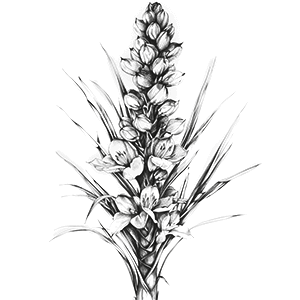
| Common & Scientific Name: | Tulip — Tulipa L. |
| Etymology: | From Turkish tülbend / Persian dulband, “turban,” a nod to the turban‑shaped bloom. |
| Family: | Liliaceae. |
| Blossoms: | Early to mid‑spring depending on group and climate. |
| Foliage: | Long, glaucous, slightly waving leaves that interlace at ground level. |
| Fruit: | Dry capsule with seeds (in fertile species). |
| Height: | ~10–70 cm depending on species/group. |
Tulip main features chart
A Journey from Wild Mountains to Stock Markets
You might think of windmills when you see a tulip, but its soul is actually Asian. Wild tulips evolved on the rugged slopes of Central Asia and the Balkans, designed to survive harsh winters and dry summers.
The Ottomans were the first to fall in love with them. In the Sultan’s gardens, the flower was called Laleh. Written in Arabic script, Laleh shares the same letters as "Allah," giving the flower a sacred, spiritual weight that it lost when it traveled West.
In 1637, a single 'Viceroy' bulb cost 4,200 guilders—over ten times a skilled worker's yearly wage. A handful of bulbs could buy you a mansion on the finest canal in Amsterdam!

In Persian and Ottoman sources the flower is Laleh—written with the same Arabic letters used for “Allah”
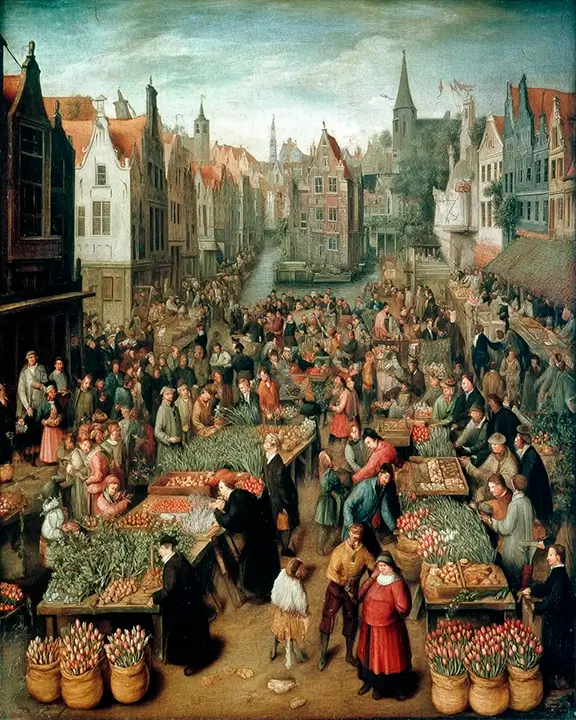
The 1630s Tulip Mania made the flower shorthand for speculation
DID YOU KNOW...?
recognised Tulipa species
Where Tulips Live Now

Tulips love temperate climates with a chill in the air. They need cold winters to "reset" the bulb and wake up in spring. Today, the Netherlands is the undisputed engine, producing billions of bulbs, but you’ll find vibrant festivals from Istanbul to Ottawa.
"Just as tulips return every spring, true love renews itself, eternally fresh and vibrant."
Tulip Varieties: The Visual Index
With over 75 wild species and countless hybrids, the variety is endless. Internationally, they fall into 15 classes. Here are four essentials:
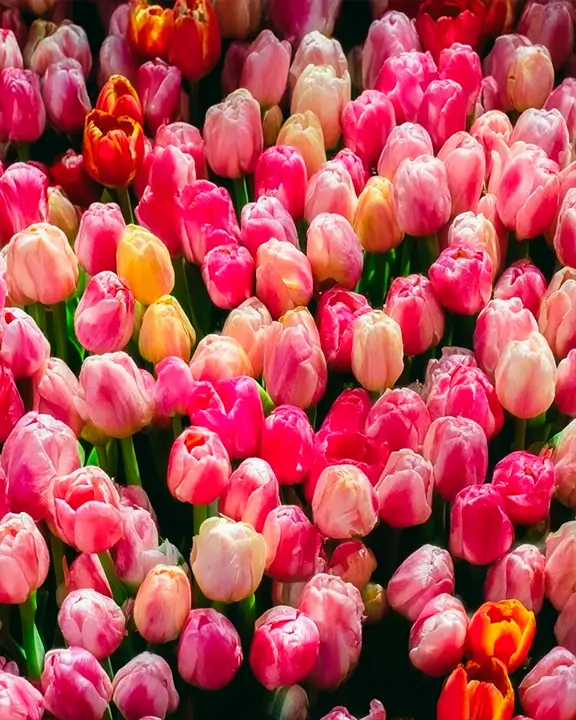
Triumph — mid‑season, sturdy cup; the all‑rounder for beds and pots.

Darwin Hybrid — tall stems and oversized blooms; landscape blocks and long‑lasting cut flowers.
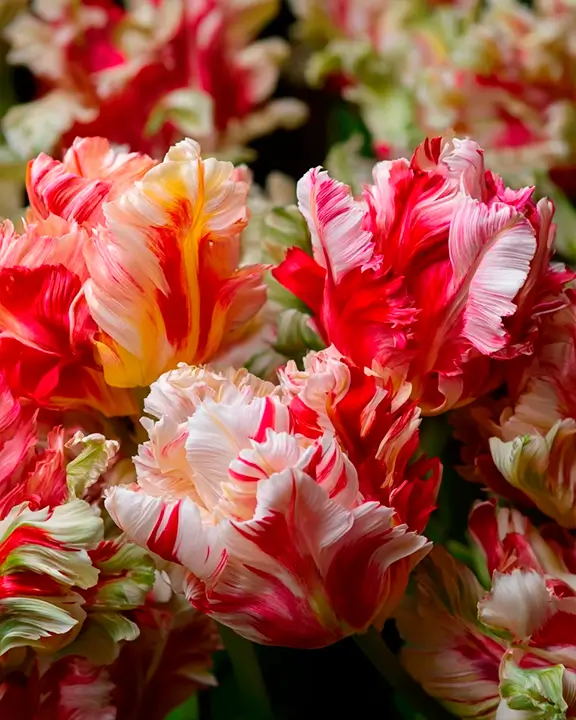
Parrot — ruffled, twisted petals; theatrical texture for focal points and artful arrangements.
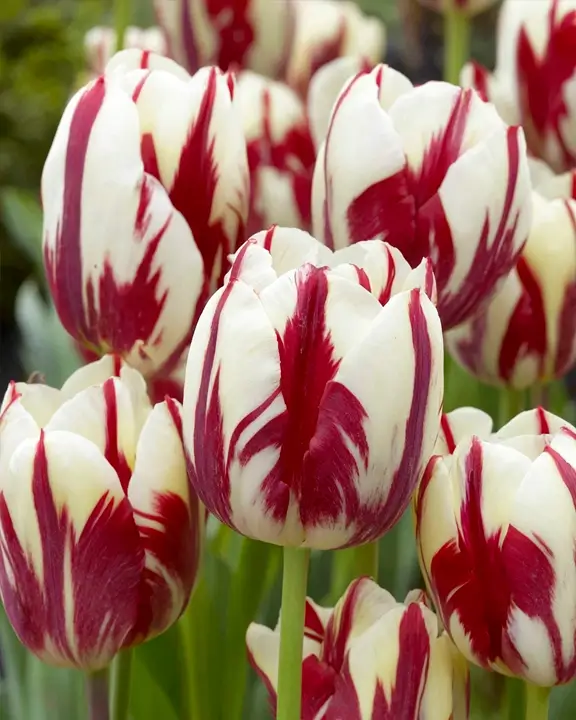
Rembrandt Tulips: Modern, virus-free versions of the flame-streaked flowers that caused the 17th-century mania.
Extra Fact: Tulips Keep Growing!
If you buy cut tulips, don't be surprised if they "mess up" your arrangement. They can grow up to 2.5 cm (1 inch) per day after being cut.

THE QUEEN OF ALL NIGHTS
There is no true black pigment in tulips. ‘Queen of Night’—a late‑season, tall, single‑cup cultivar—reads near‑black because its deep maroon–purple absorbs light, appearing darkest at dawn, dusk, or against warm backgrounds. Designers prize it for quiet drama and contrast; pair with chartreuse foliage or copper tones to make its depth hum.
DID YOU KNOW...?
of temperature precision
Tulip's Modern Powers: More Than Just Decor
Beyond looking pretty in a vase, the tulip has surprising utility and benefits.
-
Edible Elegance (Yes, really!): While starving populations in WWII ate bulbs out of necessity, modern gastronomy has rediscovered the petals. They have a crisp texture, like iceberg lettuce, with a sweet, cucumber-like flavor. Avant-garde chefs use them as edible vessels for creams or crystallize them with sugar for a high-end crunch.
Crisis Culinary Curiosity:
During the Dutch Hunger Winter (1944-1945) of WWII, tulip bulbs became a critical survival food. Rich in starch, they were eaten baked or boiled by the starving population, who had to carefully prepare them to minimize the toxicity of the bulbs.
-
The "Feel Good" Flower: Hospitals use autumn bulb-planting as therapy. The act of burying a bulb requires patience and offers a delayed, beautiful reward—a perfect metaphor for healing.
-
Early Eco-Warriors: Botanical (wild) species are crucial for early-season pollinators, providing pollen when few other things are blooming.
- Biomimicry in Energy: Forget massive blades; engineers have designed vertical wind turbines shaped like tulips. The aerodynamics of the curving "petals" allow them to capture turbulent urban wind quietly and efficiently, proving that nature's geometry is often the best engineering.
- Beauty — hydration, antioxidant shielding & soothing: beauty labs explore tulip extracts for related skin benefits—an emerging materials story rather than settled dermatology.
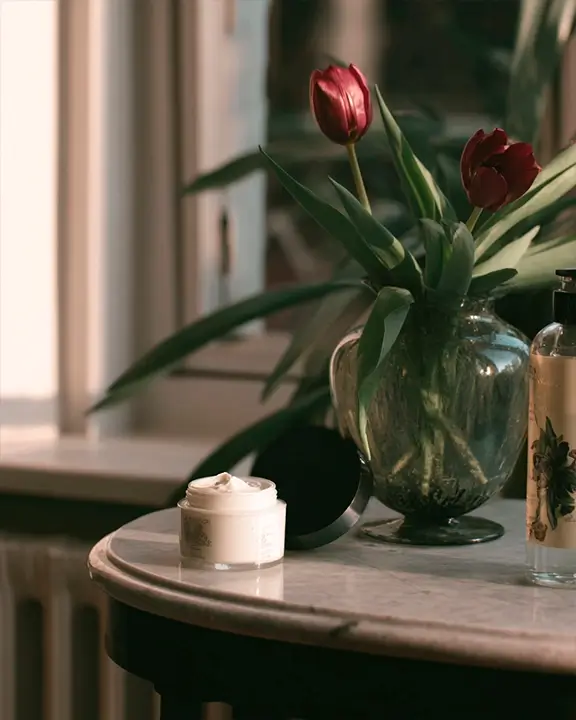
Beauty labs explore tulip extracts for related skin benefits.

3D‑printed vases: contemporary remixes of the multi‑spouted Delftware classic 'tulipiere'
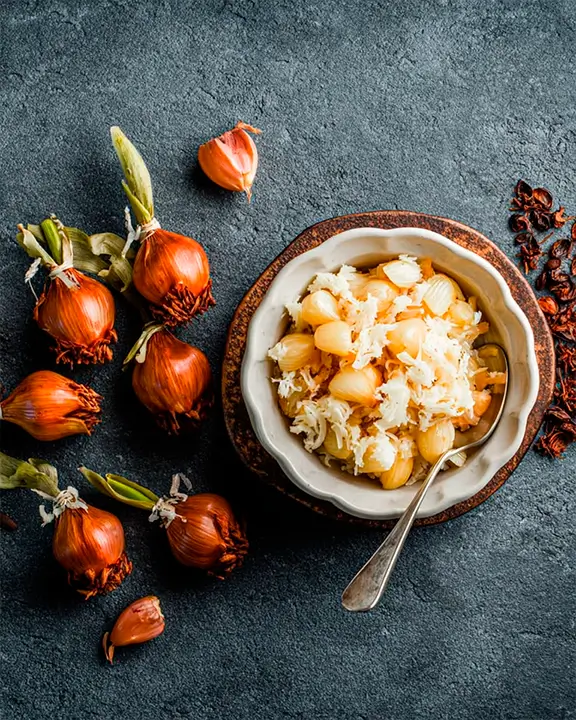
Avant‑garde Dutch kitchens have fermented bulbs into miso or charred and stuffed them

Designers extract palettes from aerial photos of tulip stripes to inform branding and UI.
The Tortoise Lanterns:
This is our favorite story. During the Ottoman "Tulip Era," garden parties were lit by tortoises with candles on their backs. They would wander slowly through the tulip beds, creating a moving "living light" show.
The Heavy Symbolism of a Fragile Flower
A tulip is never just a tulip. It signifies rebirth (arriving when the year is still dark) and measure (a perfectly proportioned vessel). But the deeper stories are fascinating:
-
Tragic Love: In Persian legend, the red tulip was born from the blood of Prince Farhad. When he heard the false rumor that his beloved Shirin had died, he rode his horse off a cliff. Each drop of his blood that hit the ground bloomed into a red tulip—the ultimate symbol of undying love and sacrifice.
-
Resilience & Hope: Since 2005, a red tulip with white edges has been the Global Symbol for Parkinson’s Disease. It was bred by a Dutch horticulturist with Parkinson's, who named it after Dr. James Parkinson. It represents hope blooming in the face of adversity.
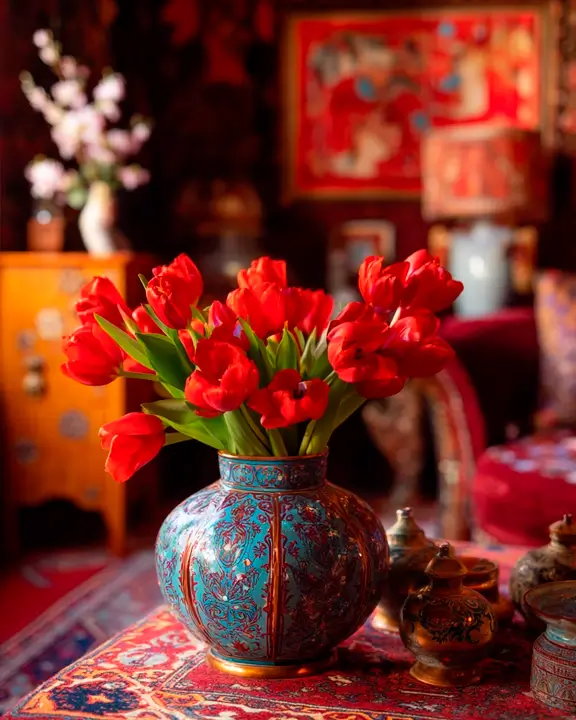
In modern Iranian memory, the red tulip can signify sacrifice and remembrance
“May tulips grow from your blood.”
Tulips in art: 10 works to fall into
Vanitas, rarity, memory. In Dutch Golden Age still lifes the tulip is a timekeeper—expensive, perishable, moral. Painters like Bosschaert and Marrel doubled as archivists of rarity, recording prized varieties the way museums list provenance.
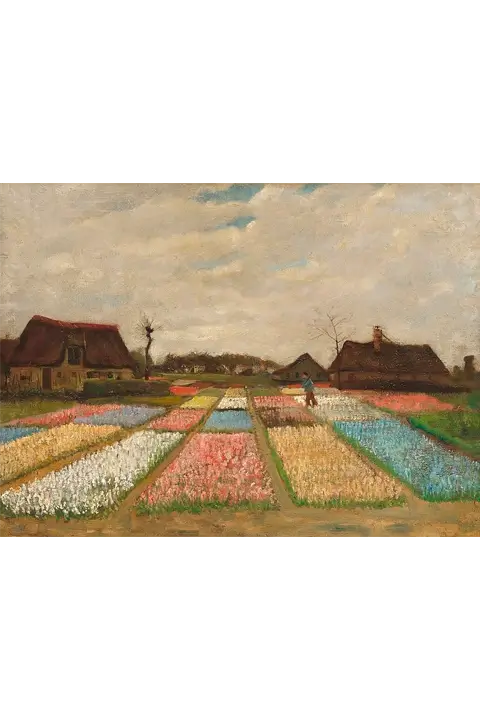
Bulb Fields / Flower Beds in Holland (c.1883) — Vincent van Gogh.
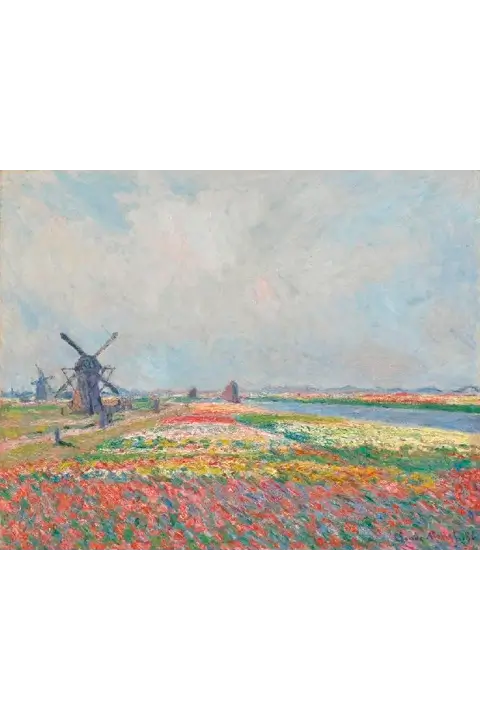
Tulip Fields near The Hague (1886) — Claude Monet
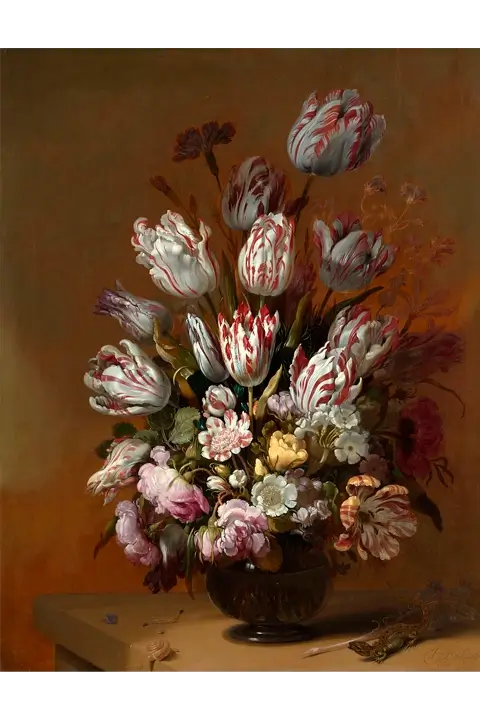
Still Life with Flowers (1639) — Hans Bollongier.

Sheet from a Tulip Book (17th c.) — Jacob Marrel
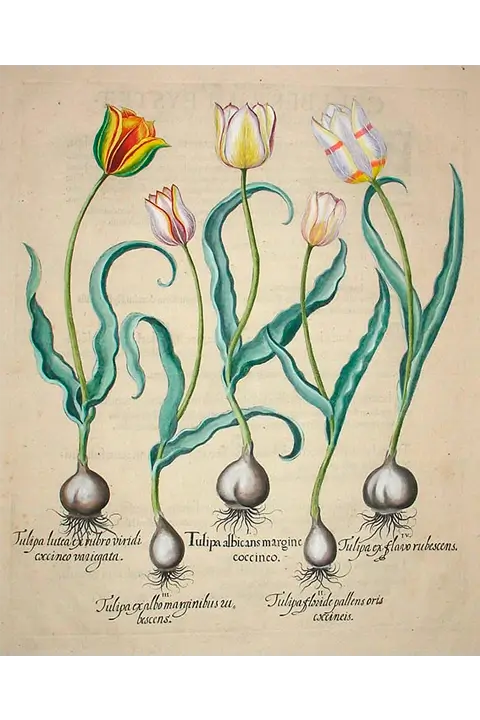
Tulip plate, Hortus Eystettensis (1613) — Basilius Besler.
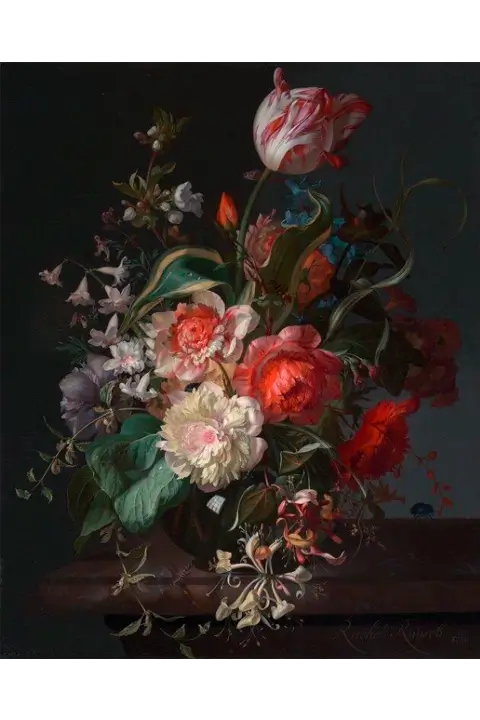
Flowers in a Glass Vase with a Tulip (1716) — Rachel Ruysch.

Tulips (1995–2004) — Jeff Koons.

Hymn of Life: Tulips (2007) — Yayoi Kusama.
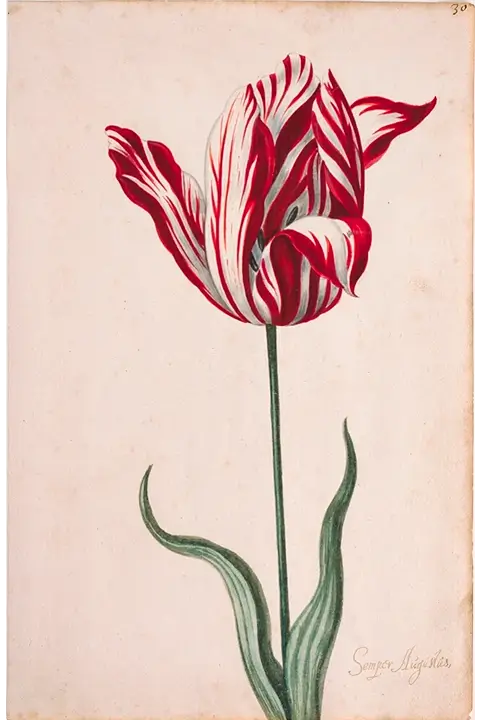
Semper Augustus (before 1640) — Anonymous, “Tulip Book”
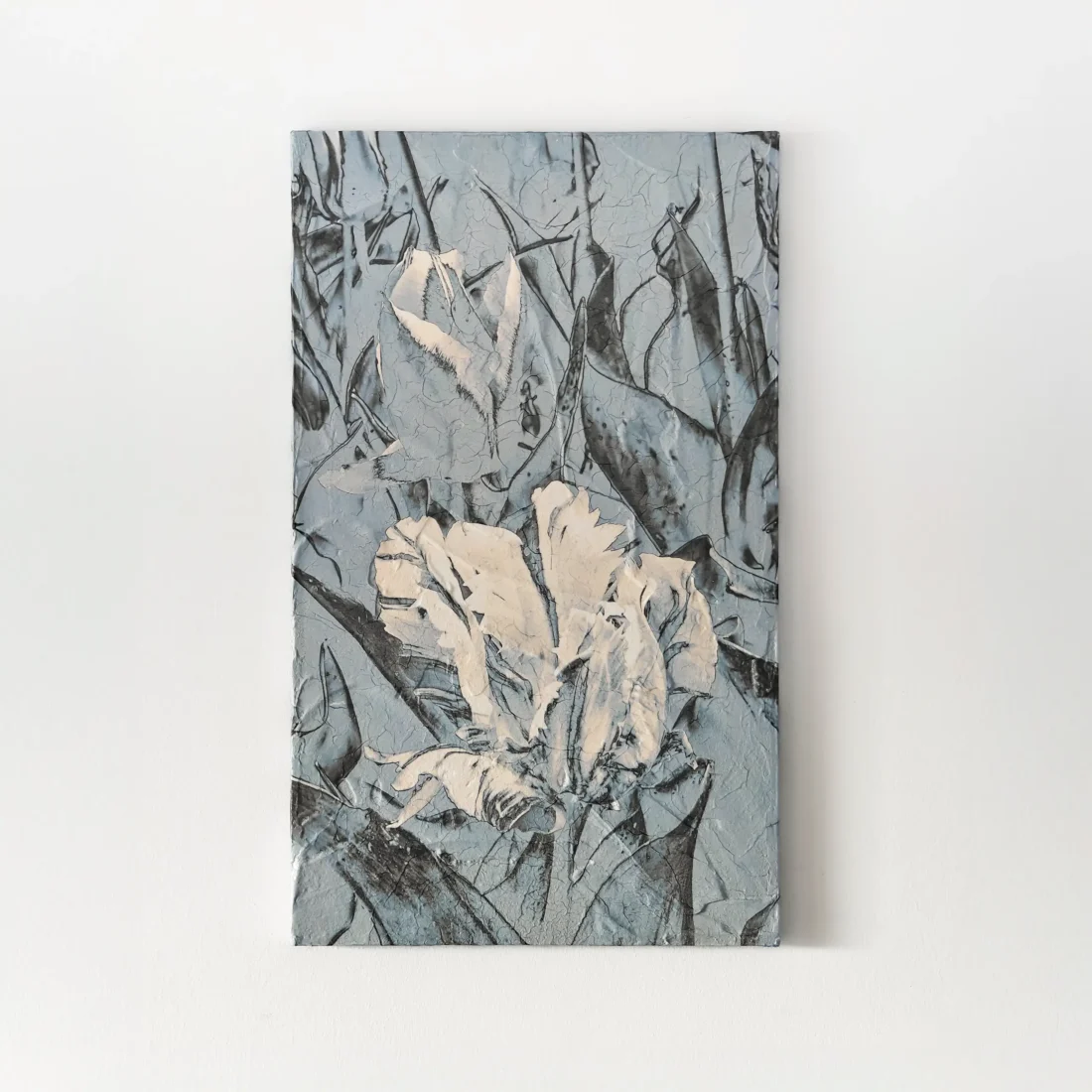
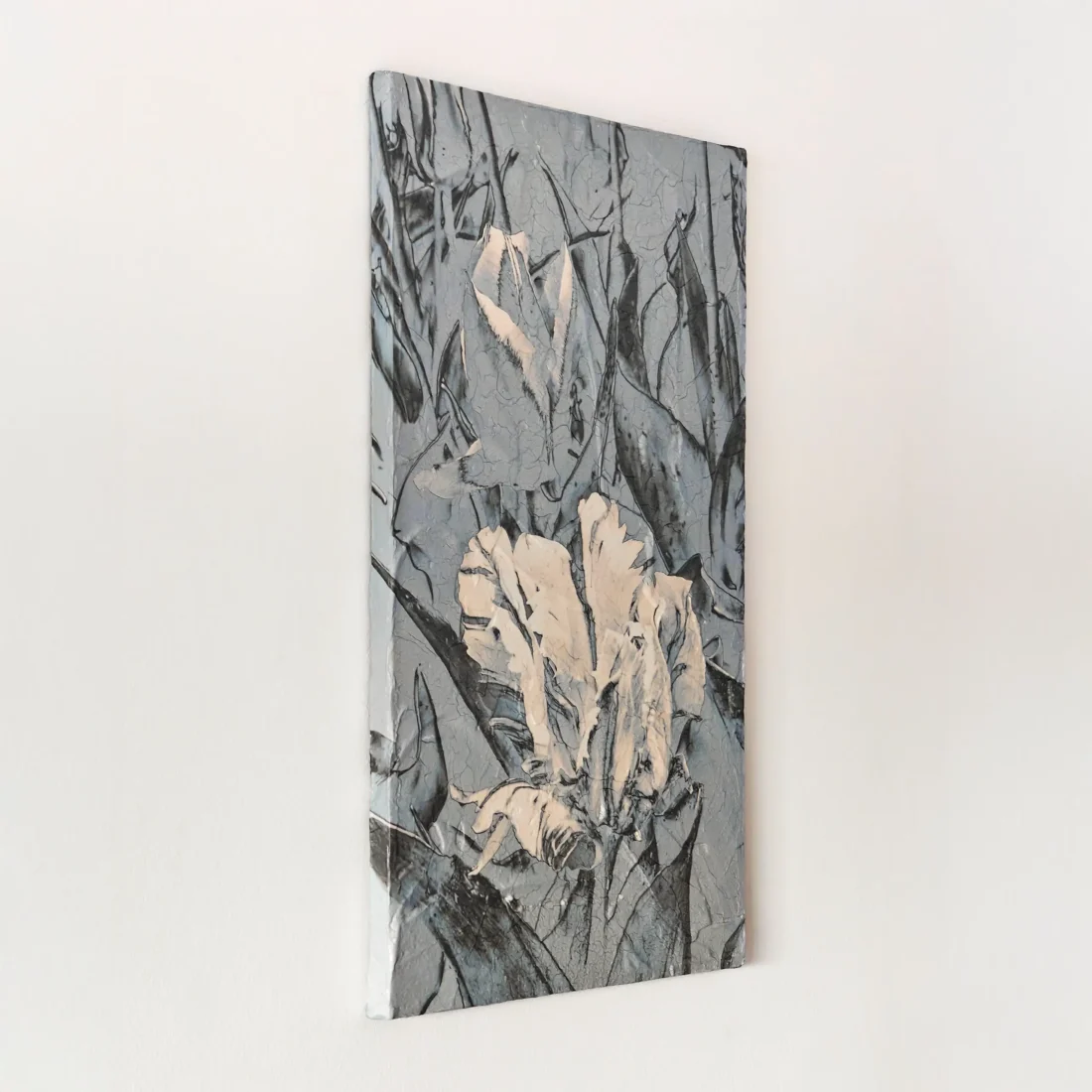
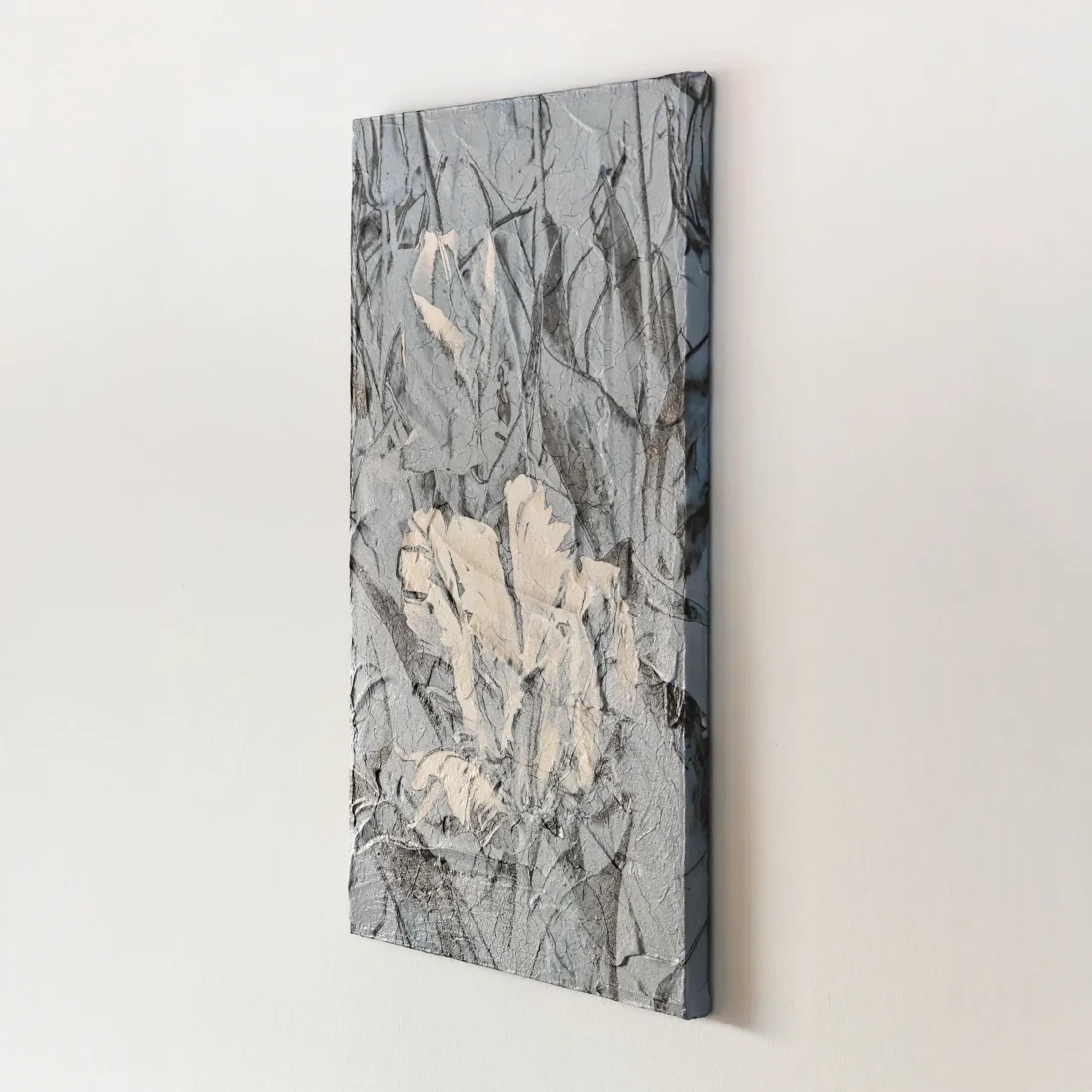
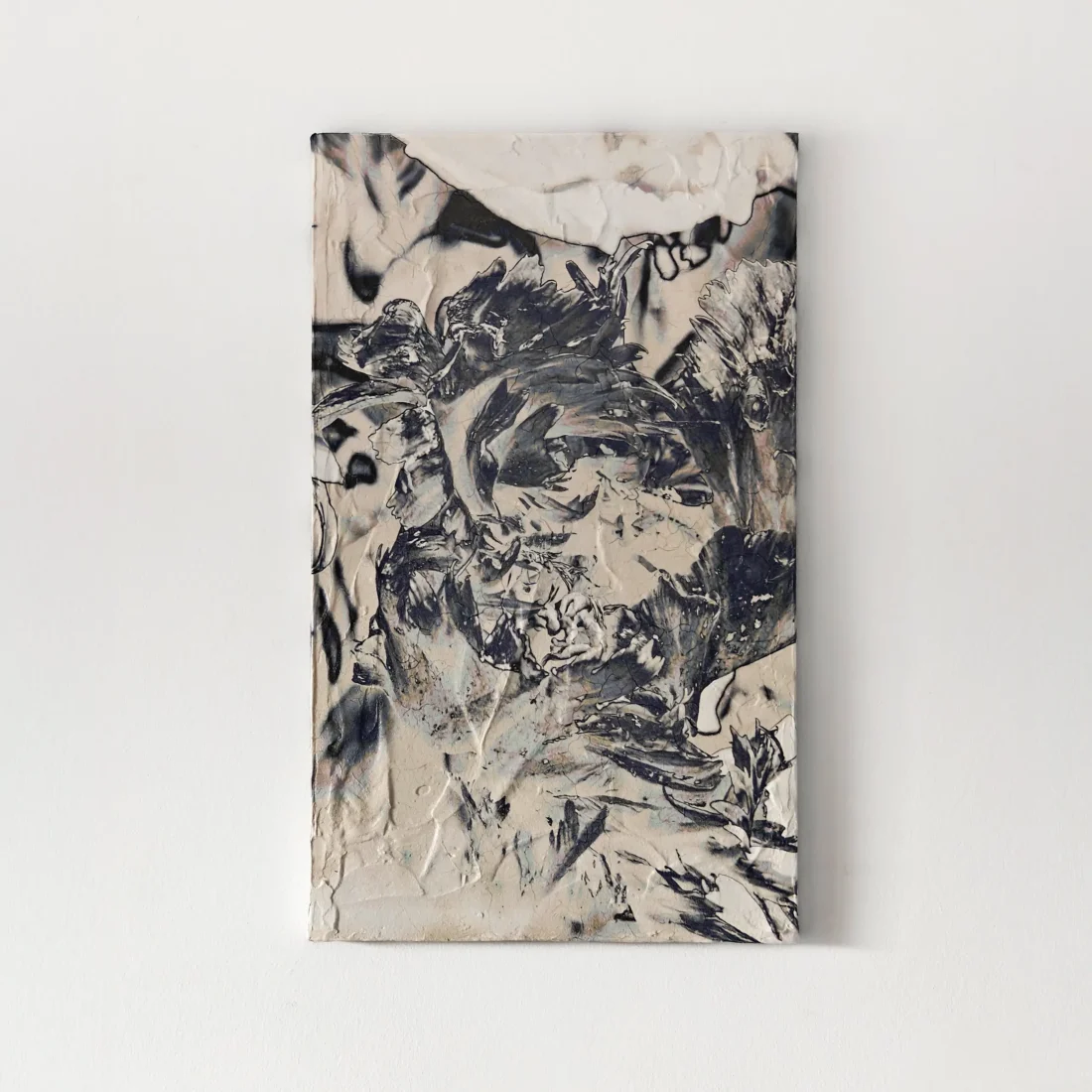
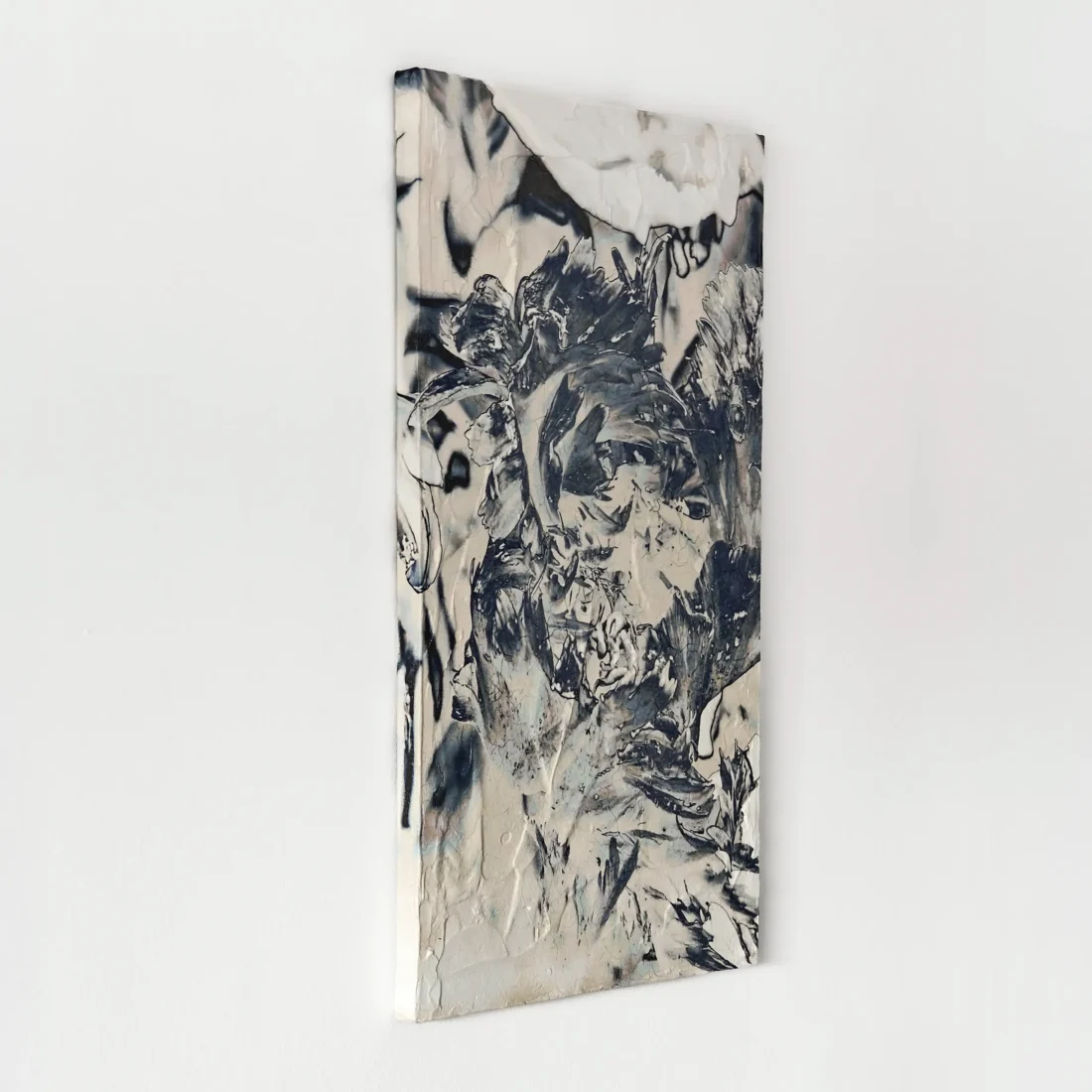
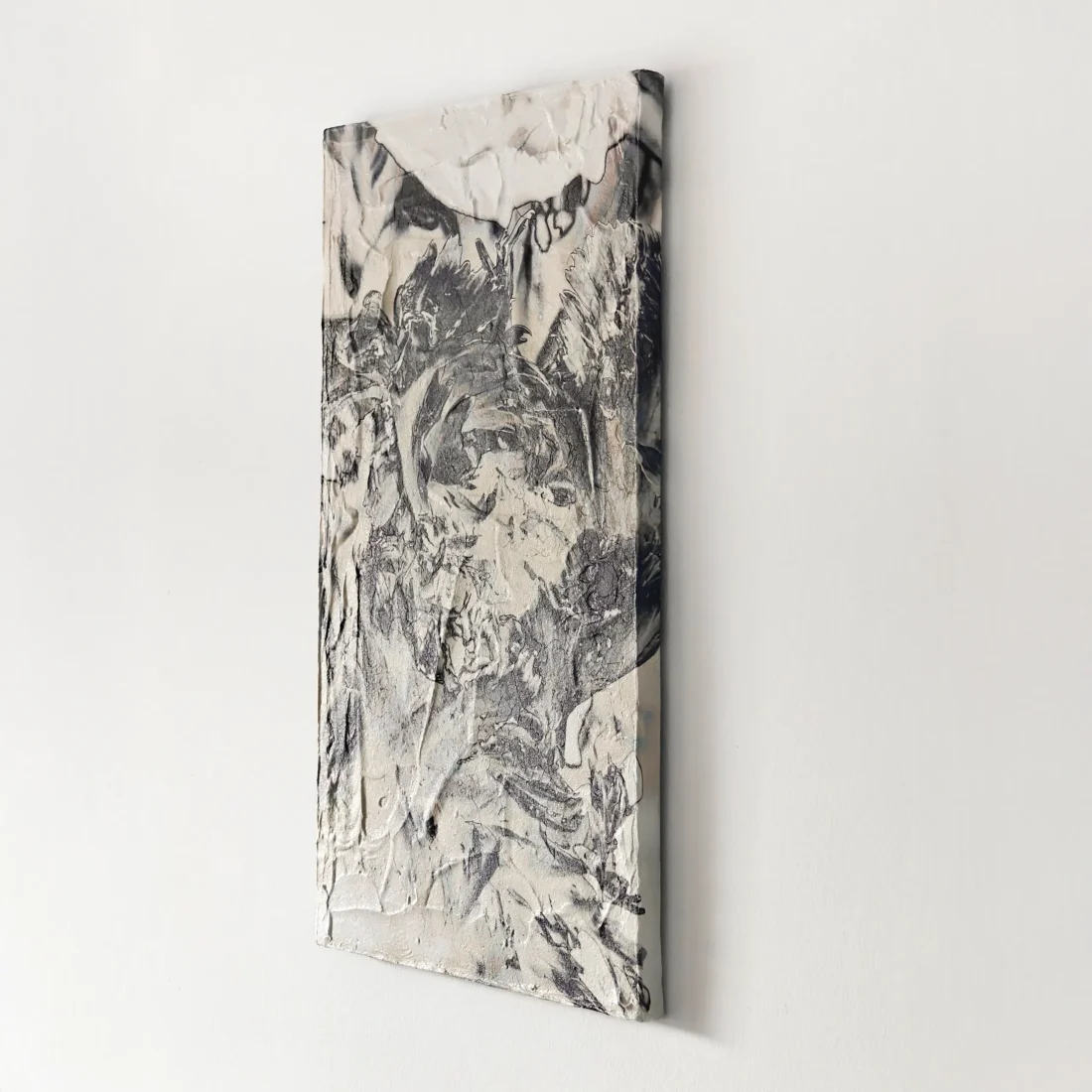
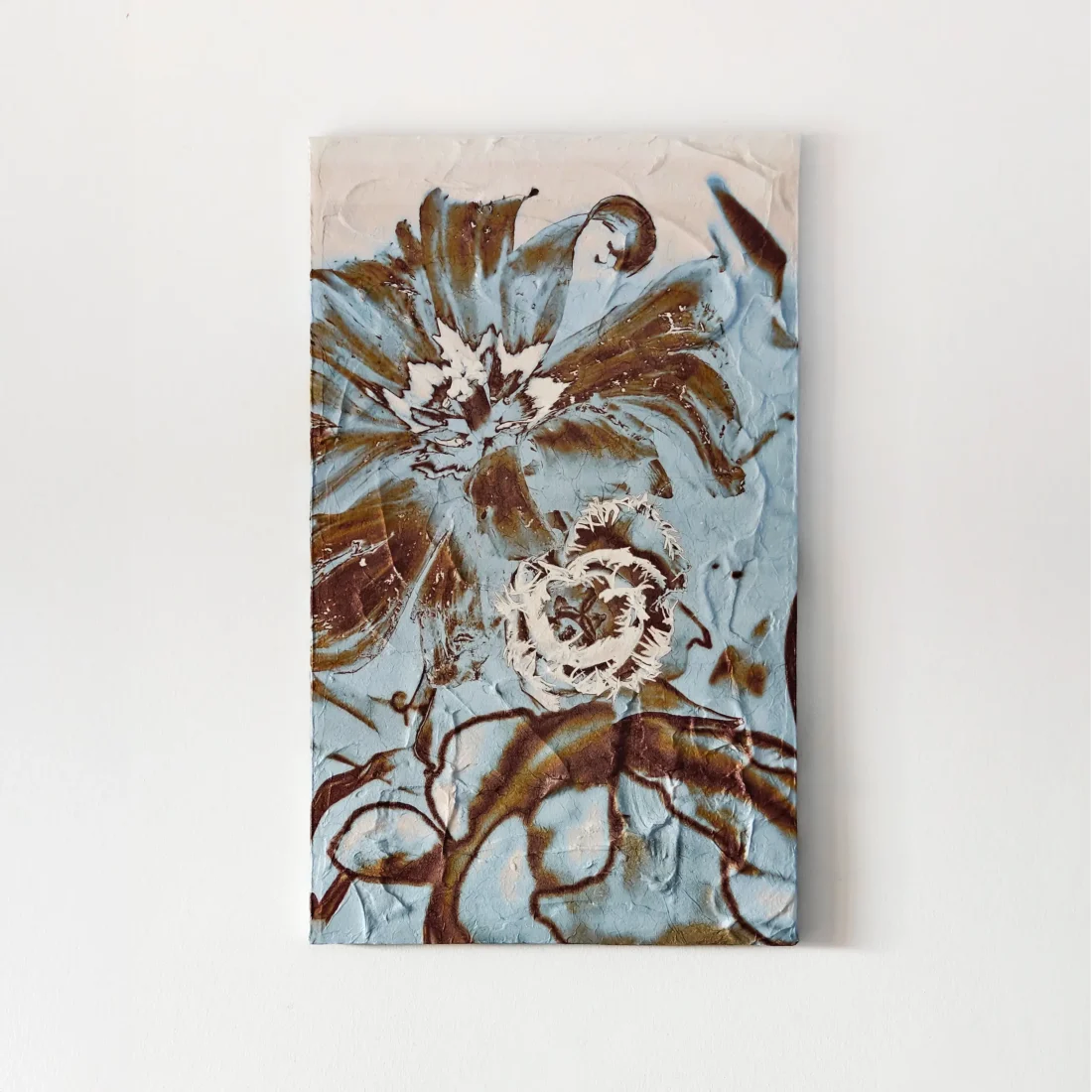
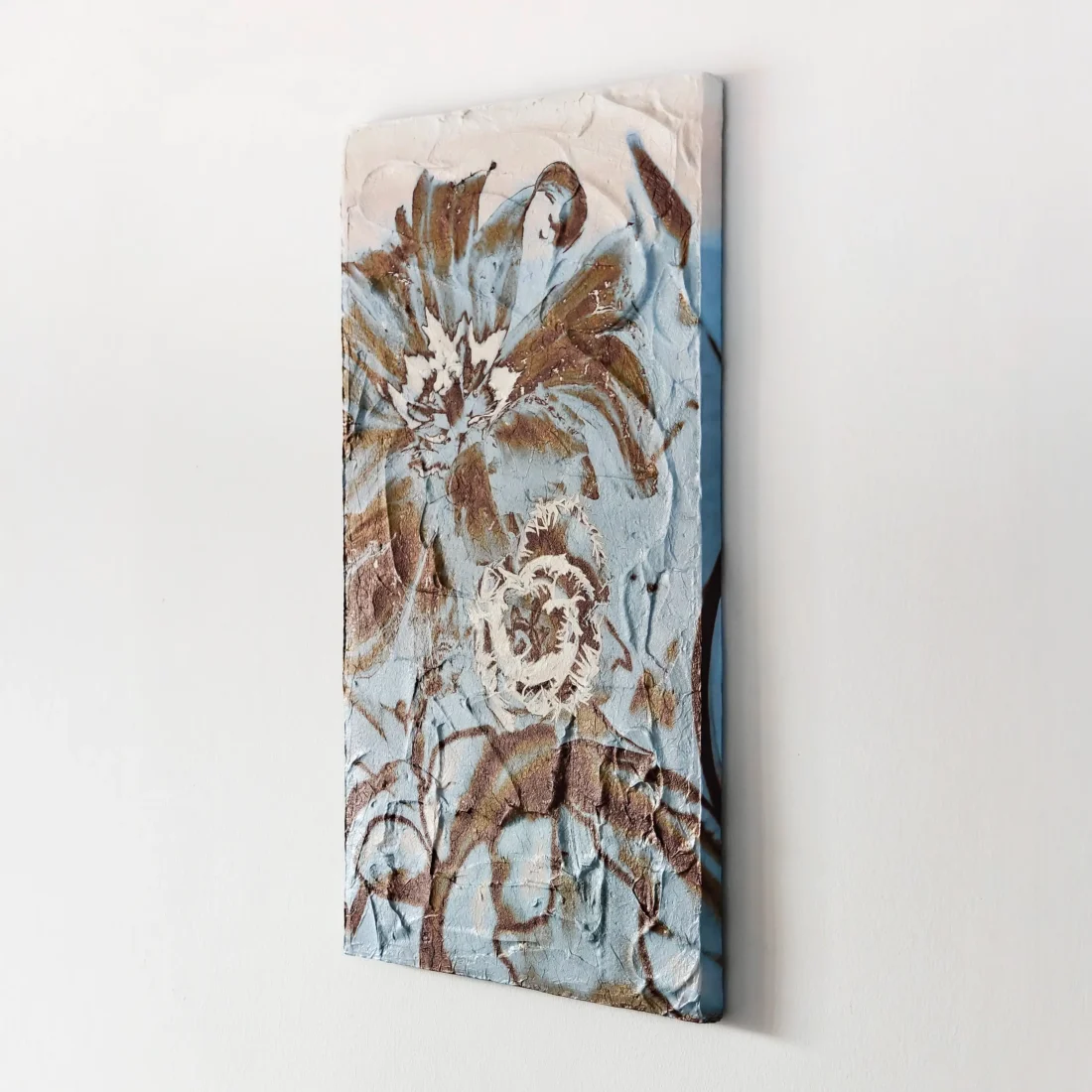
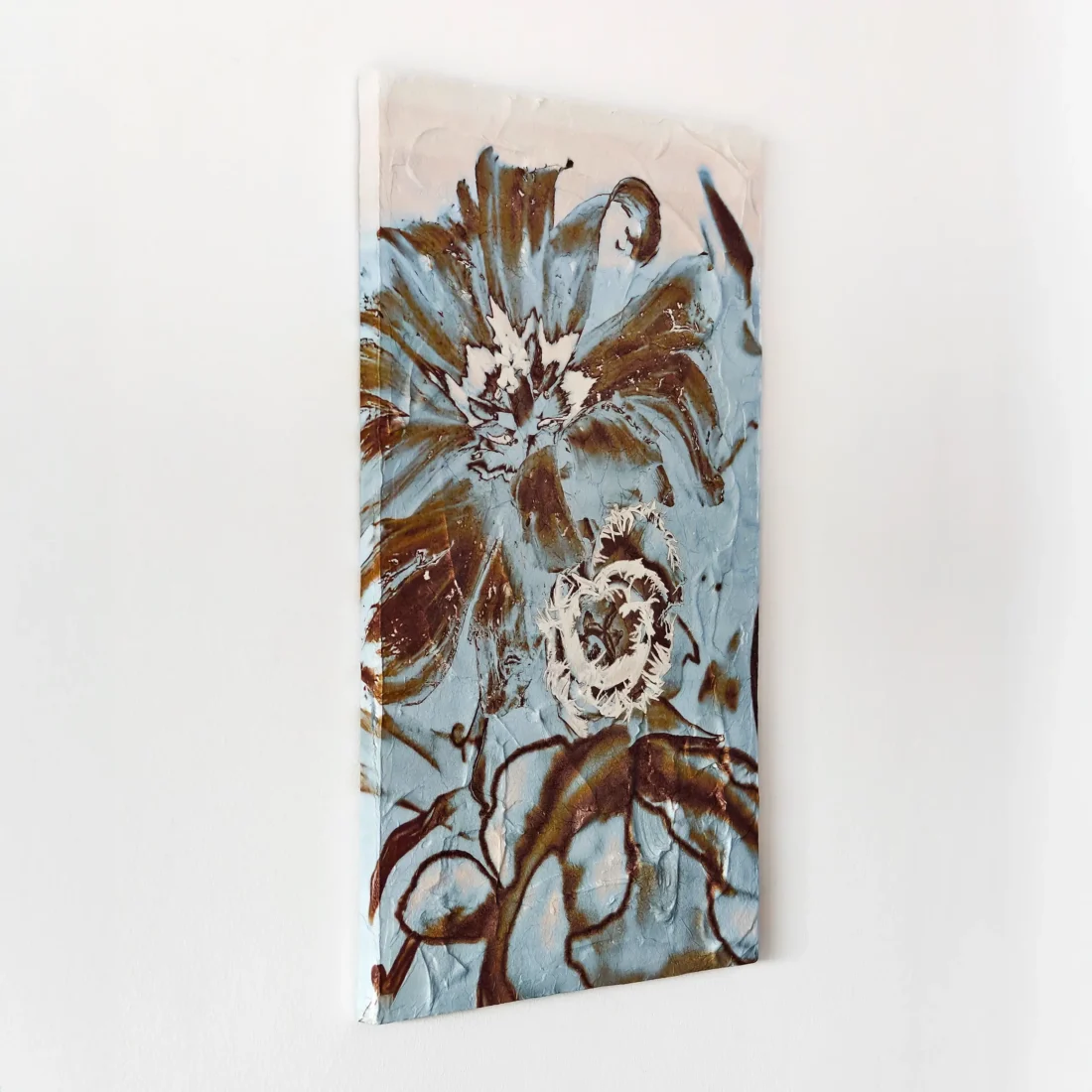
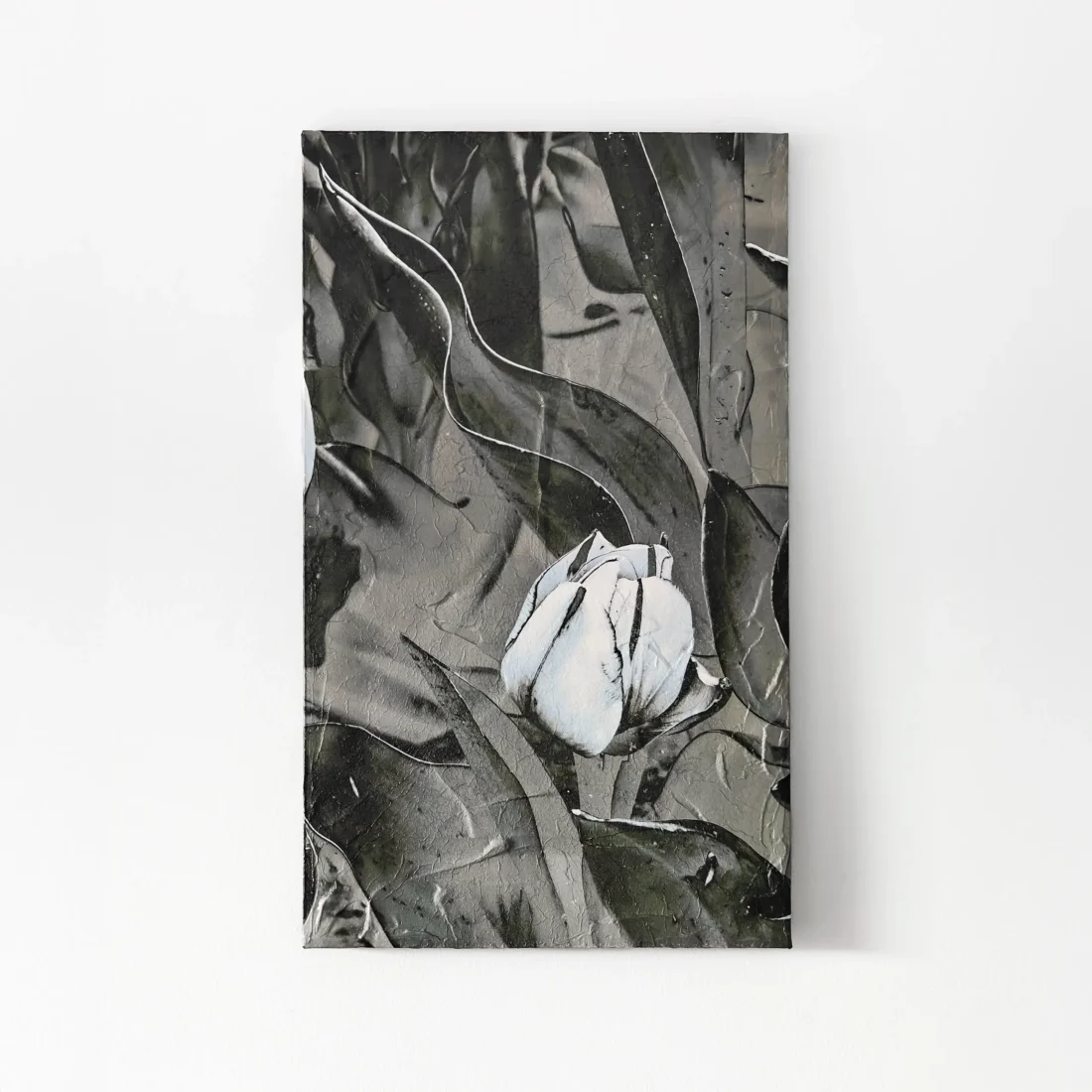
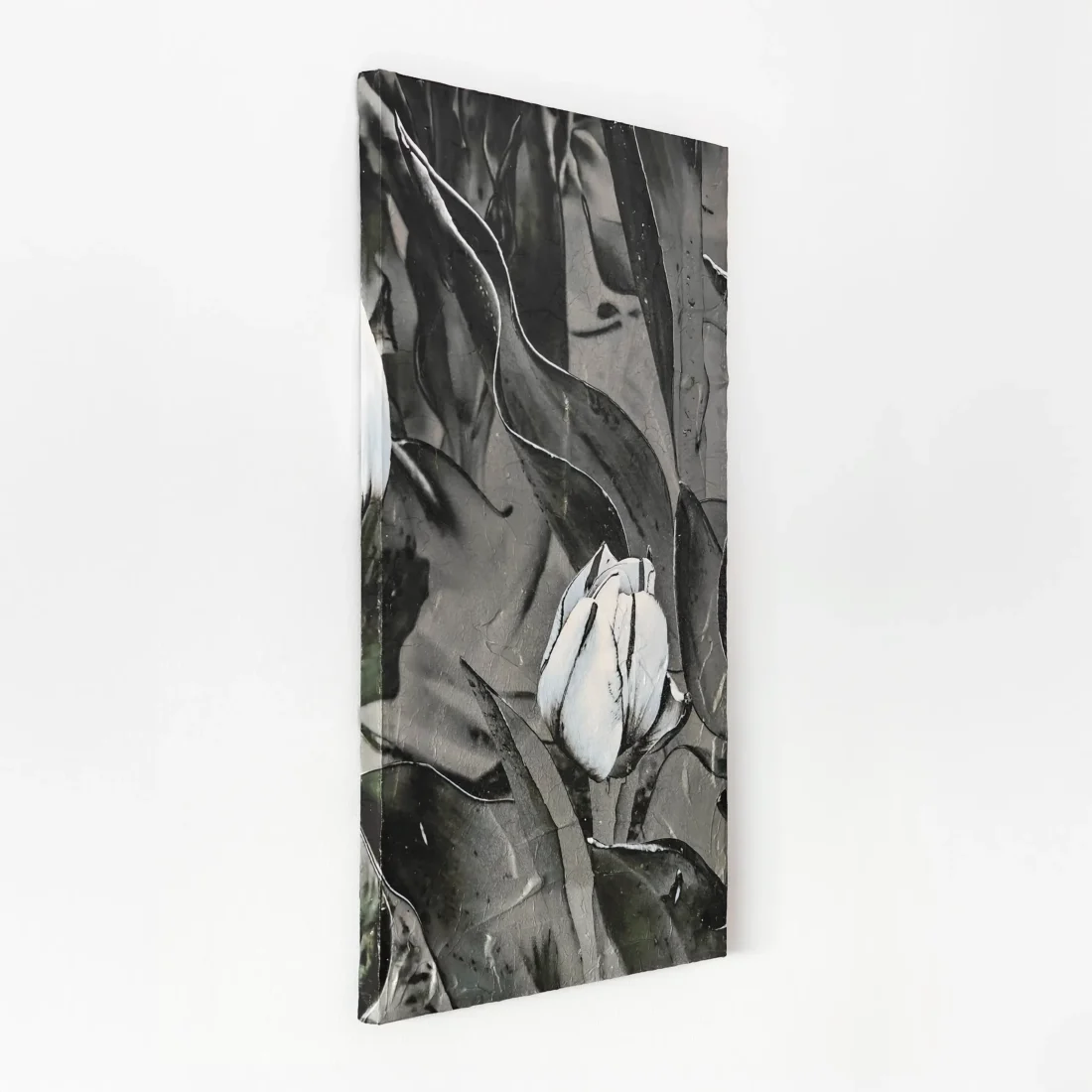
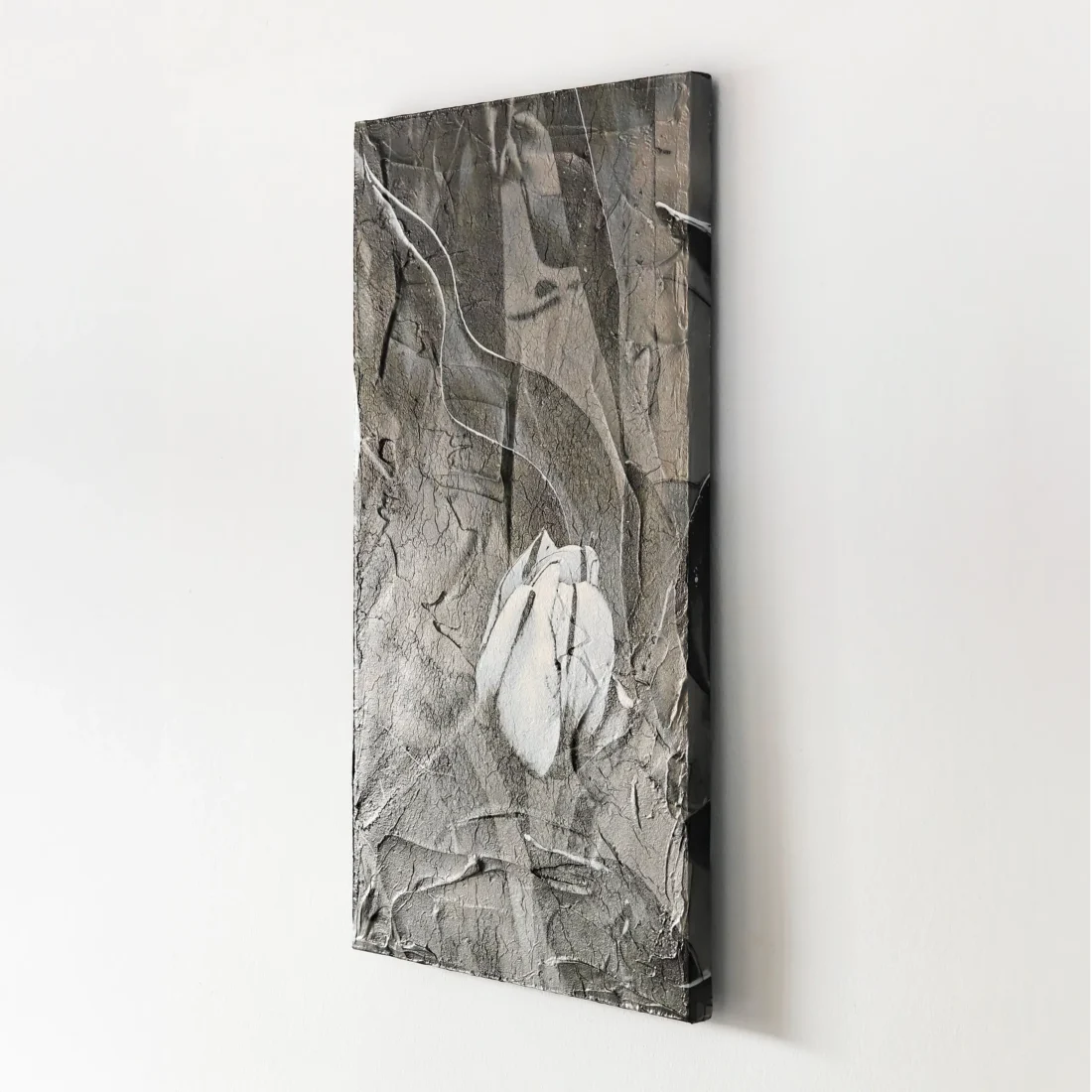
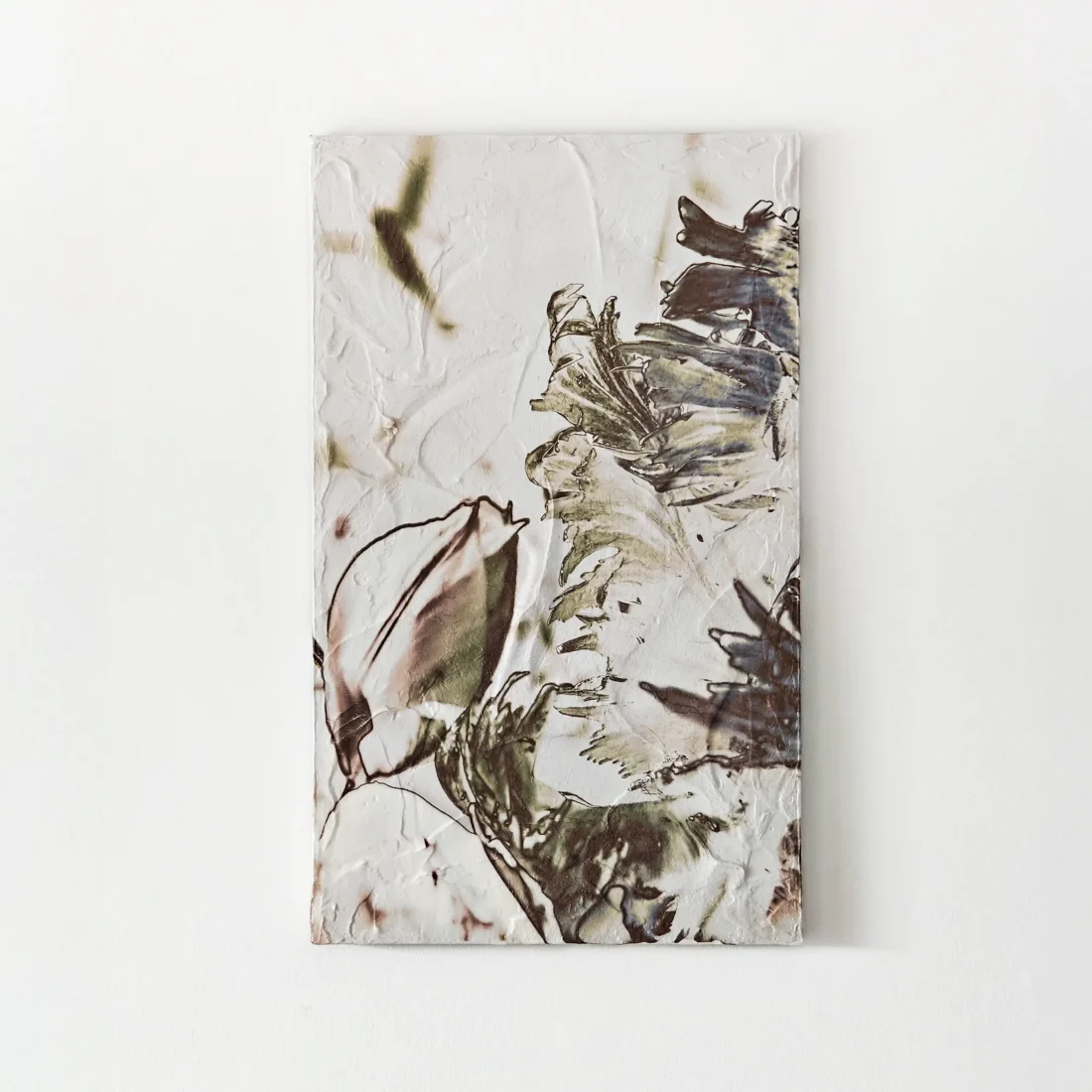
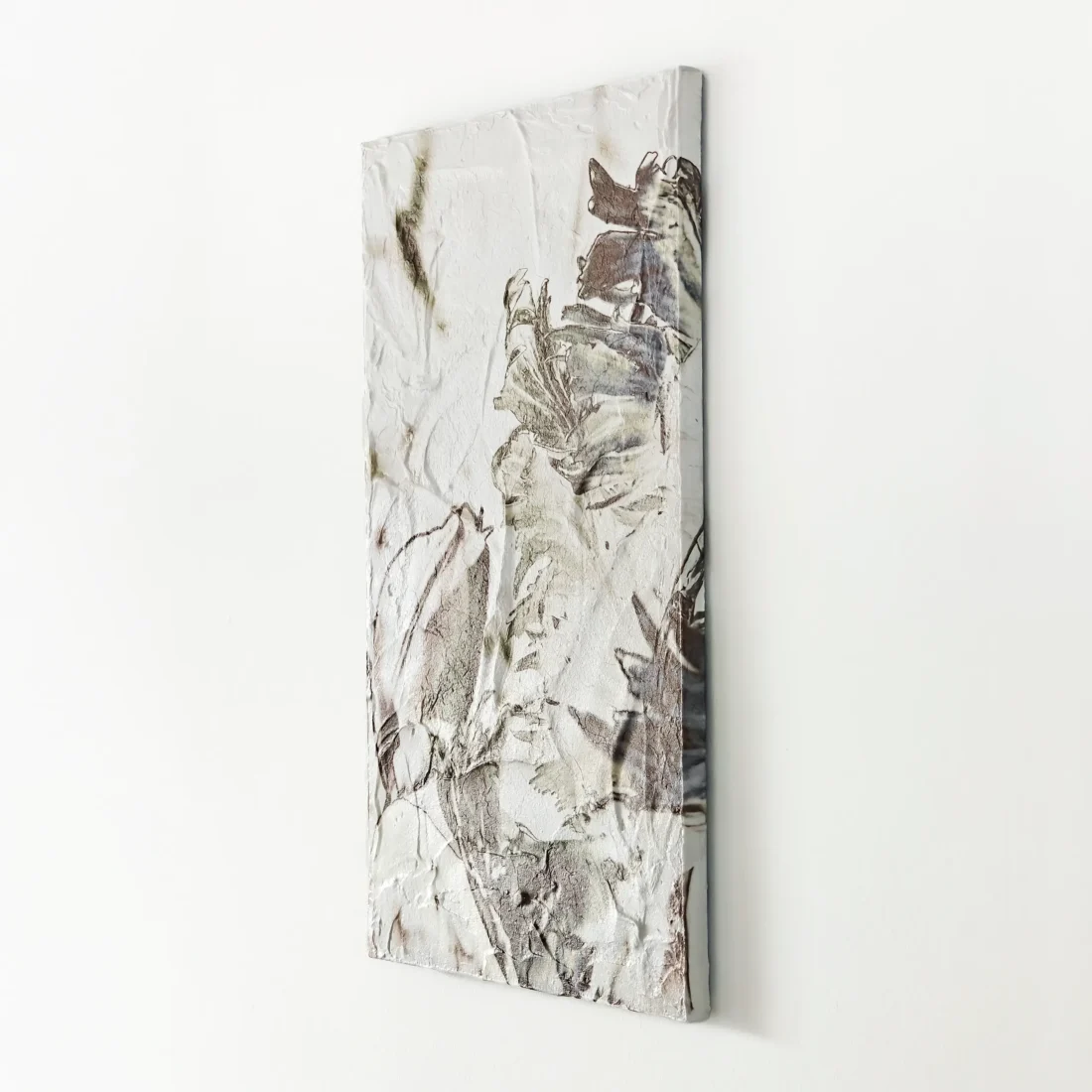
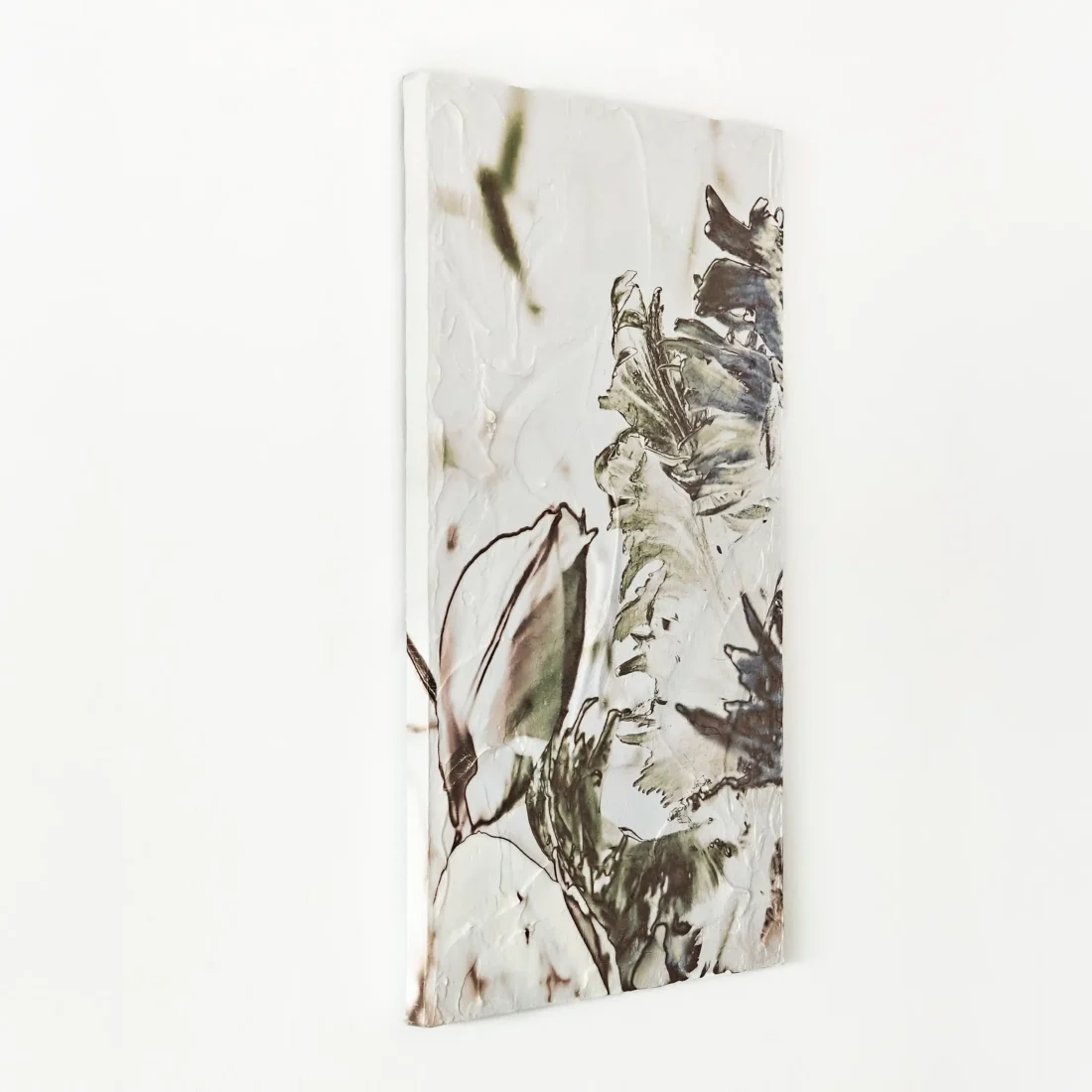
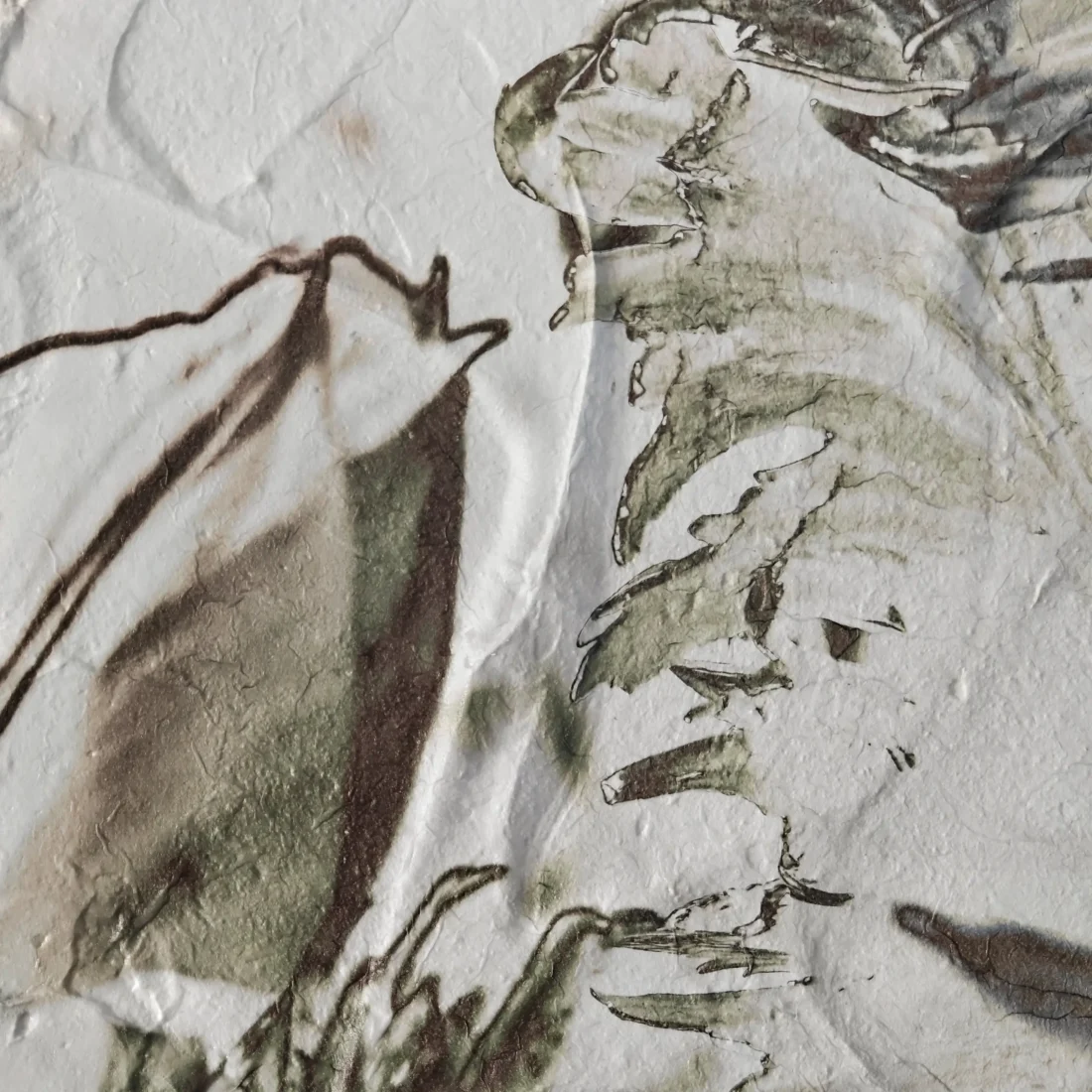
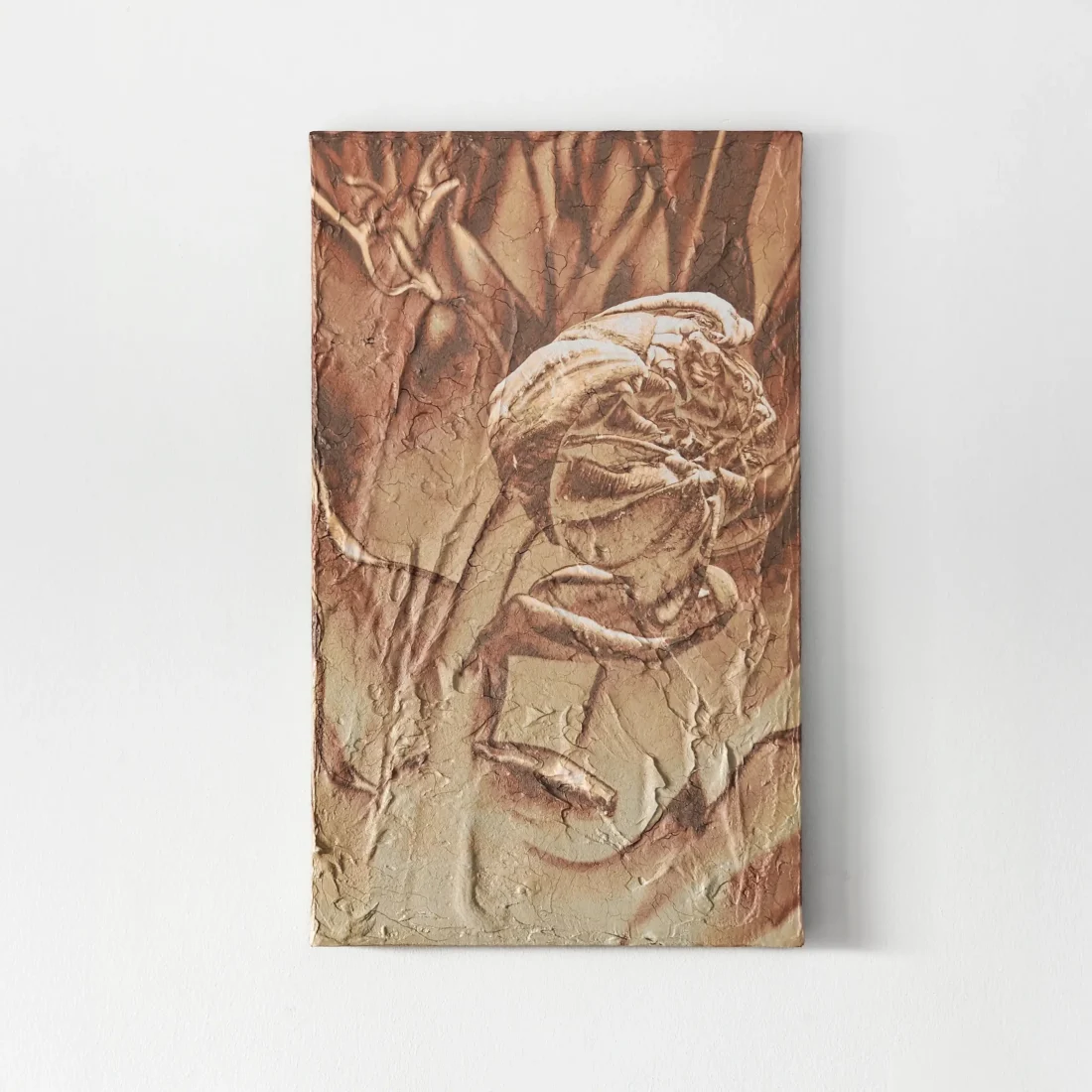
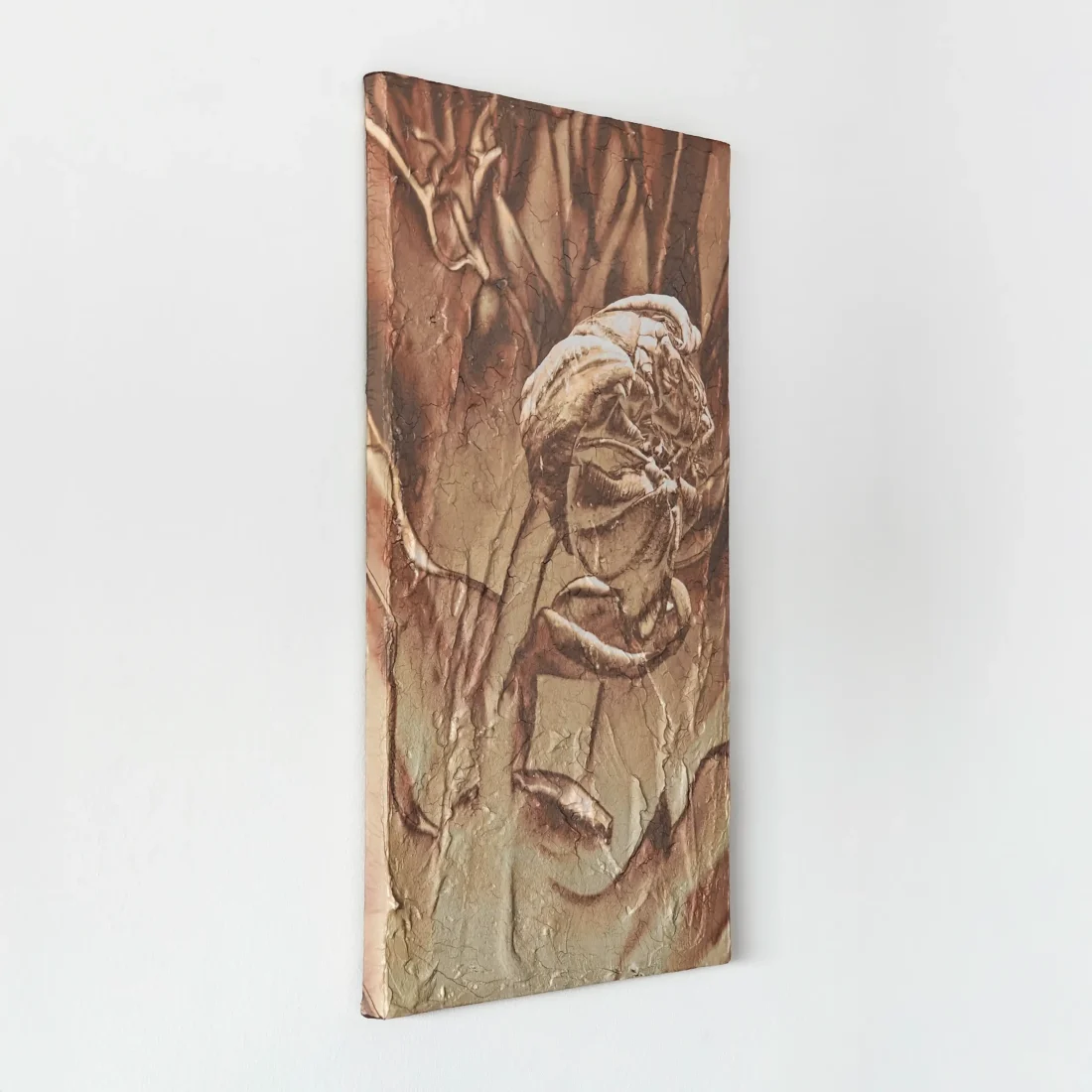
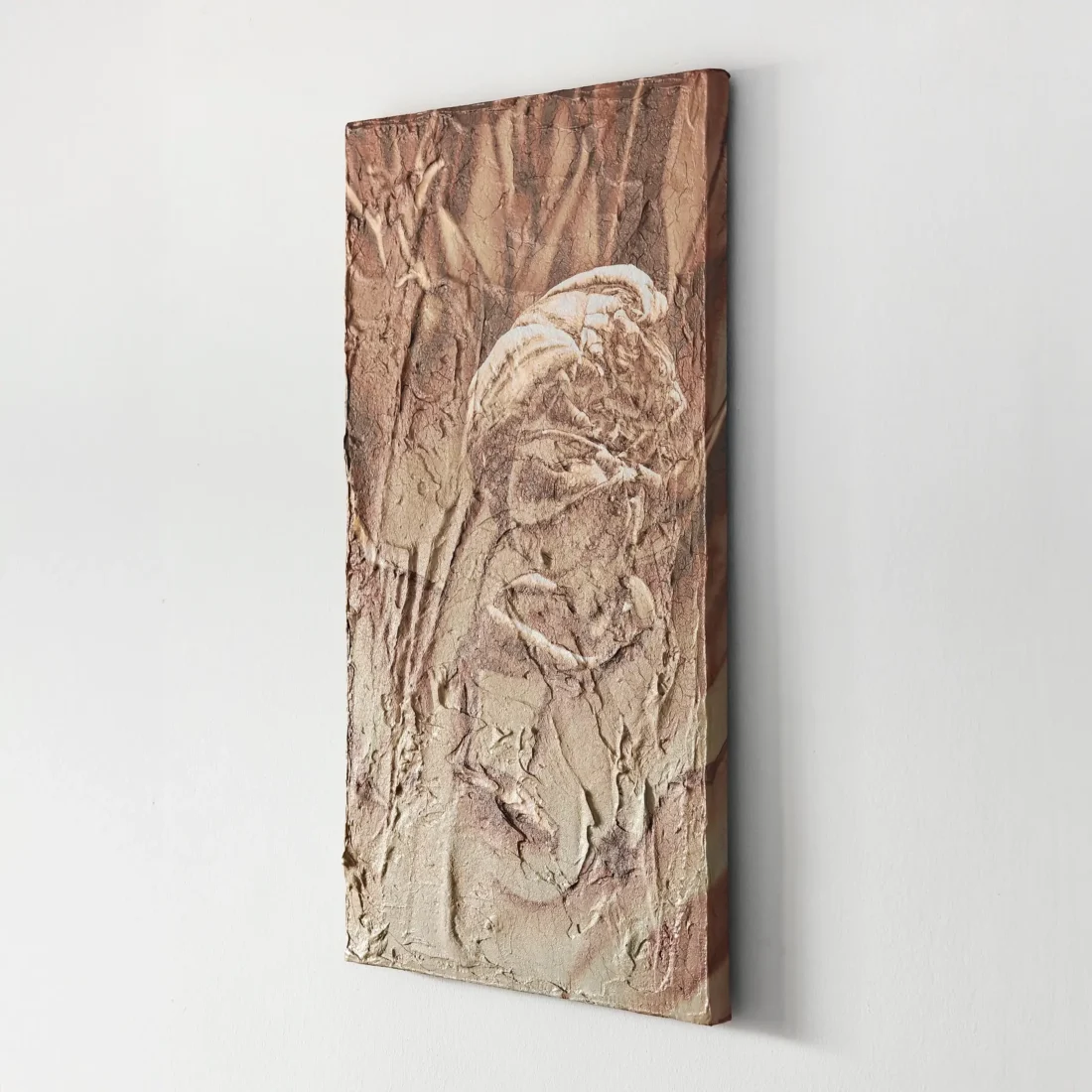
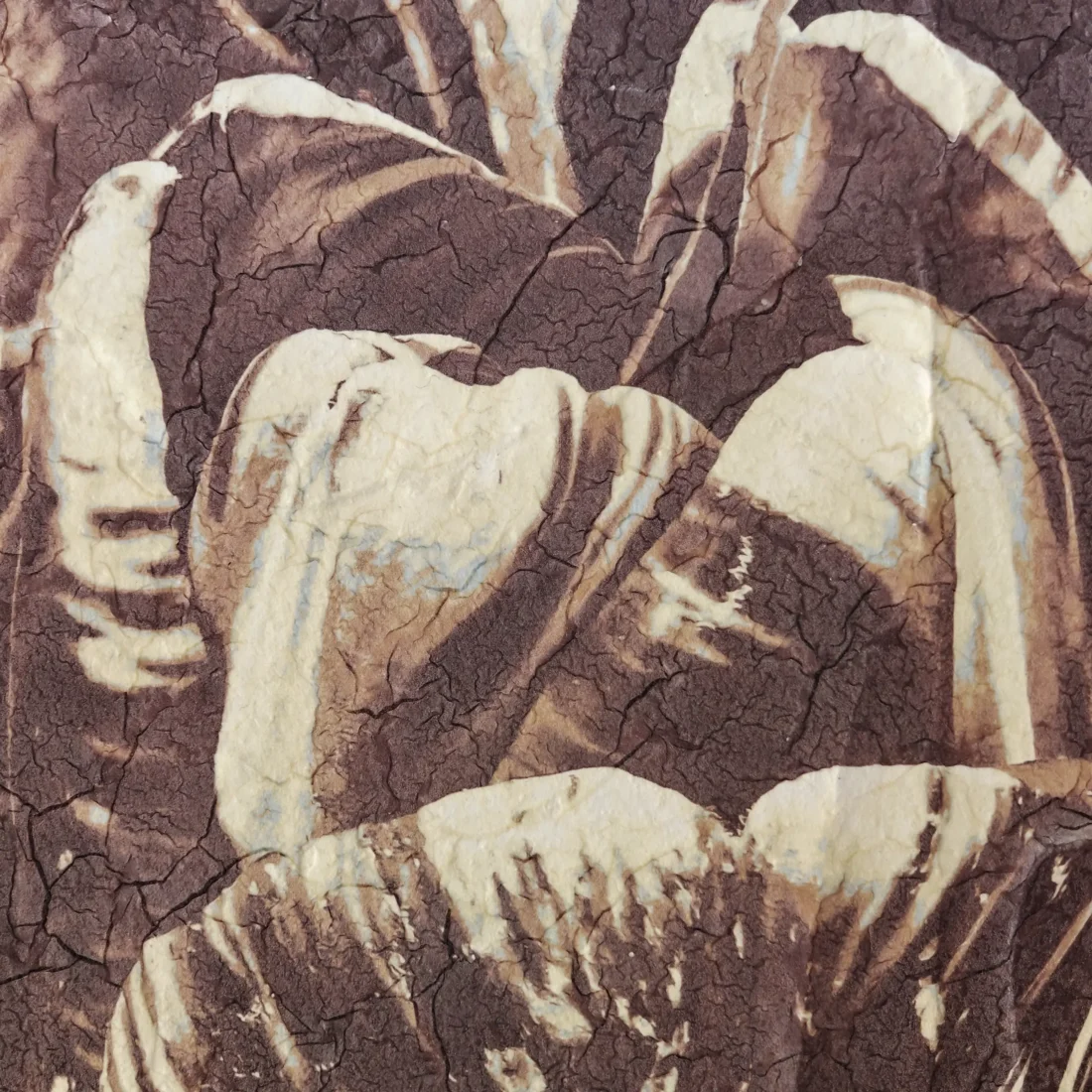
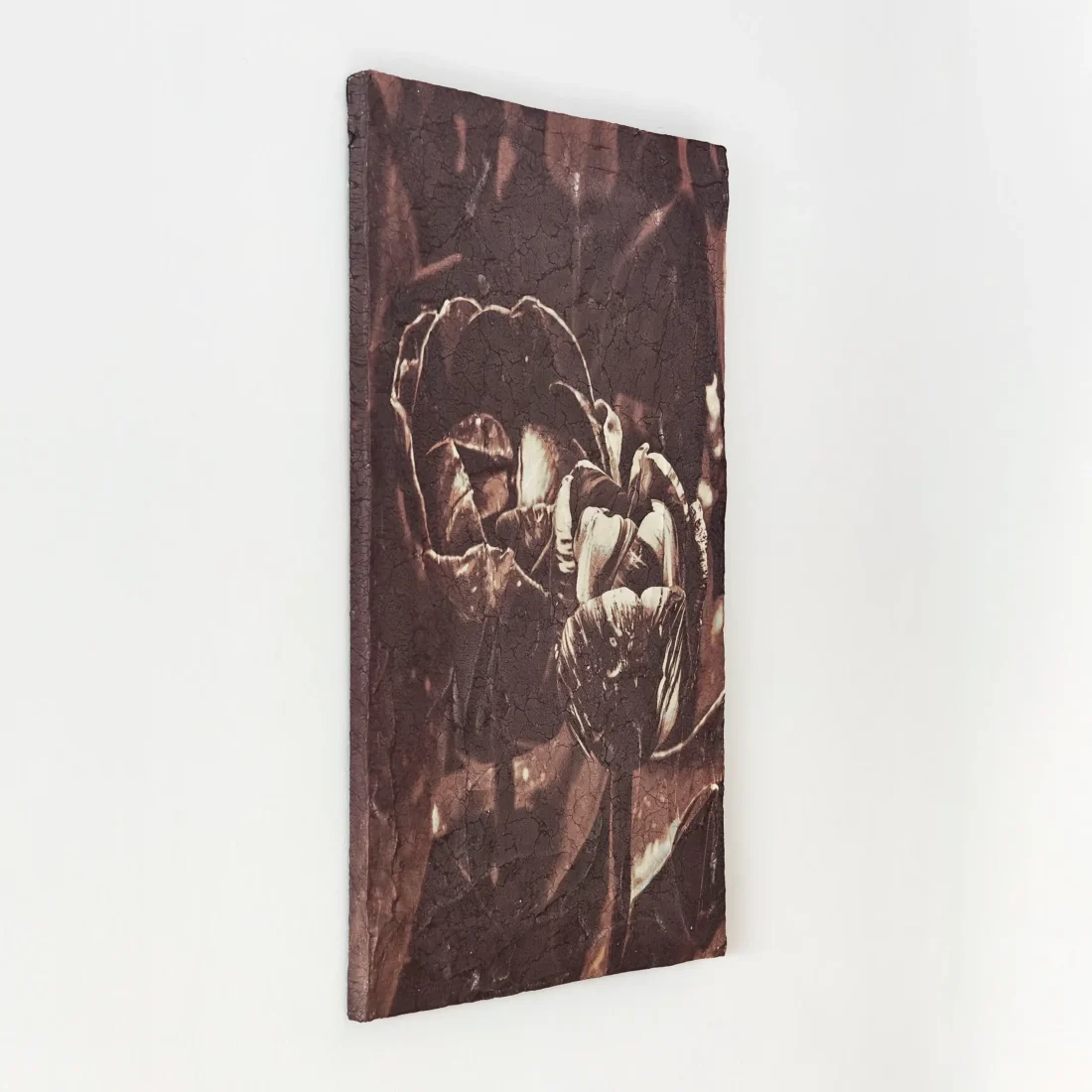
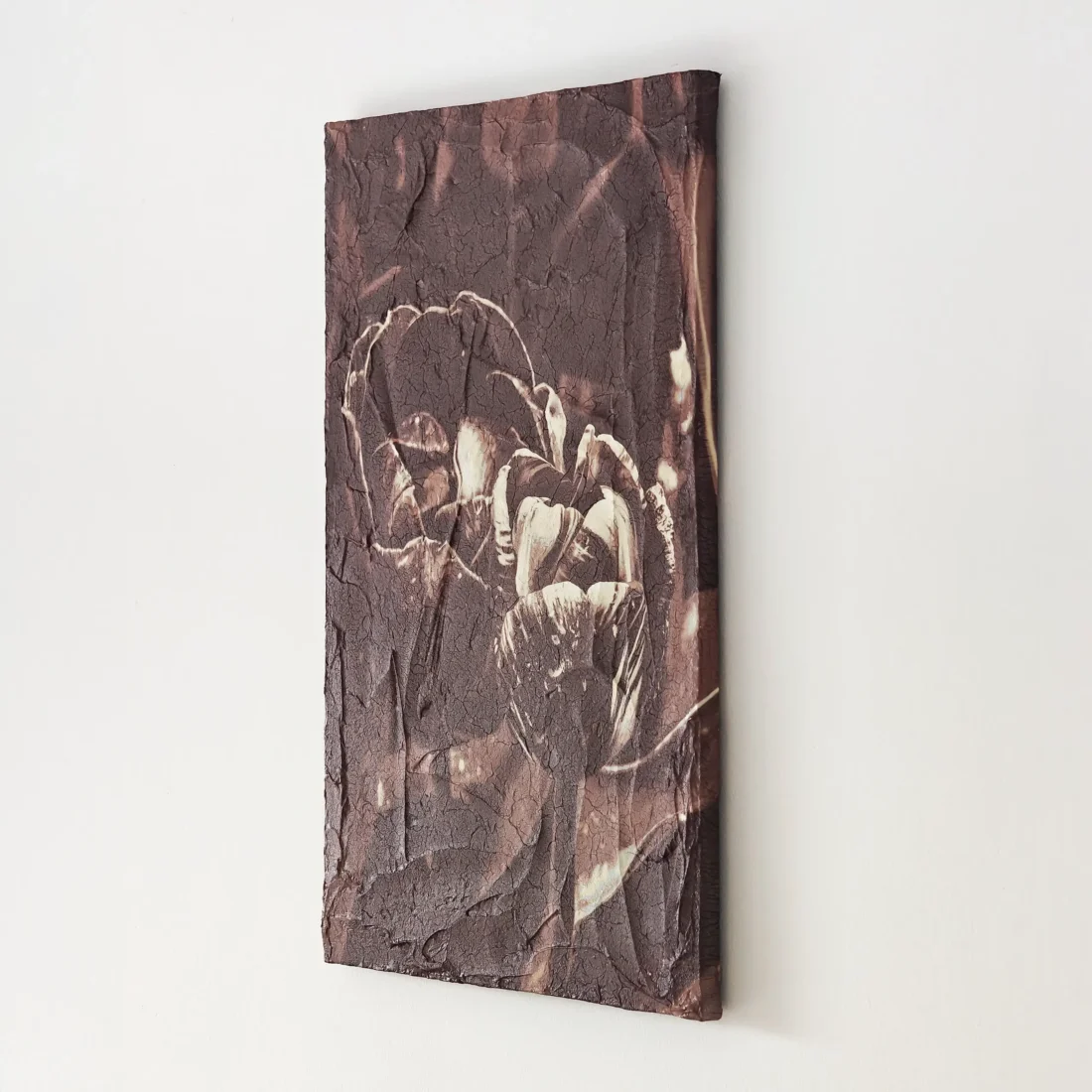
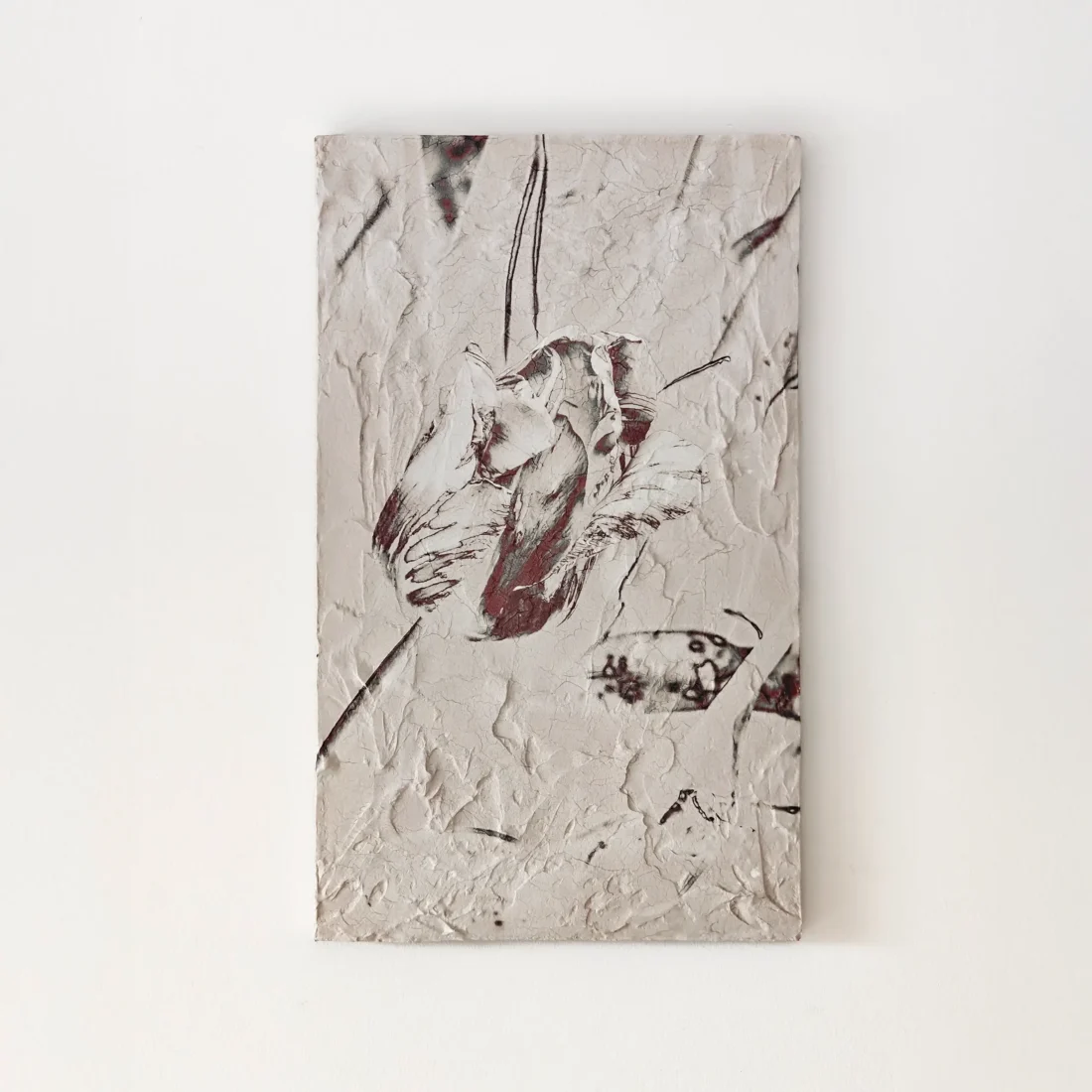
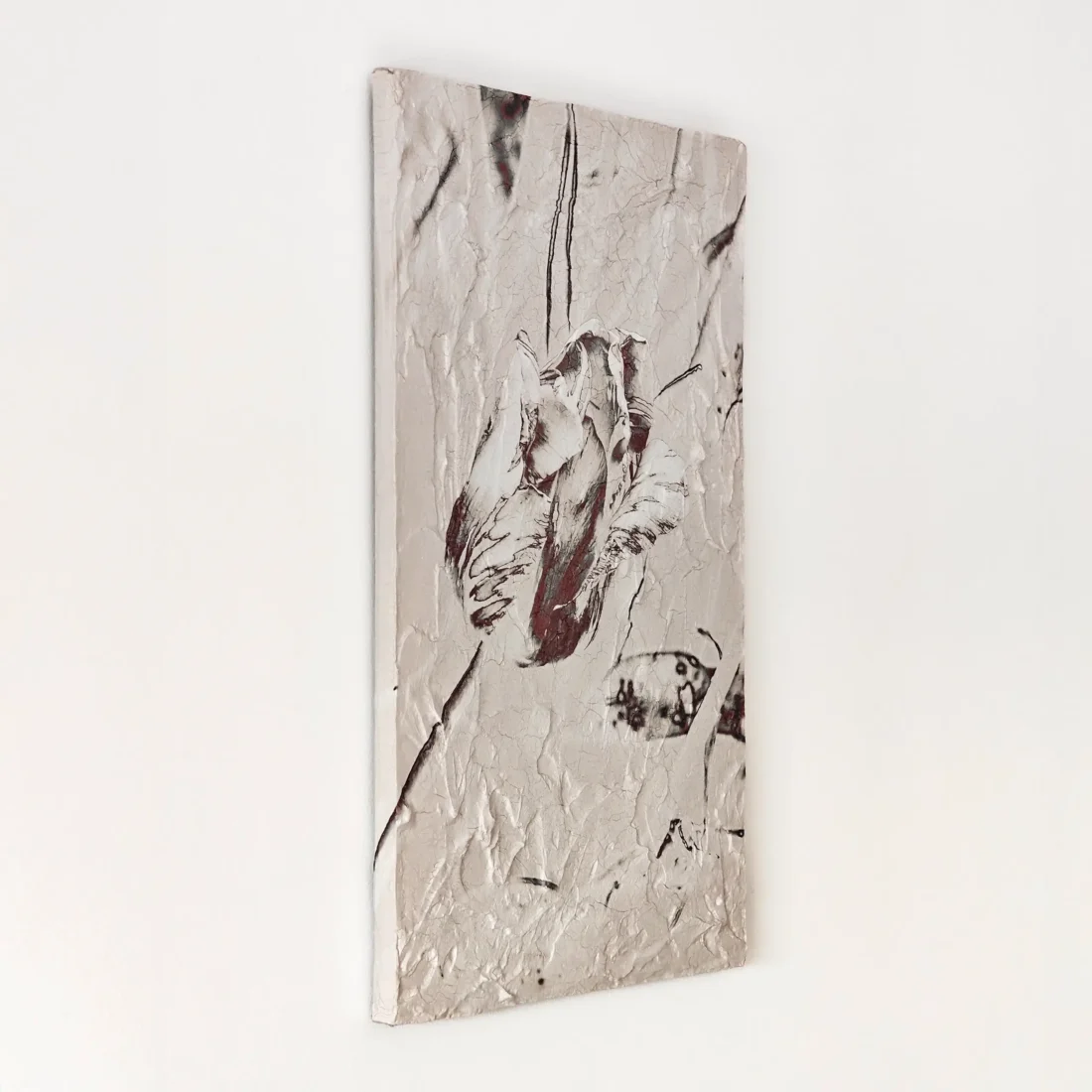
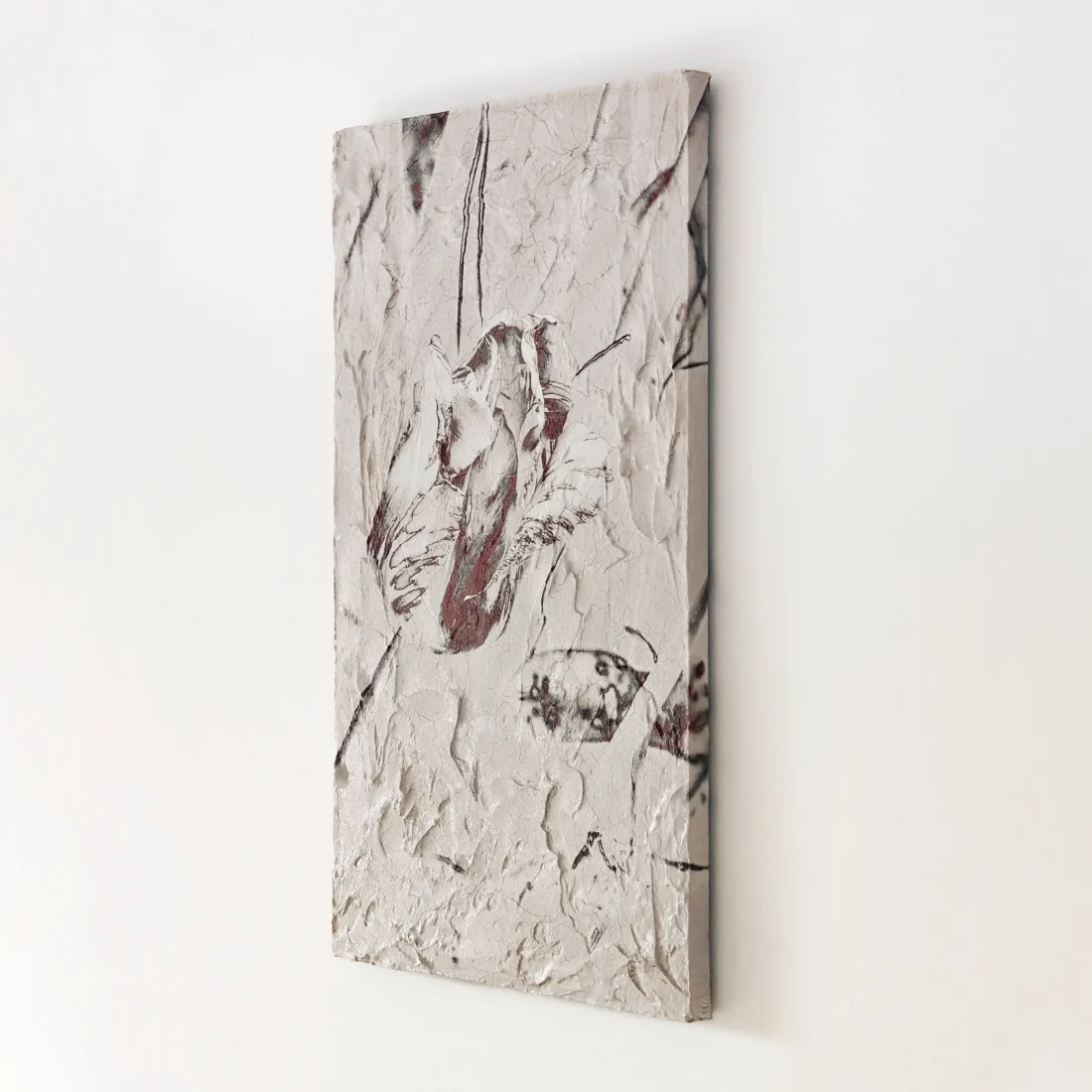
From gallery to studio — our contemporary reading. At COBELIO we read the tulip as geometry and weather: a disciplined stem cutting through a leaf‑sea. We translate that into photo‑reliefs and plaster pieces—quiet, textured surfaces that catch light like a petal at dawn. Explore here out tulip series.







Personalities who loved or decoded the tulip
Beyond scholarship and studio lore—Anna Pavord, Claude Monet, Michael Pollan, and Rachel Ruysch often frame how we think about tulips—these are figures whose ties feel most immediate:

Carolus Clusius — the networker‑botanist. The man who essentially "started it all" in Europe.

Vincent van Gogh: He saw the geometry in the chaos of the fields.

Audrey Hepburn: During the "Hunger Winter" of WWII, her family survived partly by eating tulip bulbs. Later, a white tulip was named in her honor.
Live the Tulip Life (Inspire Action)
📚 For Readers: Dive into The Tulip by Anna Pavord or the classic drama The Black Tulip by Alexandre Dumas.
🎬 For film lovers
Tulip Fever (2017) stages romance and risk amid 17th‑century Amsterdam—workshops, studio light, and a market high on colour.
🍽️ For foodies
Experience true "greenhouse cuisine". Visit pioneers like Restaurant De Kas in Amsterdam, where the menu follows the harvest and seasonal flowers often star on the plate.
🎨 For Art Lovers: Discover our COBELIO Tulip Collection, where we turn that stem-leaf tension into permanent wall sculptures.
✈️ For travellers
-
Keukenhof (Netherlands): For the sheer scale of 7 million bulbs blooming at once.
-
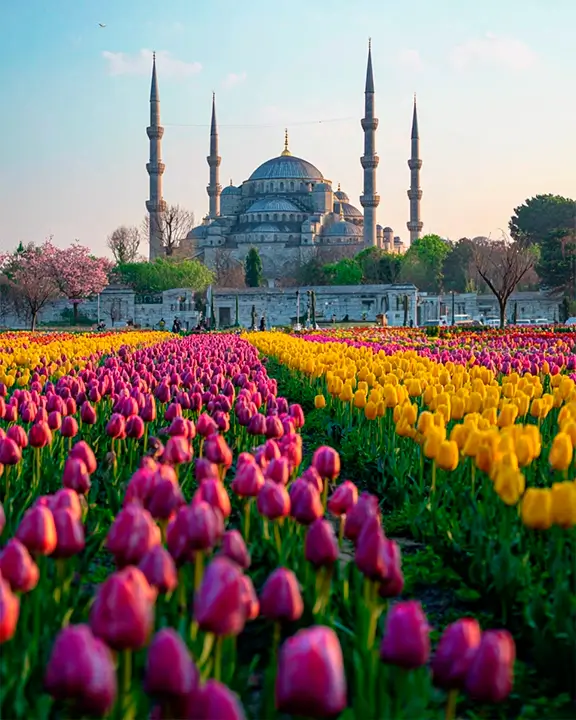
Istanbul (Turkey): To see the flower in its ancestral home, especially in Emirgan Park.
-
Skagit Valley (USA): For vast color fields framed by snowy mountains and fewer crowds.
-
Srinagar (India): To witness Asia's largest tulip garden nestled in the Himalayas.
-
Ottawa (Canada): To see the millions of bulbs gifted by the Dutch Royal Family in gratitude for WWII aid.
🌱 For eco‑activists
Buy from certified organic growers and support the conservation of wild tulips in Central Asia.
Tulip FAQs
When to plant tulip bulbs?
6–8 weeks before the first hard frost (often Oct–Nov). Warm zones: plant pre‑chilled bulbs mid‑winter.
How to keep cut tulips from drooping?
Use a tall vase, cool room, clean water and daily trims; wrap stems in paper for the first hour to rehydrate; keep away from heat/sun and ripening fruit.
Do blue tulips exist?
No. There’s no true blue pigment in tulips; “blue” blooms are dyed or carefully staged hues.
Are tulips poisonous to cats and dogs?
Yes—especially bulbs. Keep beds and bouquets away from pets.
Are tulips native to Holland?
No. They’re indigenous to Central Asia and moved west via the Ottoman world before flourishing in the Netherlands.

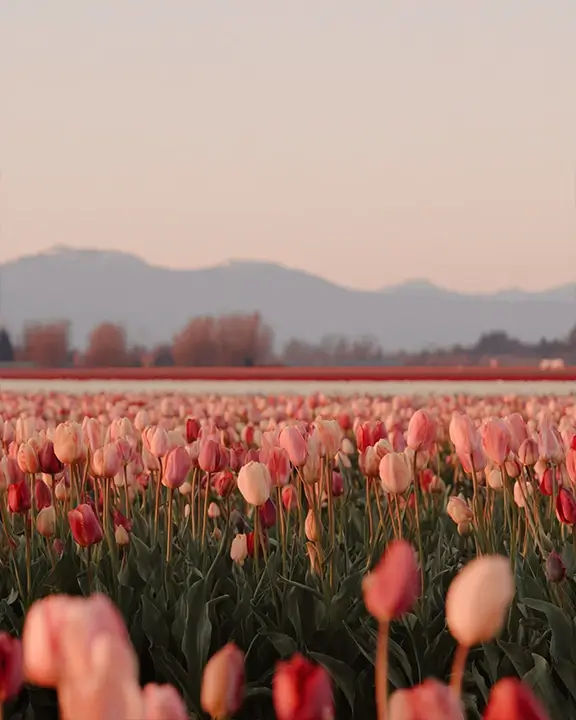
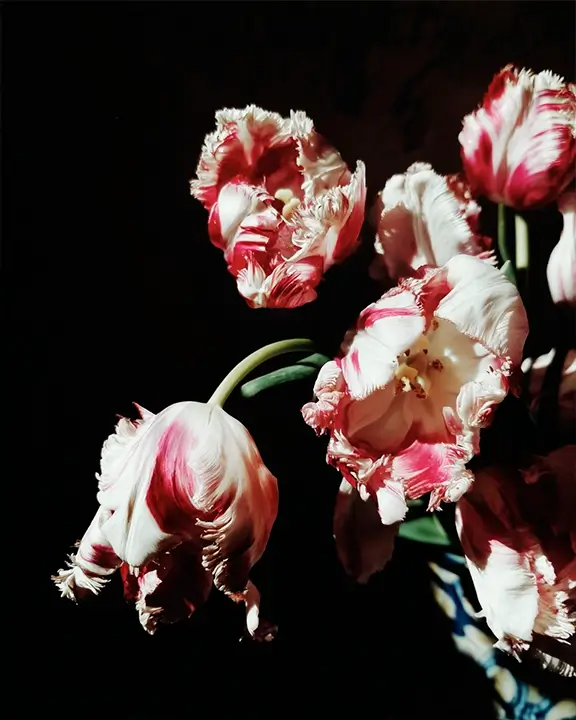
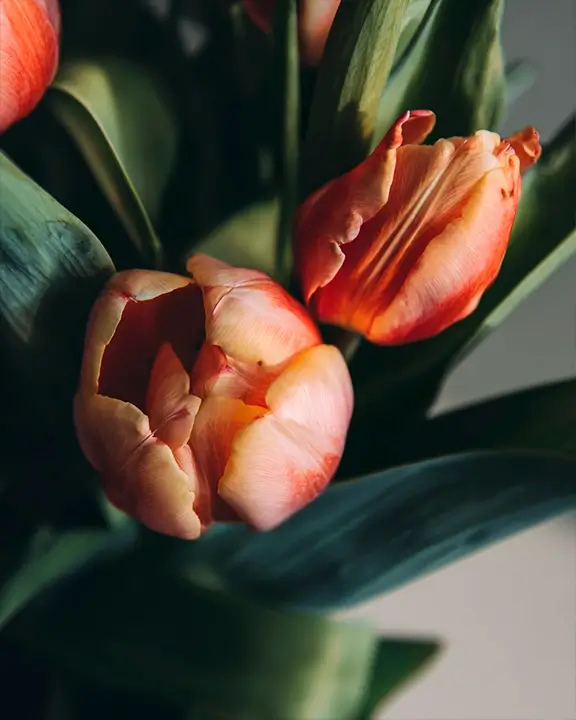
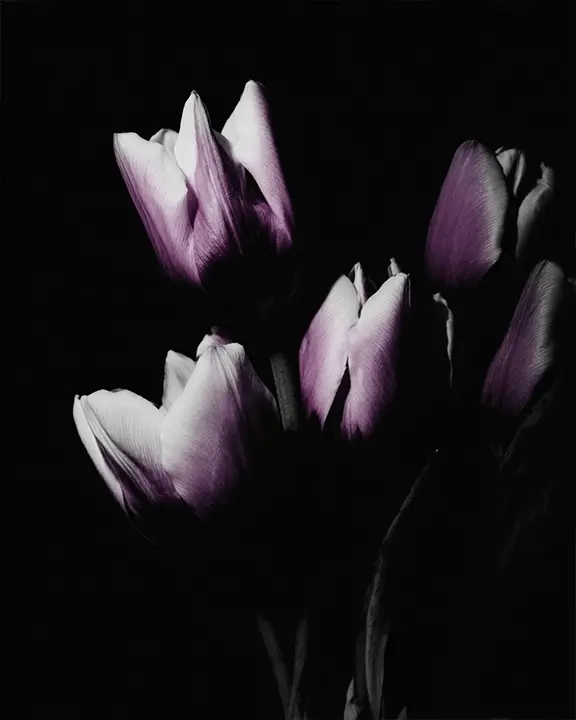
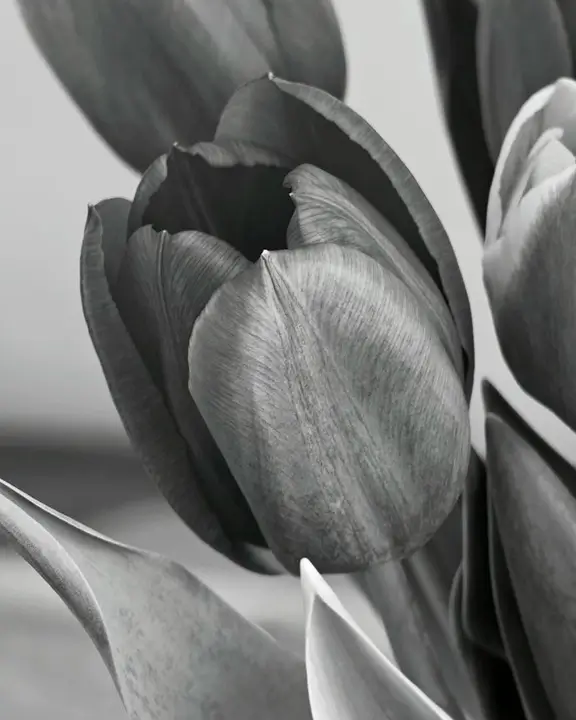
From Nature to Canvas
How do you capture a tulip beyond its famous color?
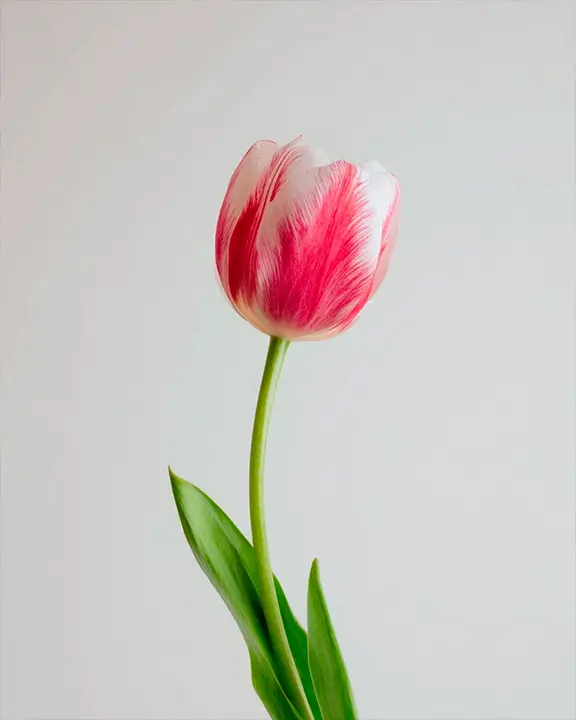
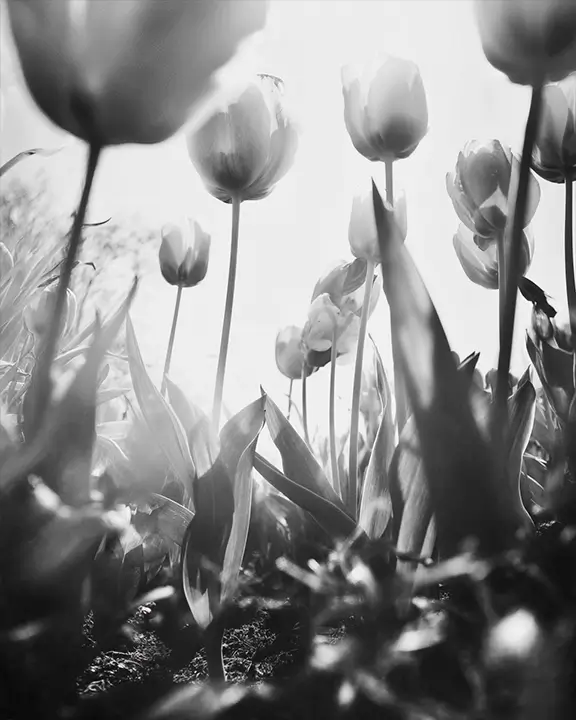
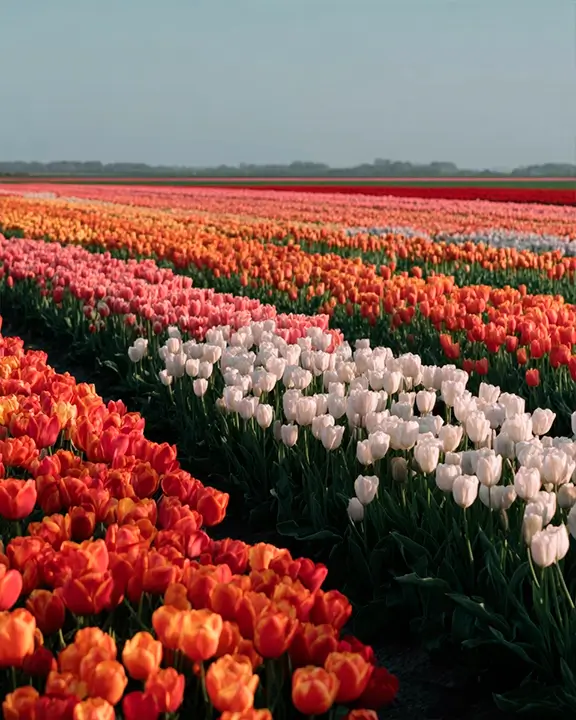
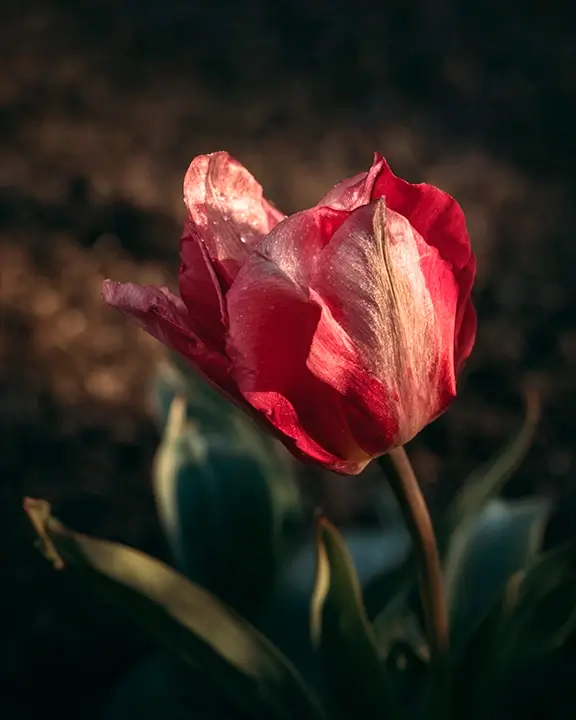
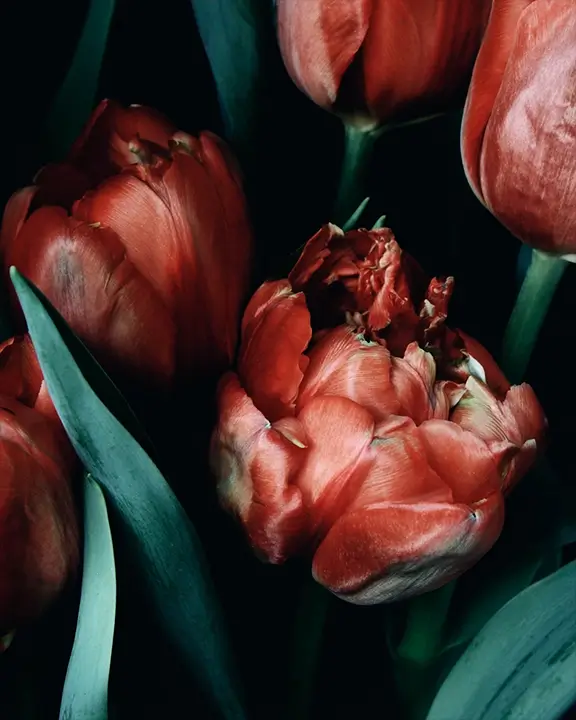
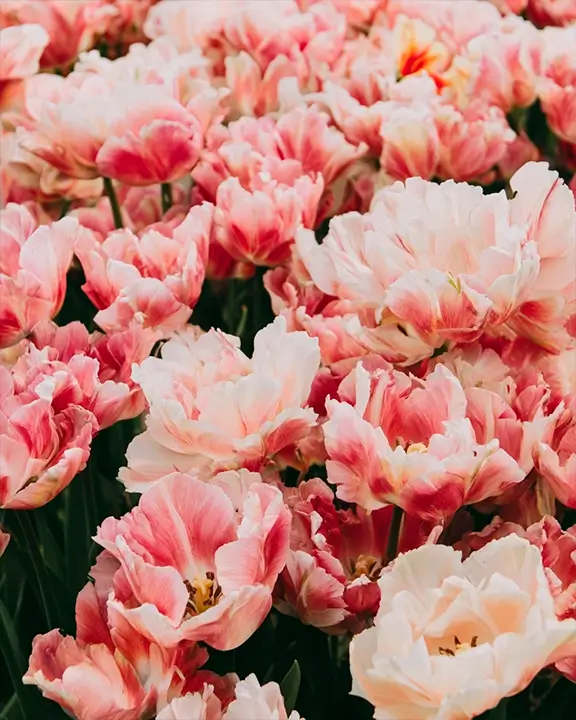
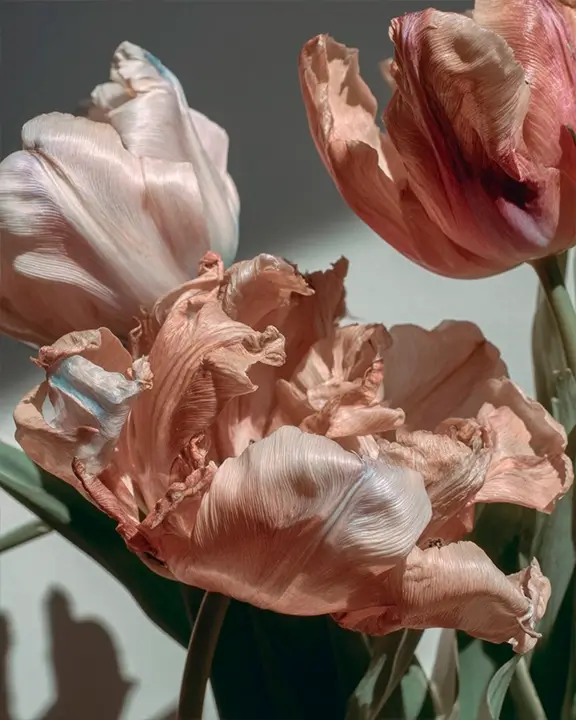
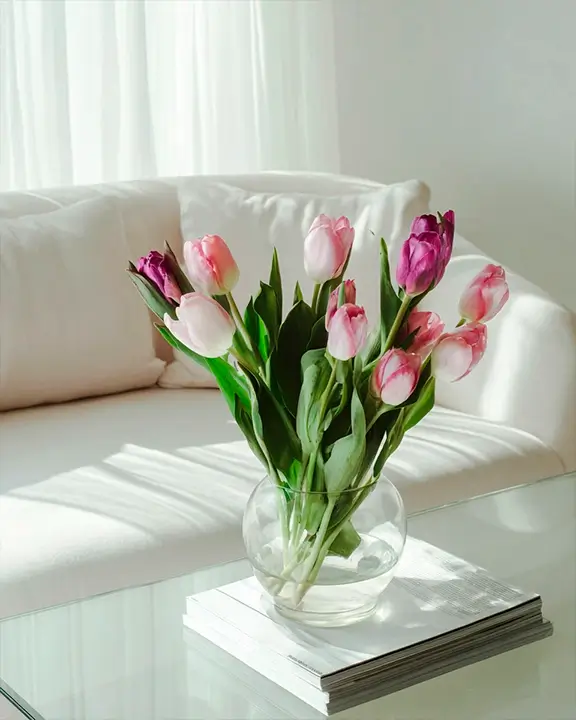
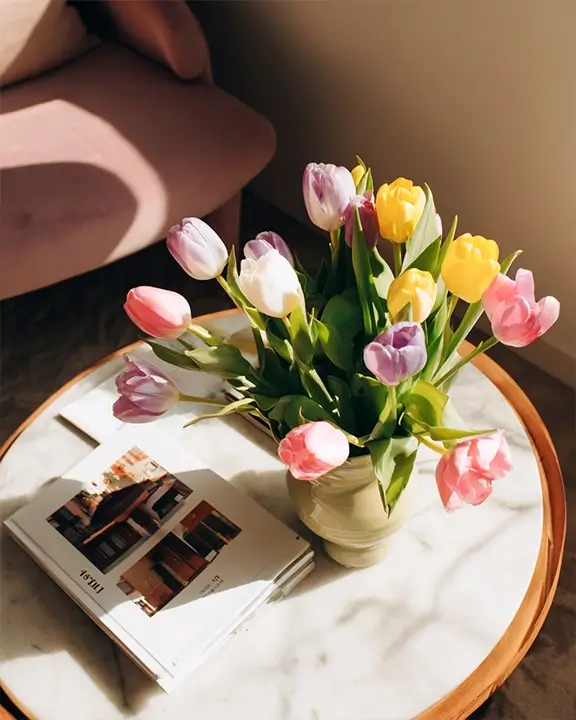
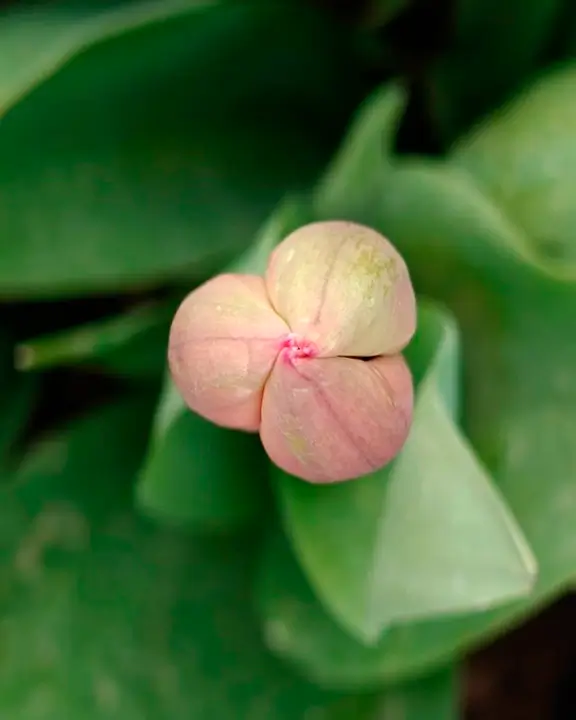
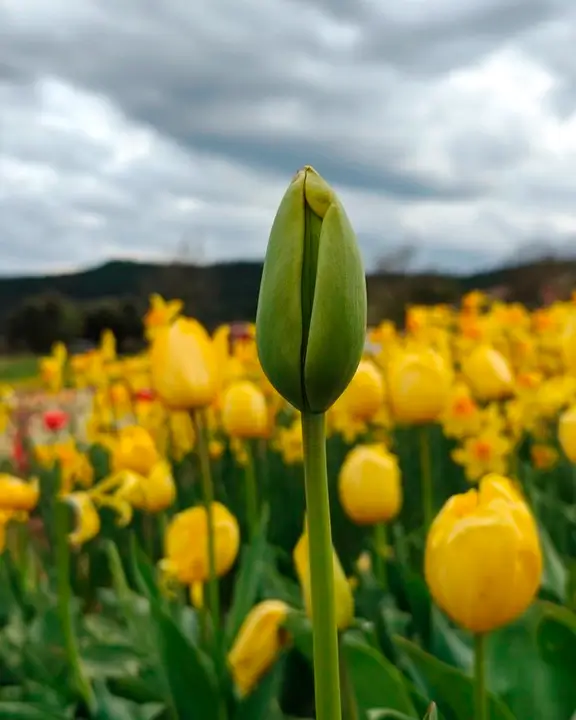
That was our challenge at COBELIO. We walked through the fields near Barcelona and realized that the beauty wasn't just in the vibrant reds or yellows—it was in the movement. The way the rigid, proud stem cuts through the chaotic, waving sea of leaves.
In our studio, we use plaster and light to freeze that movement. We carve photo-reliefs and sculpt surfaces that catch the shadows, adding a tactile dimension to the plant’s beauty. Our collection currently features eight wall artworks, each one a tribute to this balance of discipline and wildness.
If you are looking for art that brings the quiet drama of nature into your home, this is it.