How Much of a Large Wall Should Art Cover?
Somewhere between half and three-quarters, depending on whom you ask. That is the problem.
The figure you meet most is four-sevenths to three-quarters of the wall’s width. Others say two-thirds, about 60 per cent, or at least half. Put a four-metre wall through all of them and the advice runs from 120 to 300 cm of art: same wall, a factor of two and a half.
Nobody says where four-sevenths comes from, but the arithmetic gives it away. Another rule in circulation asks for a margin on each side of the picture equal to three-eighths of its width. Picture plus two margins is 1.75 times the picture, so the picture is the wall divided by 1.75: 0.571, four-sevenths. It isn’t a proportion with a meaning of its own; it is a comfortable margin, written backwards.
Now try it on a wall five metres wide and 2.70 high. The rule asks for 2.85 to 3.75 metres of art. Size the height the same way, as some guides suggest, and a piece of 285 × 154 cm still covers only a third of the wall. Whatever you hang, most of a large wall stays empty. The question is whether the empty part looks chosen.
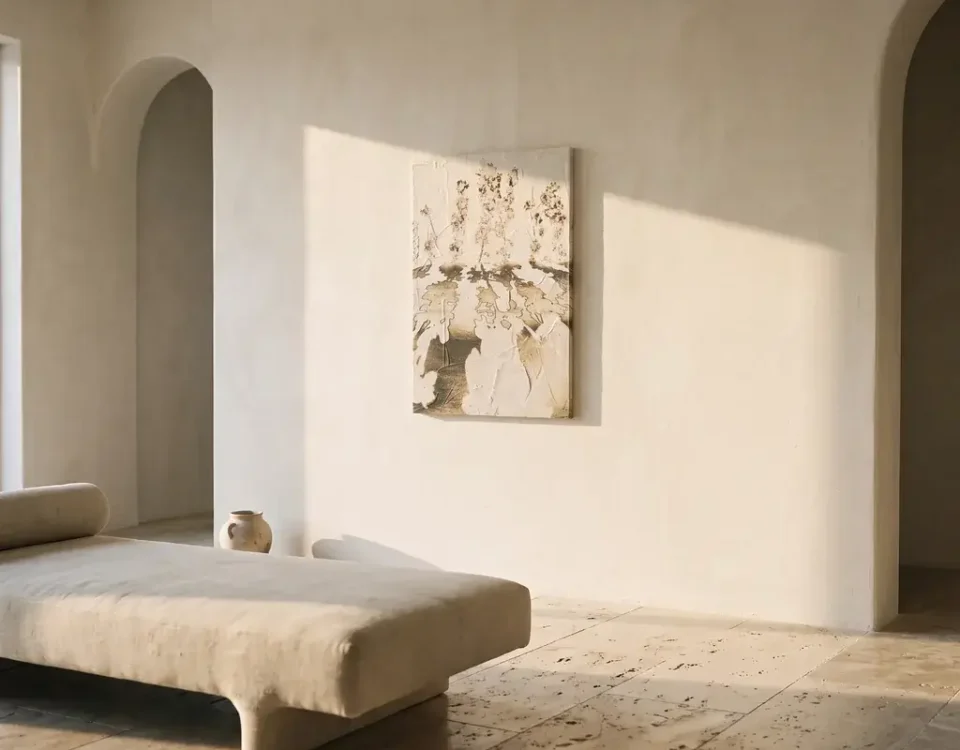
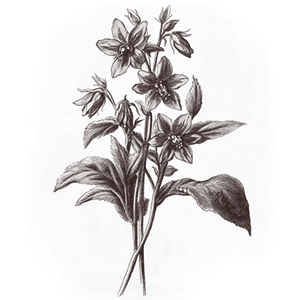
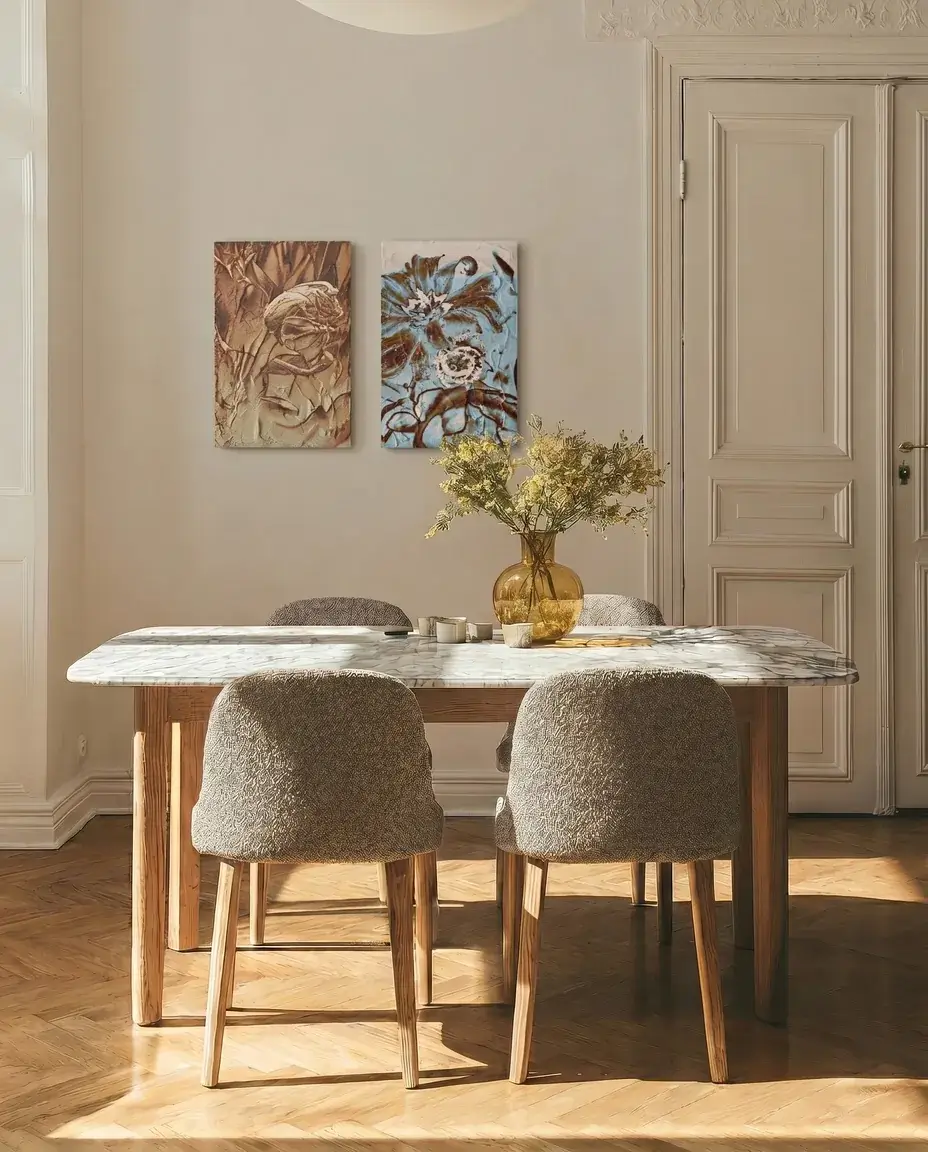
So the rule is right, but pointed at the wrong thing. Use it on a zone: the stretch that a sideboard, a bench, a door or a window already marks out. A five-metre wall with a 160 cm sideboard is, for the art, a 160 cm wall, and the rule asks for 91 to 120 cm. ‘BORAGE I. The Dinner’, at 90 cm wide, sits at the lower end of that. Its poem asks the question this whole article turns on: “How much space does happiness actually need? A tabletop.”
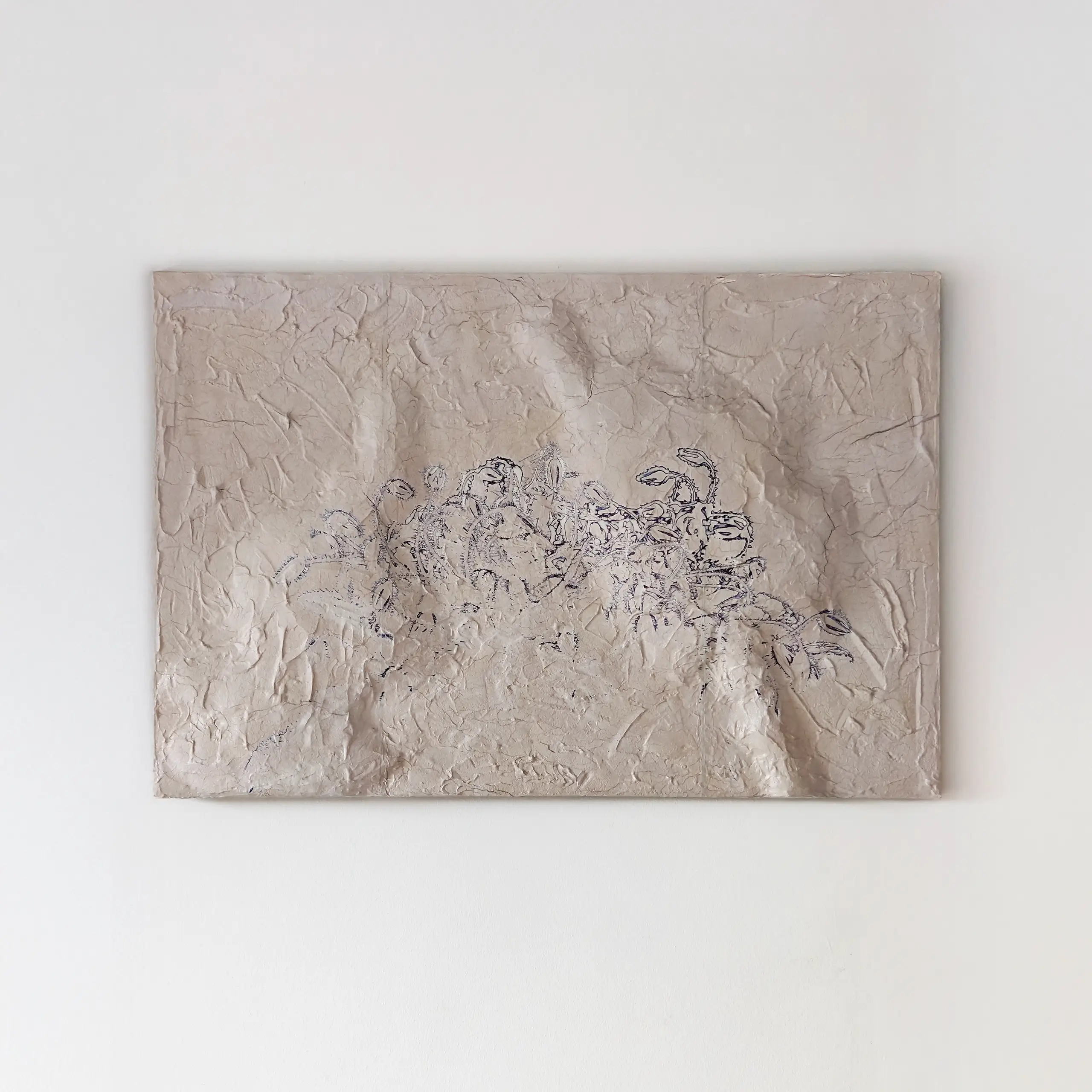
A five-metre wall at scale. Even the size the rule asks for leaves two-thirds of it bare; a piece sized for the sideboard looks chosen.
The short answer, if you only want the numbers
- Size for a zone, not the whole wall: four-sevenths to three-quarters of it.
- One piece where people stop; a pair where the wall is seen from afar and walked past.
- Gap inside a pair: 5 to 10 cm.
- Centre at 145 cm, unless furniture sets it.
- Beside a window: two to two and a half times the distance from the corner to the window’s middle.
Where Do You See a Large Wall From?
From two places, and that is what makes it different from every other wall in the house.
A wall above a sofa has one spot you look at it from. A large wall usually has two: the far end of the room, five or six metres away, and the path along it, a metre away, as you walk to the table or the door. You see it whole only from far away, and you see anything in it only from close up.
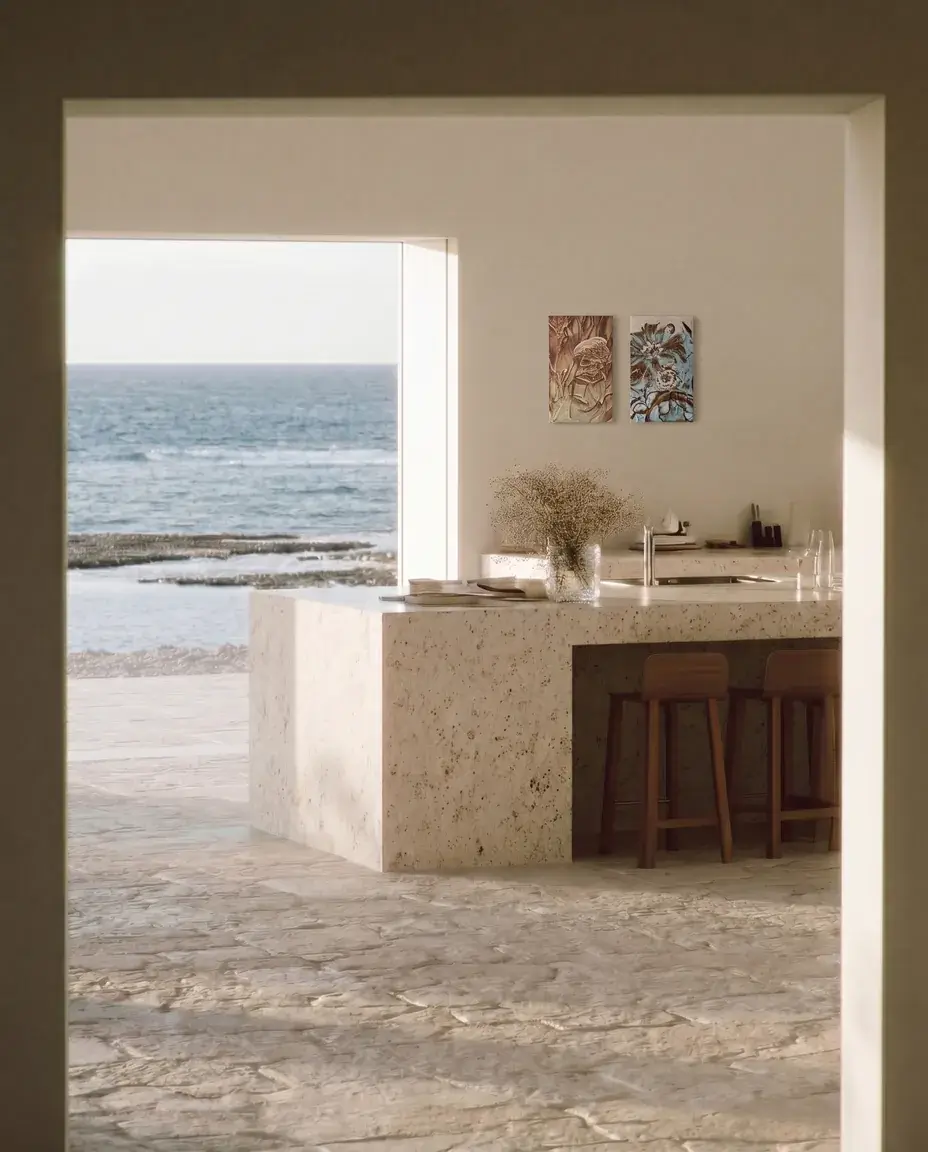
In the article on living rooms we worked out a ruler for this: a piece made from one of our photographs reads the way it was taken from a little over two diagonals away. From five metres, that asks for a diagonal of more than two metres, which hardly anything that fits through a front door has. A 90 × 60 piece seen from the far end is at more than four diagonals; a pair of 65 × 81 side by side, at about three.
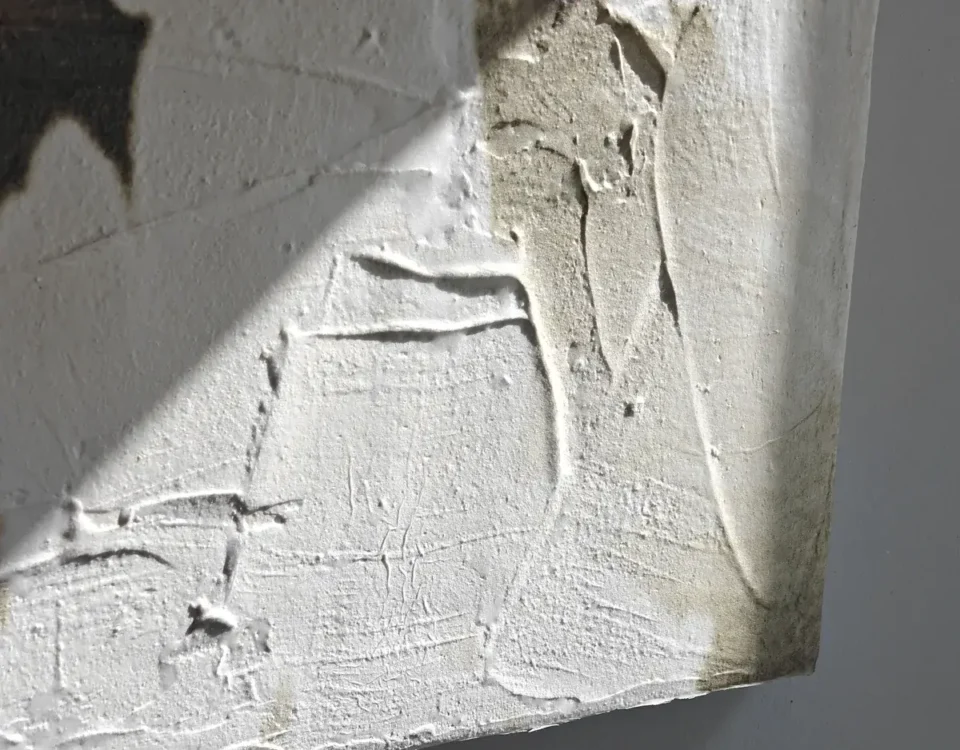
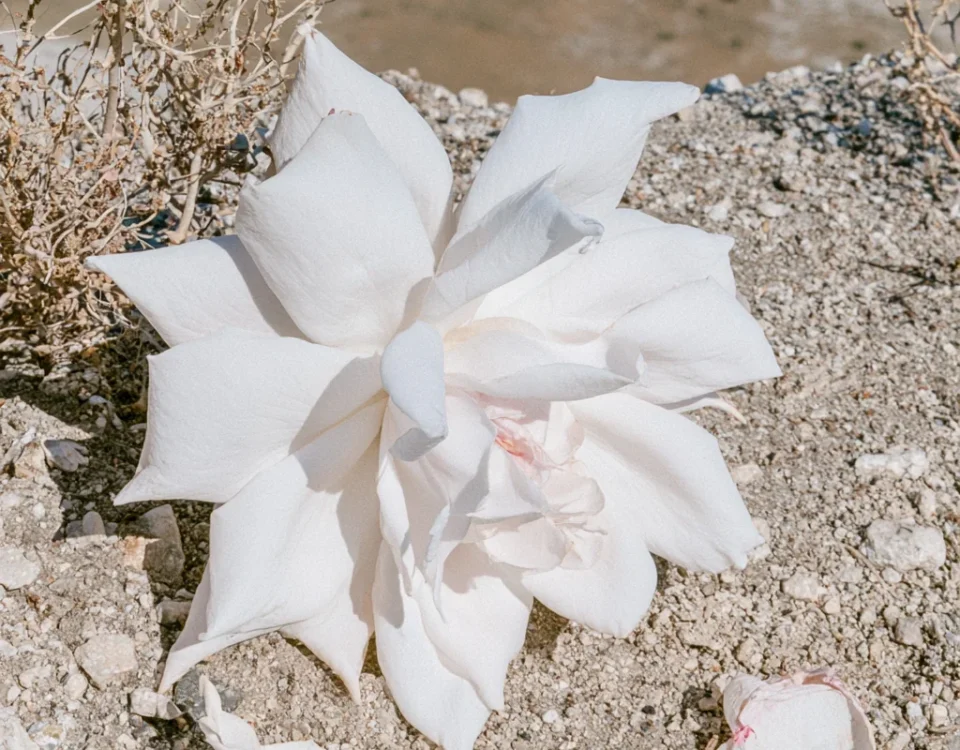
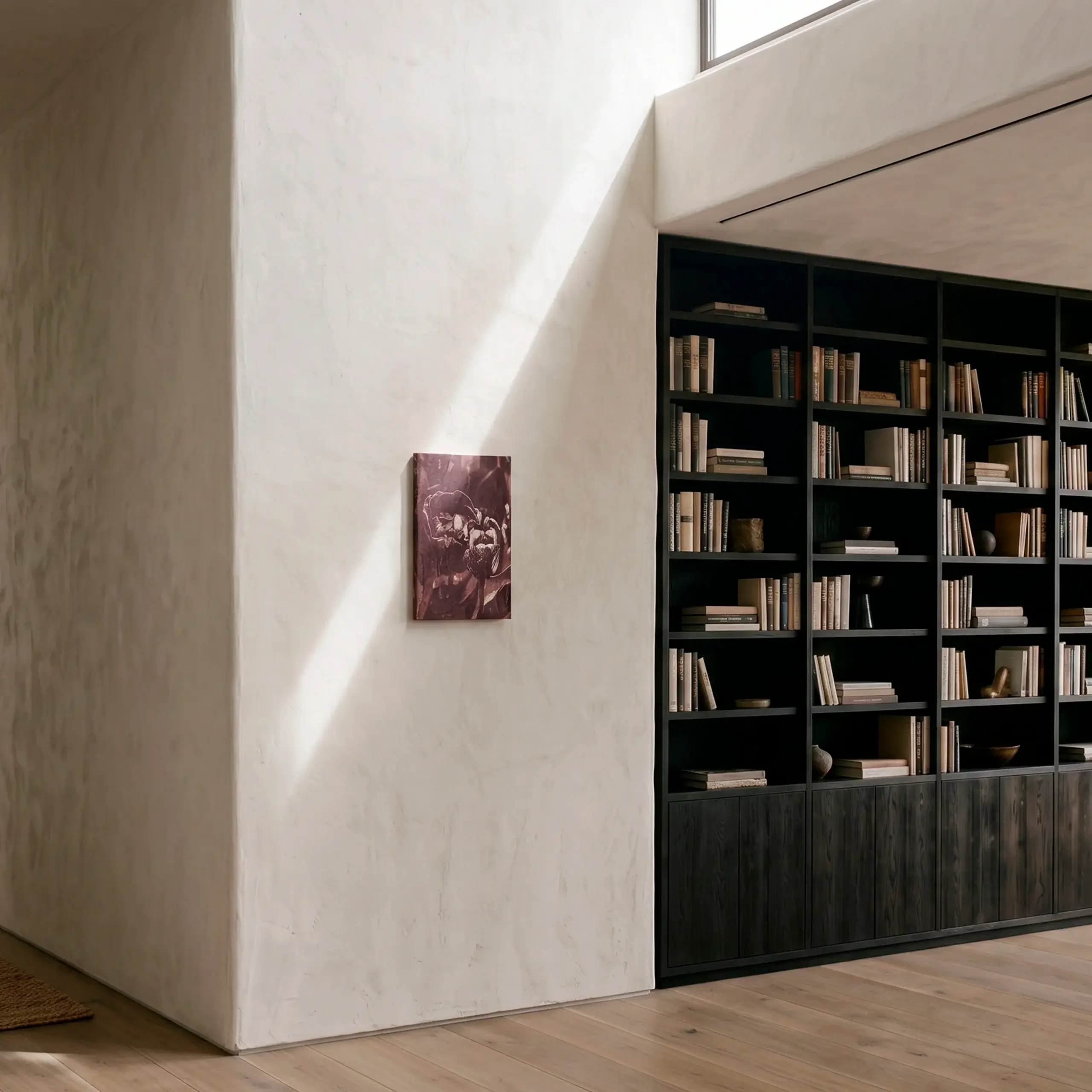
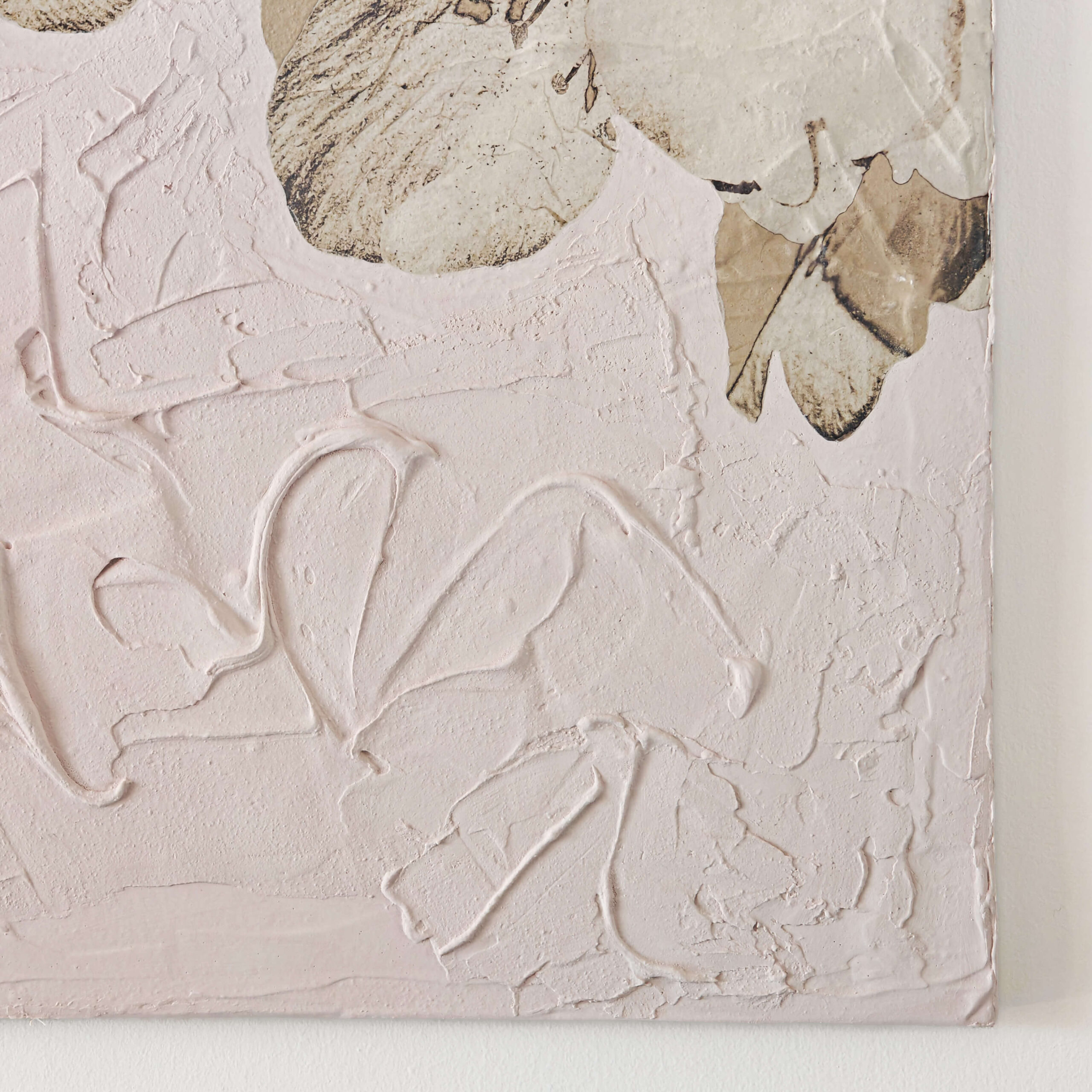
So from across the room what reaches you is the shape on the wall, its colour, the air around it and, on a relief, the light on its surface. The image arrives when you walk up to it. That is why a piece like ‘ROSE I. Ink Portrait’ holds a large wall: from the far end it is a single black gesture on white, which carries across any room; at a metre, the splashes of ink and the plaster underneath appear. One view to recognise it, another to read it. Choose for both.
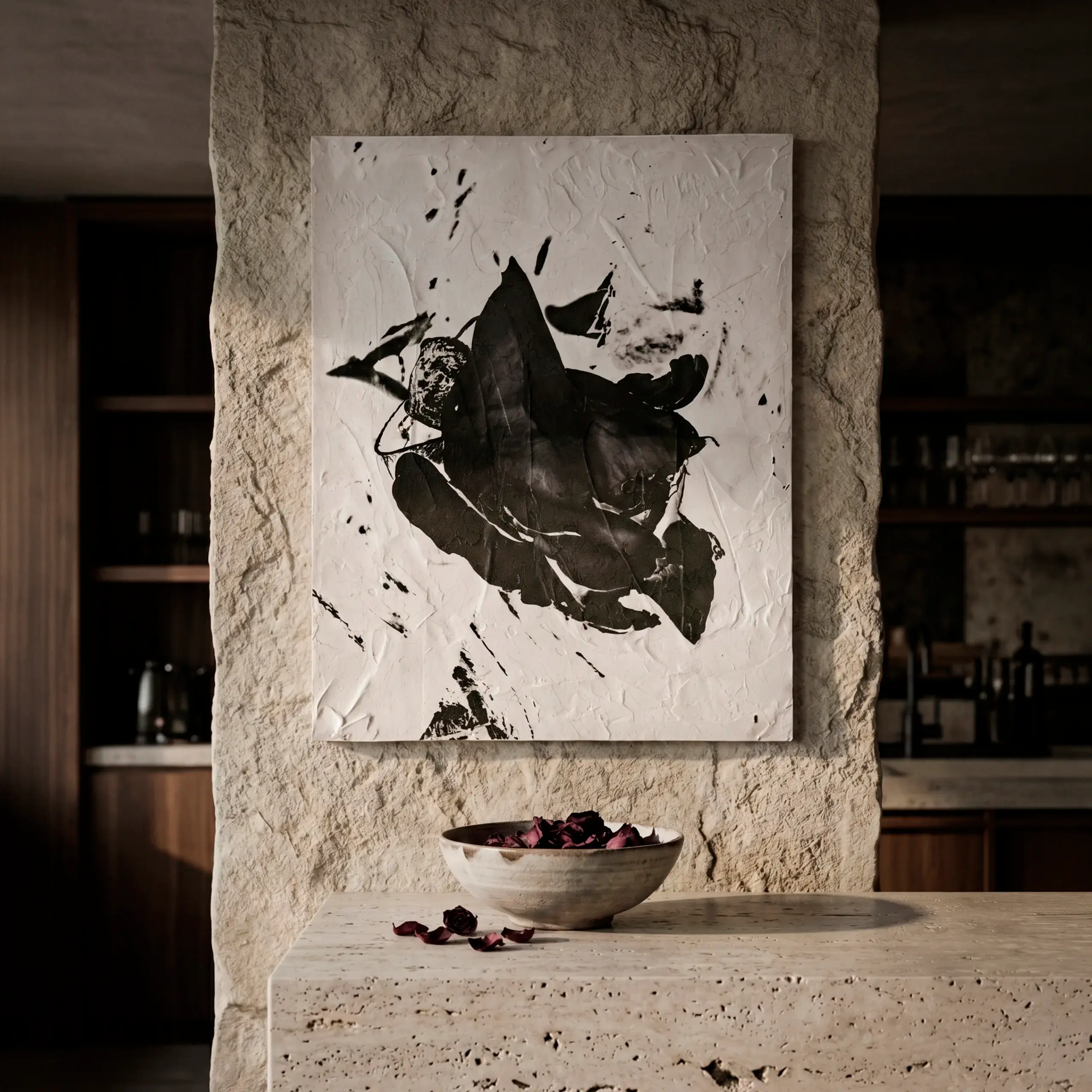
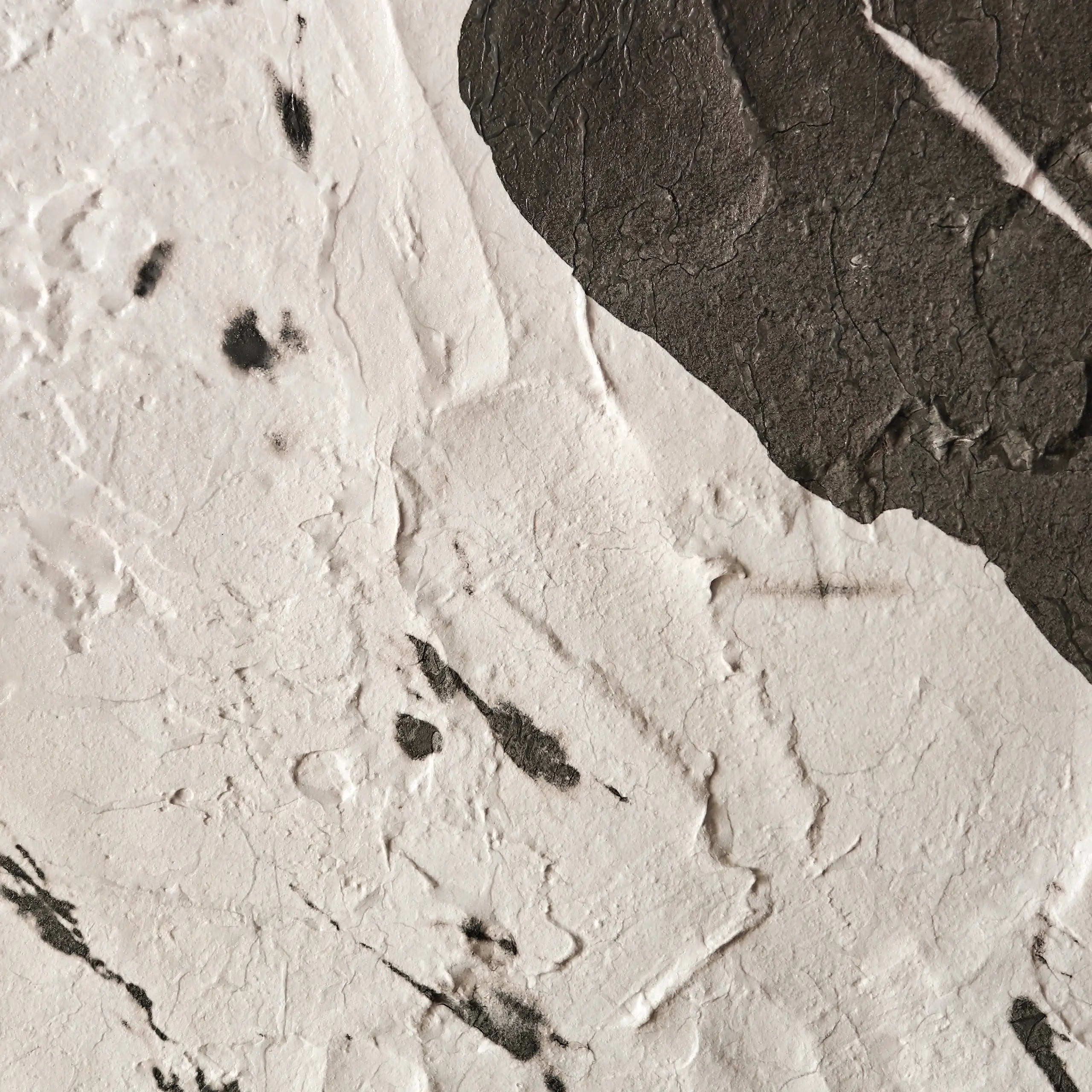
‘ROSE I. Ink Portrait’ from across the room and from up close. From far away, a gesture; up close, the plaster.
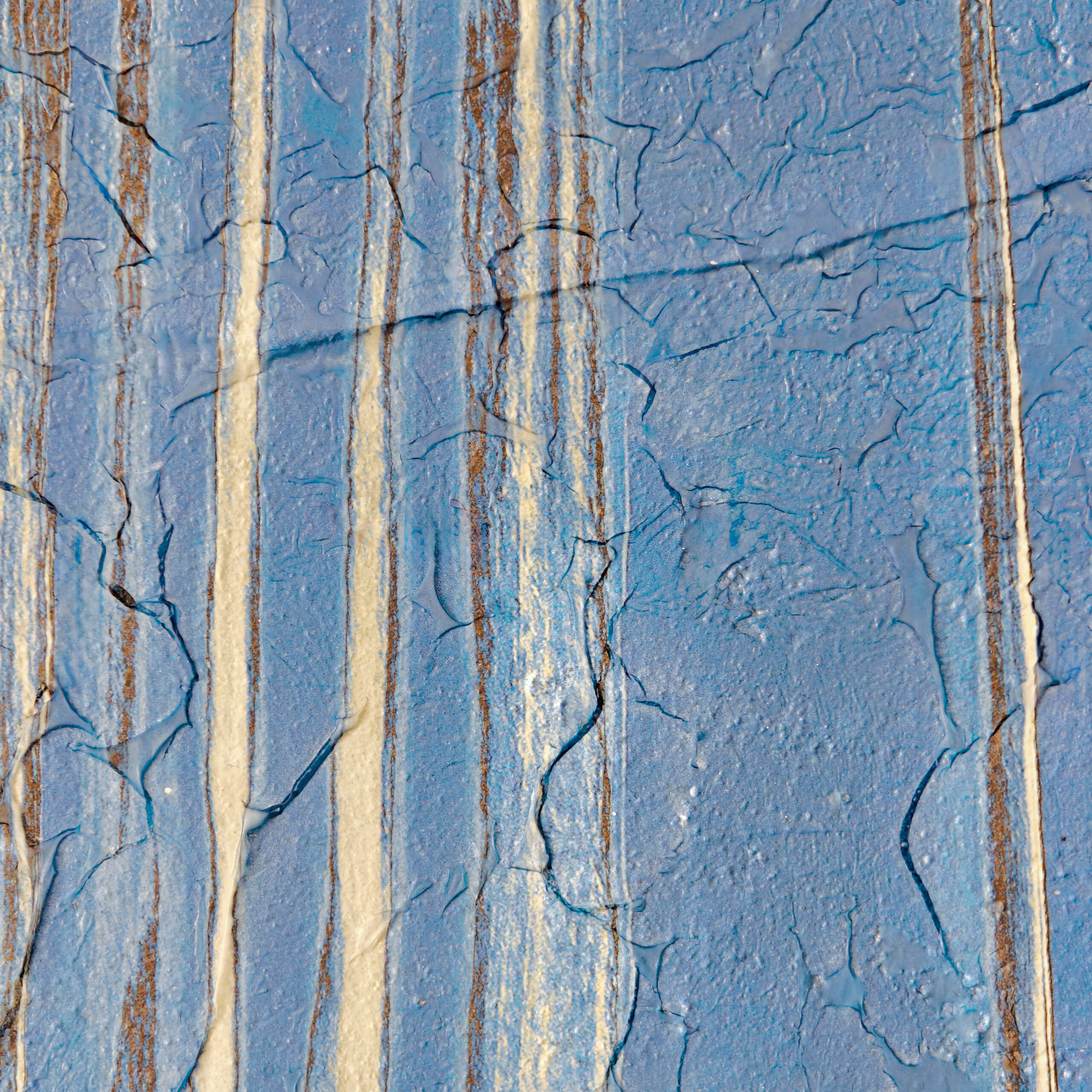
A note on the wall, 1951
In April 1951 Barnett Newman put up a typed note in his exhibition in New York: “There is a tendency to look at large pictures from a distance. The large pictures in this exhibition are intended to be seen from a short distance.” One of the paintings in the room was more than five metres wide.
The rules say the bigger the picture, the further back; a painter of enormous pictures asked, in writing, for the opposite.
Large Wall Art for a Living Room: One Piece or a Pair?
Decide by distance, not by the size of the wall.
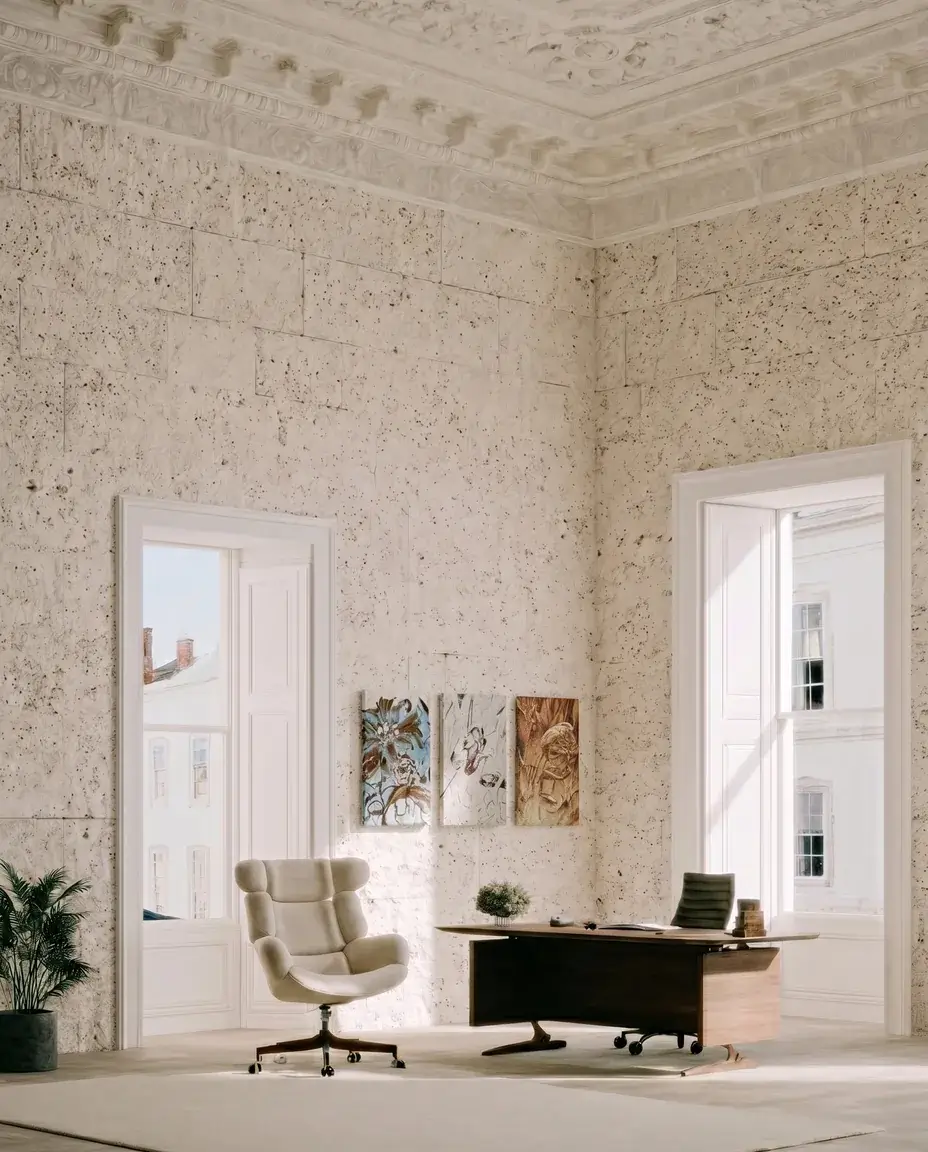
One piece, where there is somewhere to stop. A sideboard, a bench, a reading chair, the end of the dining table: a large wall almost always has a spot where people pause. Size the piece for that spot (at two to two and a half metres, a 65 × 81 or a 90 × 60) and centre it there, not on the wall. The rest is air, and the air is doing work.
A pair, where the wall is seen from far away and walked past. Two pieces of the same size give the far view something to hold, and each keeps its own distance when you come close. ‘ROSE I. Ink Portrait’ and ‘ROSE XV. Lying in Red’, both 65 × 81, make 140 × 81 with ten centimetres between them: from the far end of a five-metre room, about three diagonals instead of nearly five.
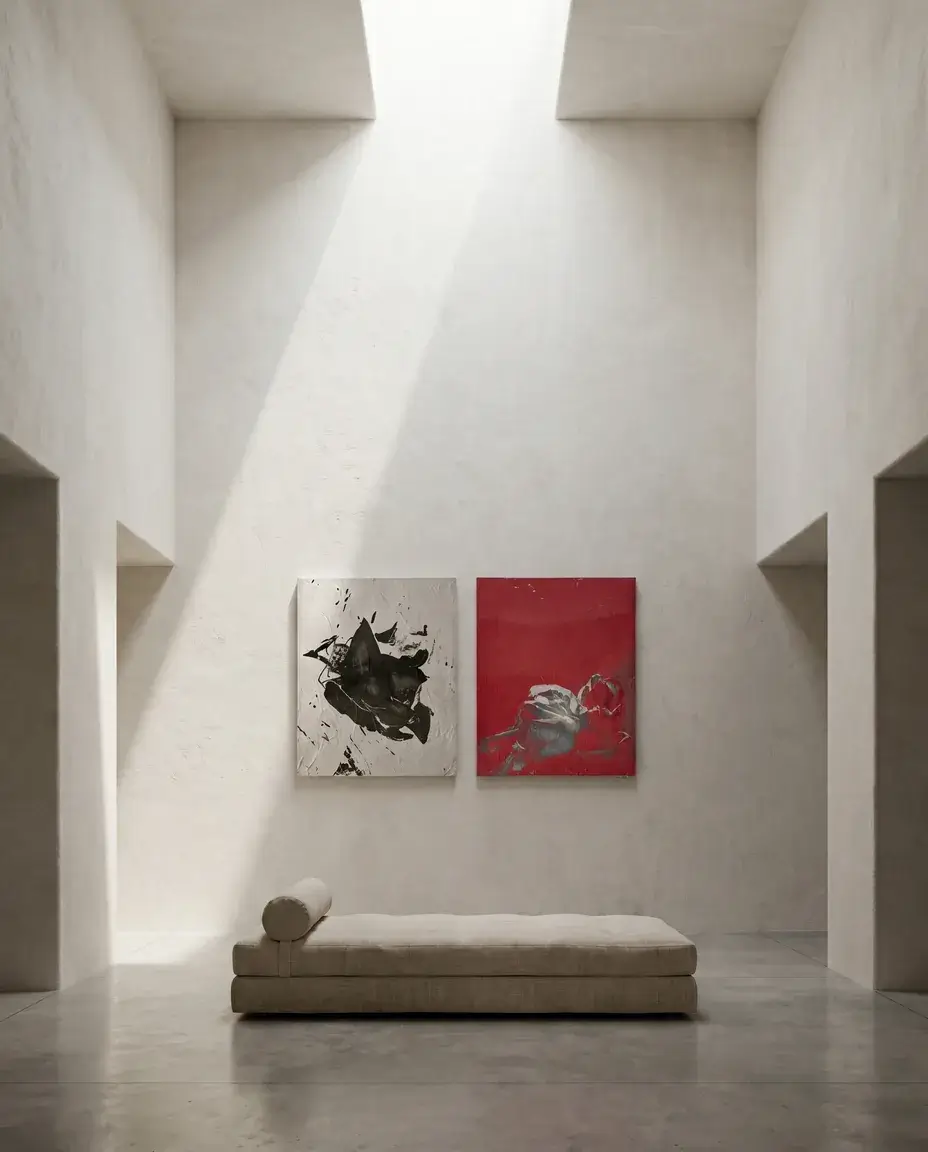
On a relief, the gap does more than on a flat picture. With light from the side, the edge of a panel about two centimetres deep throws around four centimetres of shadow onto the wall. In a five-centimetre gap that fills almost everything: the gap reads as a dark seam and the pair as one object. At ten centimetres a line of lit wall survives, and you see two pieces answering each other. Both are good; they are different pictures. Why never twenty is in How High to Hang Art.
With light from the side, a 5 cm gap fills with shadow and the pair reads as one object; at 10 cm, a line of lit wall keeps them two.
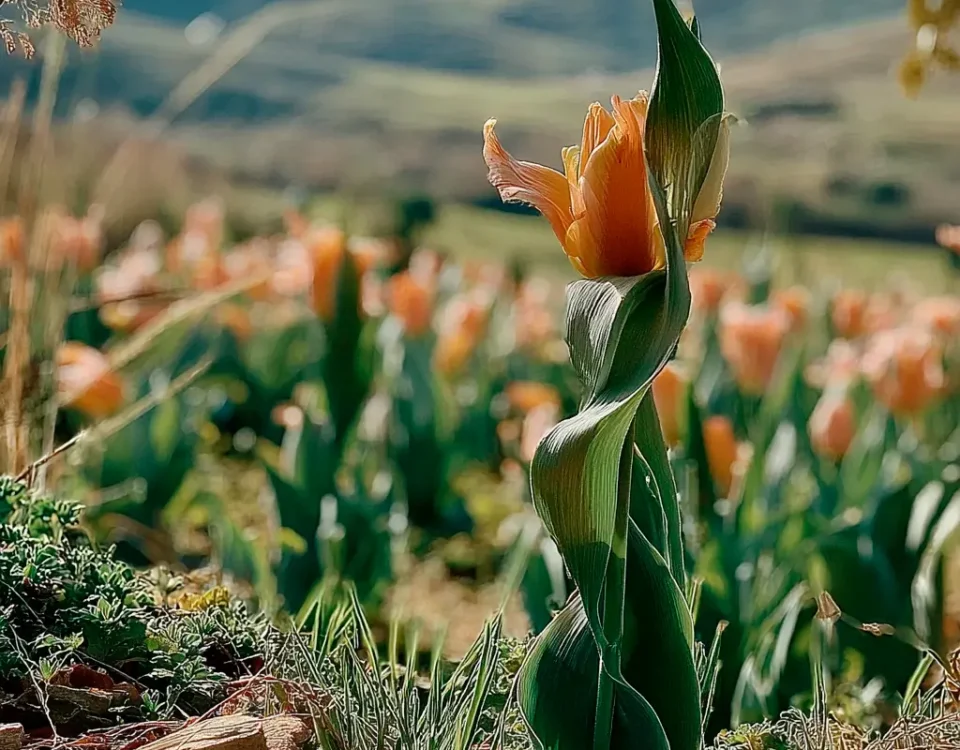
A smaller pair has a different job. Two 33 × 55 side by side make 74 cm, less than one wide piece. Hung one above the other, eight centimetres apart, they make a vertical of 33 × 118: the answer for the tall, narrow stretch of a large wall, between a door and the corner or between two windows. ‘TULIP VIII. Amber Hour’, in a light “the colour of late afternoon”, above ‘TULIP X. They Bloom Anyway’, at “the hour when gardens turn to shadow”: a column that goes from afternoon to dusk.
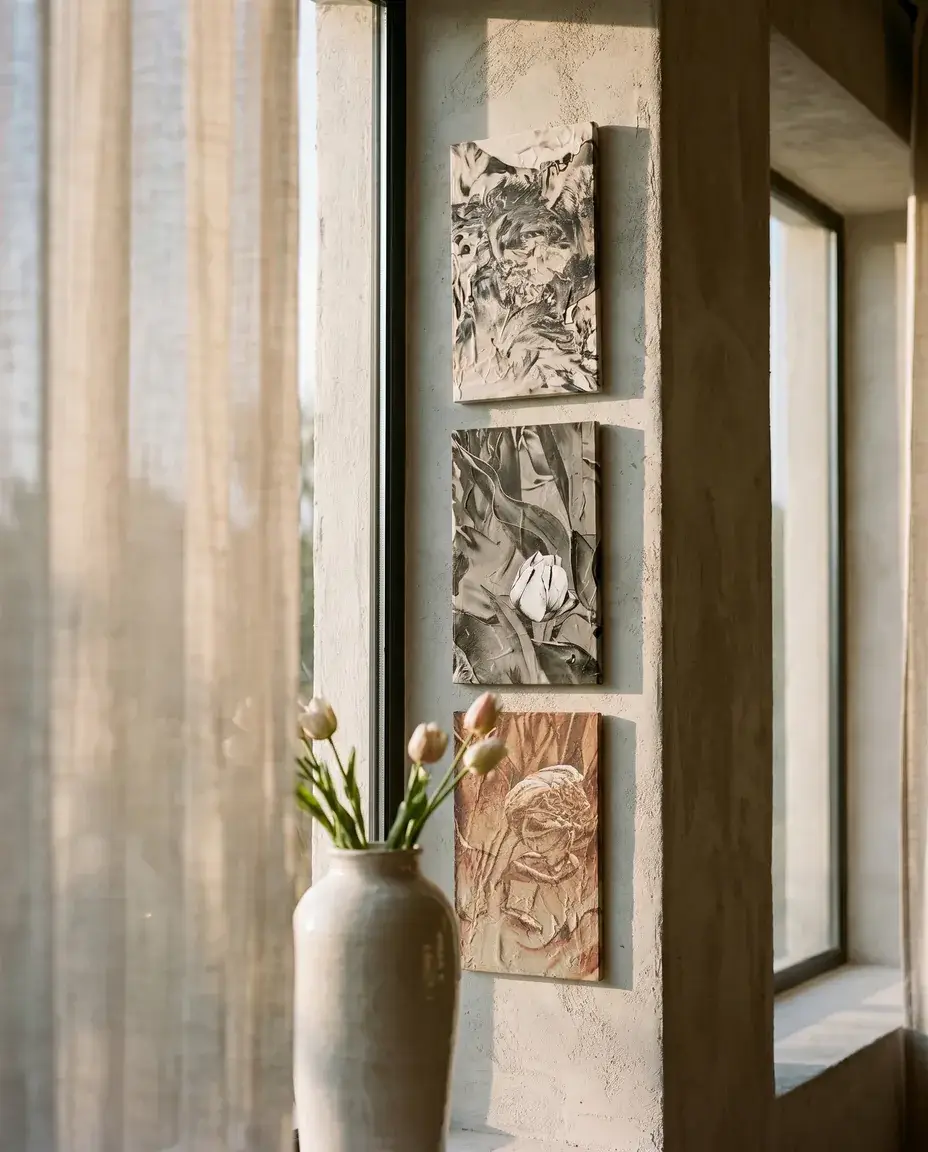
A gallery wall, where the wall is a passage read piece by piece. On a staircase or in a corridor nobody looks from far away, and many pieces close together are right. From across a room, though, a gallery wall reads as a pattern of frames rather than as a picture. A good answer to a different question.
The same five-metre wall three ways: one piece where you stop, a pair for the far view, a column for the narrow stretch by the door.
What Does Light Do Along a Long Wall?
None of the guides mentions this, and for a piece with a surface it matters most.
In the article on light we said the best wall in most houses is the one beside the window, the one daylight runs along. On a large wall that is half the answer, because the light doesn’t arrive the same way all along it. Near the corner it meets the wall almost head-on and flattens anything with a surface; far down the wall it is so slanted that shadows swallow the picture. In between is a stretch where it arrives at the 20 to 30 degrees that suit a relief. Measure from the corner to the middle of the window and multiply by two and by two and a half: the stretch in between is the one. With the window centred one and a half metres from the corner, that is roughly three to four metres along the wall. Windows are wide and daylight comes from many directions, so think of it as a band, not a line.
Four things follow.
A wide piece is lit unevenly across its own width. Centre a 90 cm piece three metres from the corner in that room and one edge gets its light at 30 degrees, the other at 23: about a third more shadow at the far edge. On a relief, one side reads a little more as image and the other as surface. ‘BORAGE I’, one of our deepest reliefs, belongs in the middle stretch: at the far end, a deep relief throws more shadow than image.
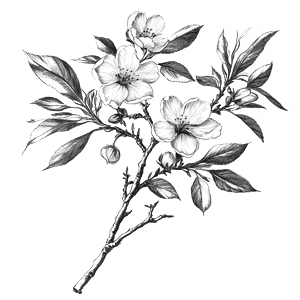
In a pair, the piece further from the window is the more sculptural one. Hang there the one whose surface you love most. When we photographed the branch of ‘ALMOND TREE I’, we dropped the light almost level with the petals so that every volume would show; the far side of a pair gives it that light back.
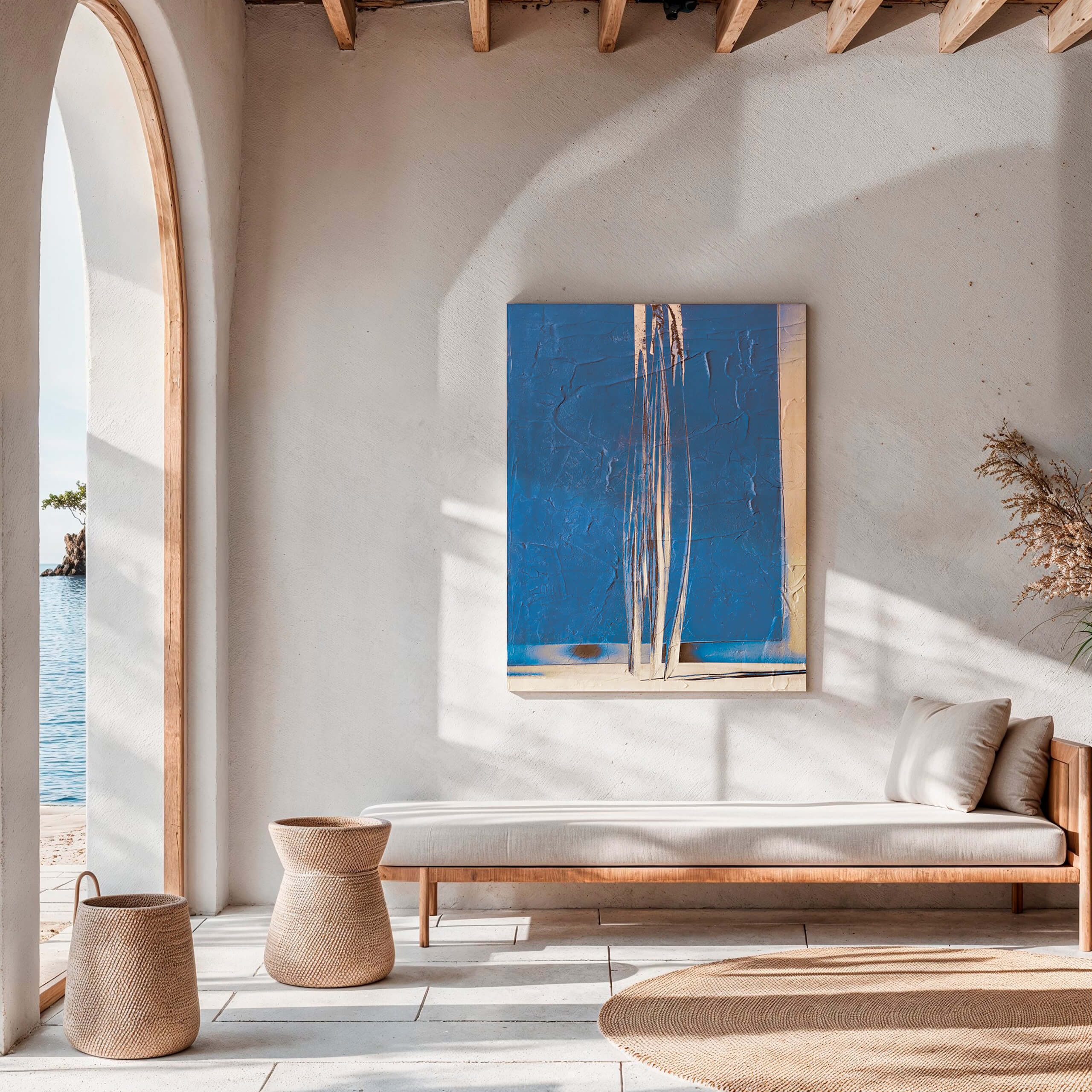
The hour moves along the wall. Direct sun from a side window slides along it as the day goes on, and reaches much further in winter, when the sun is low. Where you hang a piece decides at what hour it gets its raking light, and whether the daily patch of sun lands on it: check in December as well as in June.
From across the room, the light is what carries. A three-millimetre ridge in light at 25 degrees throws about six millimetres of shadow, still readable from five metres; in light from the front, the same surface barely reads at one. Past the good stretch daylight also fades, so the dim end needs a lamp, angled as in the article on light.
How High Should Art Hang on a Large Wall?
At 145 cm to the centre, as anywhere else, and the reason is the person walking past.
From the far end, height barely matters: raising a piece fifteen centimetres changes the angle by less than two degrees from five metres away, which is why some guides say large spaces let you hang higher. But from a metre away, as you walk along the wall, the same fifteen centimetres is eight and a half degrees, enough to turn looking at a piece into looking up at it. Hang for the person closest to the wall. A pair is centred as one piece: ‘ROSE I’ and ‘ROSE XV’, 81 cm tall, run from about 105 to 185 cm. Over furniture or on a double-height wall, the arithmetic is in How High to Hang Art.
Did you know…?
0.57 and 57
A coincidence
The wall rule multiplies by 0.57; the height rule says 57 inches. They’re unrelated: one is a margin written backwards, the other the middle of the band where seated and standing eyes overlap.
What Goes Wrong on Large Walls
The piece centred on the wall instead of on something. A single picture in the middle of five metres of plaster, lined up with nothing, looks as if it is waiting for the rest to arrive. Line it up with the sideboard, the window, the place you stop: then even a small piece works, and the empty wall becomes its frame.
Pieces spread out to cover the length. Three pictures a metre apart don’t make a large picture; they make three small ones that don’t know each other. Three of our 33 × 55 tulips spread along five metres get lost; the same three, eight centimetres apart, make one group of 115 × 55 that holds a bench or a console. Keep the group tight and leave the air outside it.
Large Wall FAQs
Horizontal follows a long wall and the furniture on it. Vertical holds a tall, narrow stretch: between two windows, beside a door, up a staircase. A pair can be either.
There is no far view, only the close one, from a metre or two, walking. Size each piece for that, keep the gaps tight and, since nobody sits in a hallway, hang a touch higher than in a living room (the figures are here).
For the view from across the room, often yes: it is the cheapest way to cover a lot of wall seen from far away. The difference shows at one metre, which on a large wall is where people pass every day. What to look for up close is in How to Tell If Art Is AI-Generated.
Pieces for a large wall
The single piece for a wall with somewhere to stop, and one of our deepest reliefs: “Around the table, immensity; upon it, joy.”

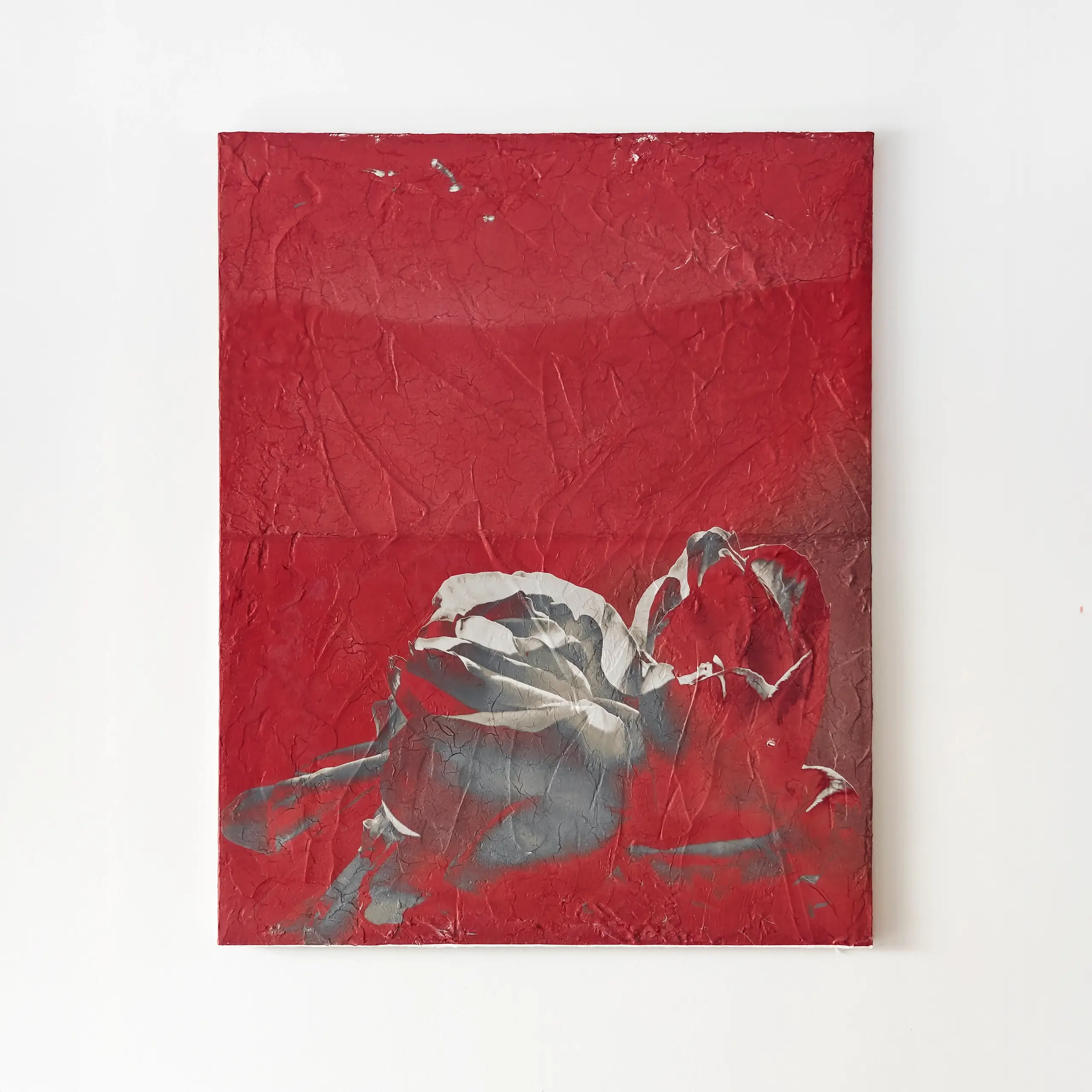
‘ROSE I. Ink Portrait’ and ‘ROSE XV. Lying in Red’
A pair for the wall seen from the far end: a single black gesture on white, and a red “so intense it becomes a place”.
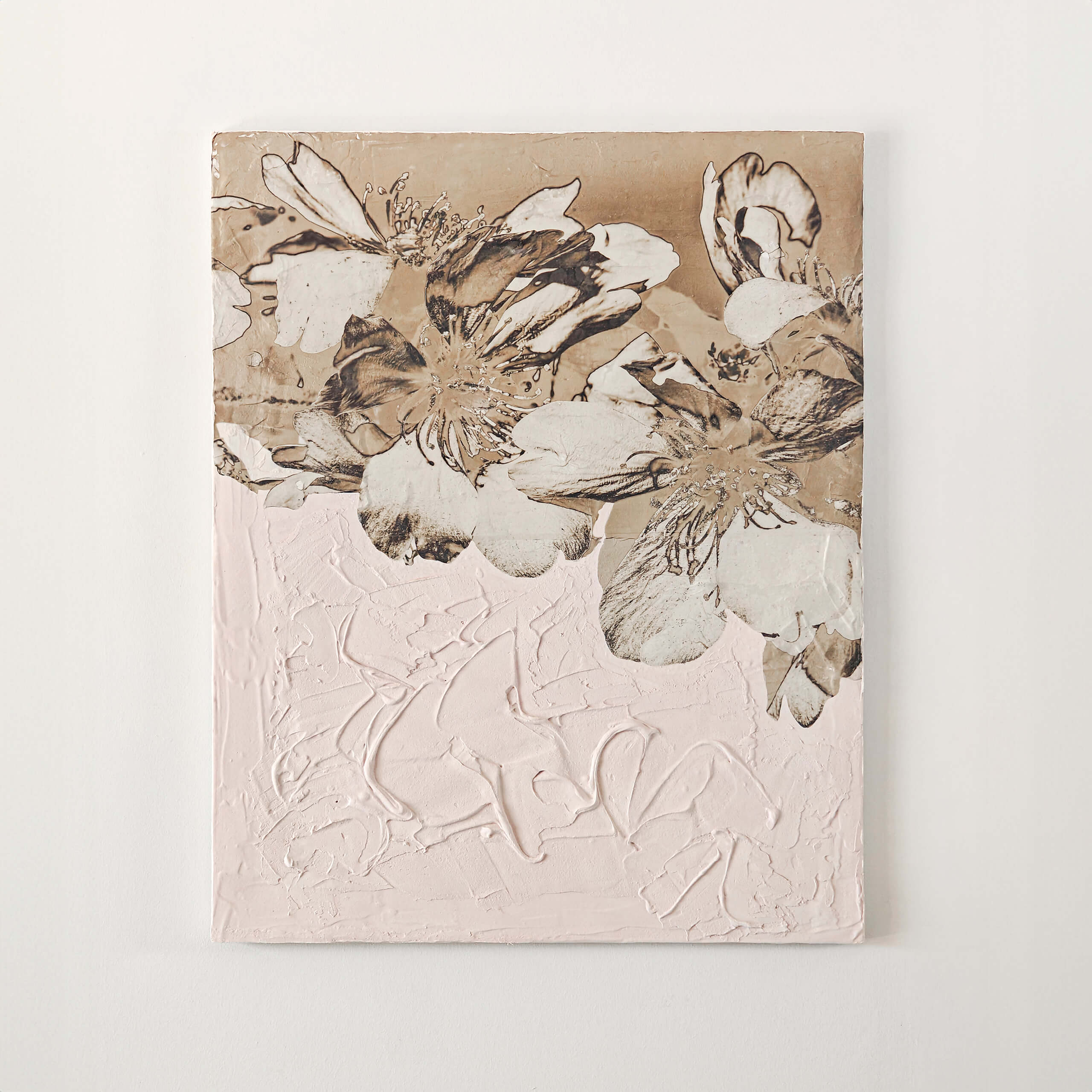
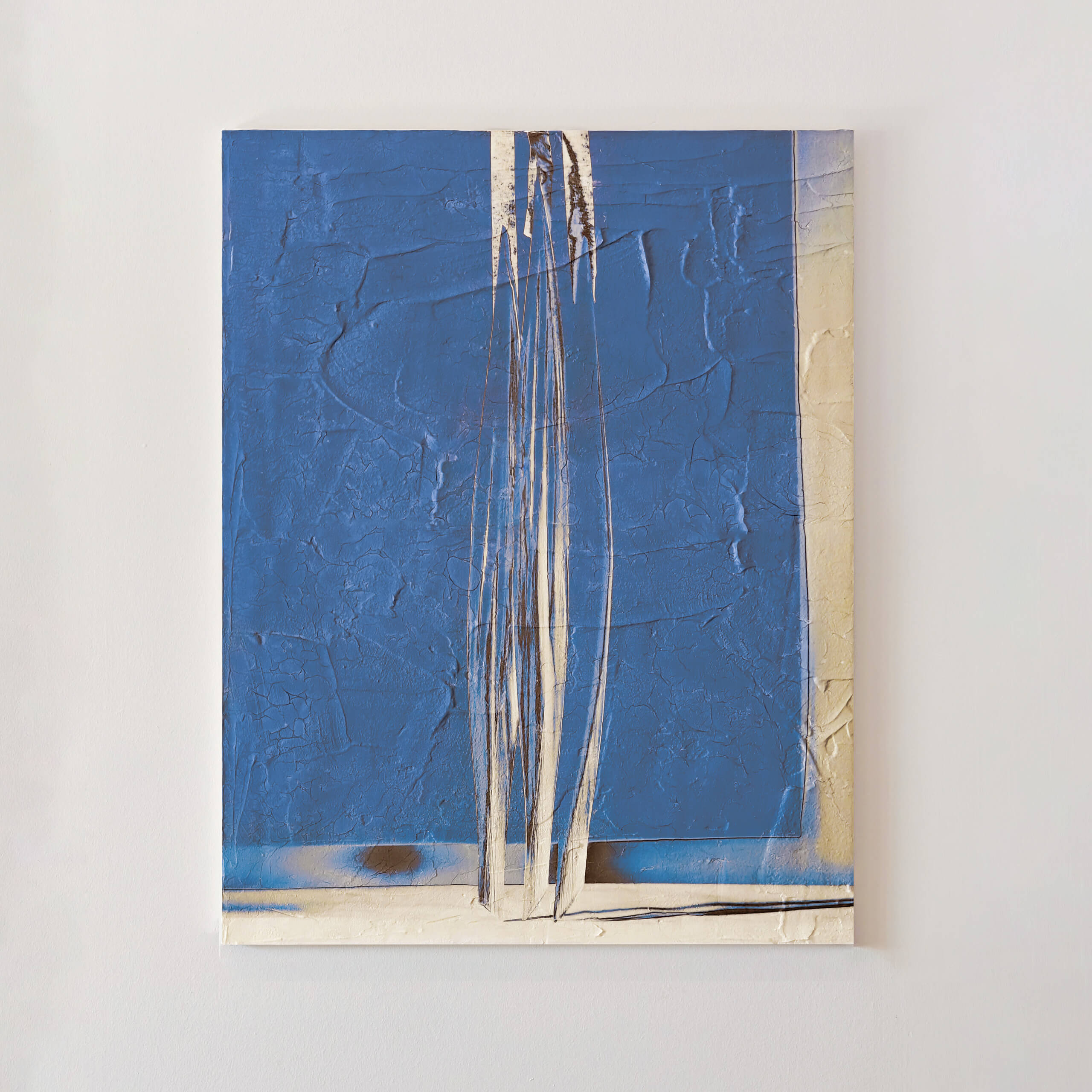
‘ALMOND TREE I. Submerged Currents’ and ‘YUCCA III. Stretching is Important’
The other pair in that format: “flows that seem to be underwater” and leaves stretching “against a deep blue background”.
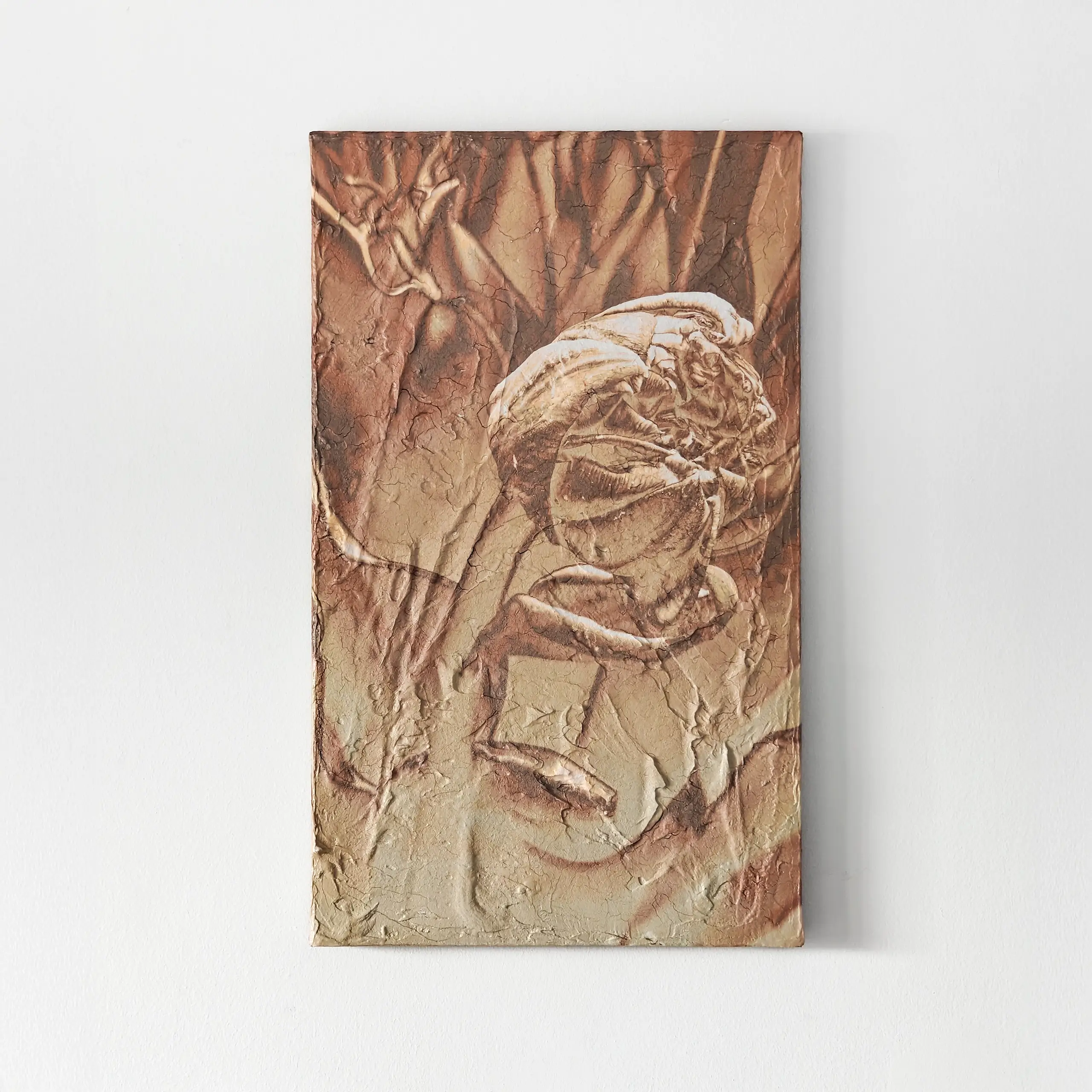
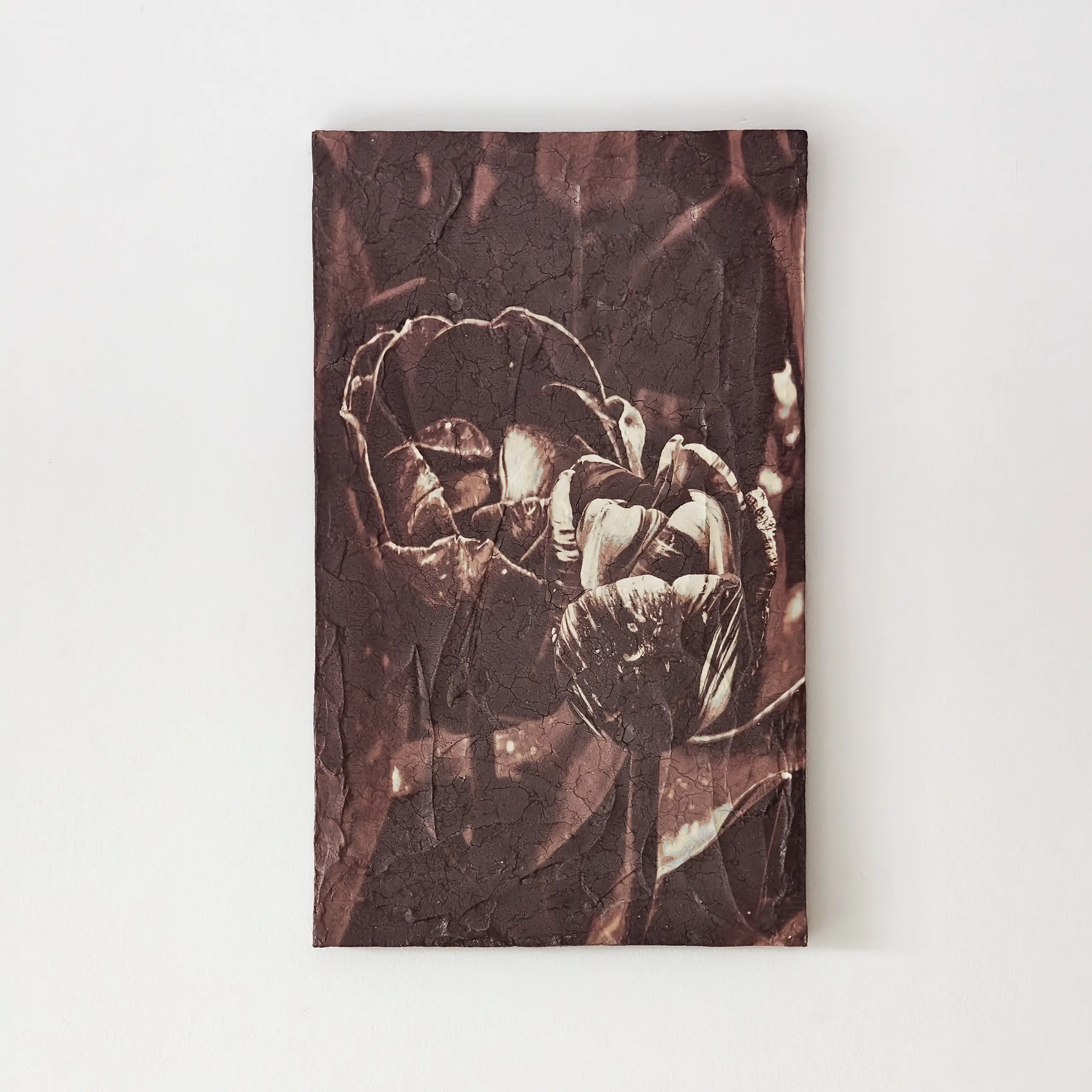
‘TULIP VIII. Amber Hour’ and ‘TULIP X. They Bloom Anyway’
The column for the narrow stretch by a door, from afternoon to dusk.
From Nature to Canvas
What does a large wall have to do with how we work?
More than we expected. We practise something we call selective letting go: most of what we do to an image is deciding what to take out, until what is left says what we felt. A large wall asks for the same decision: not how to fill it, but what to leave out. We work in photographic relief in plaster on canvas: the image, our own, transferred once onto a surface built to hold light and shadow. The pieces are grouped by theme, our room views show them on different walls, and there is more about the two of us in about us.
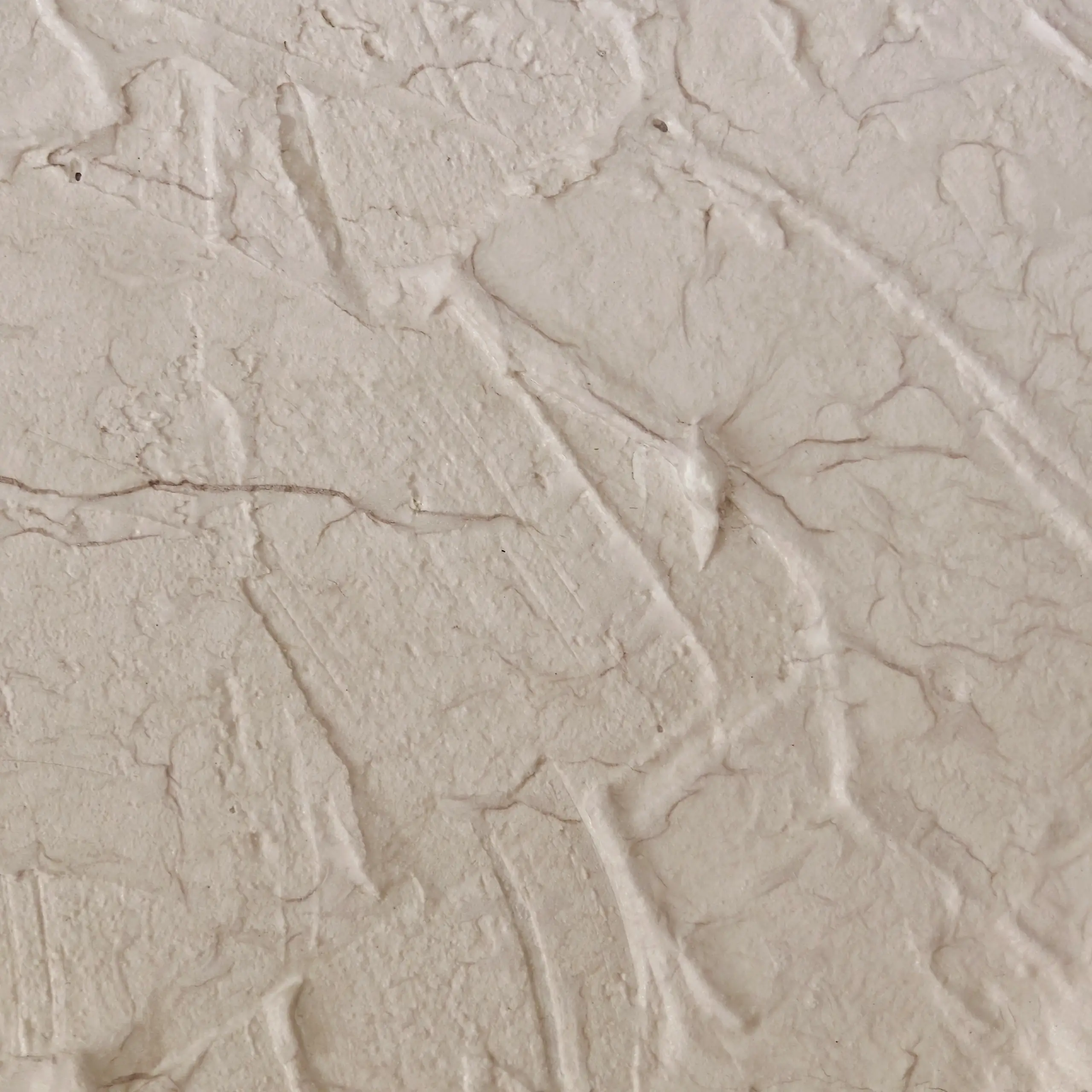
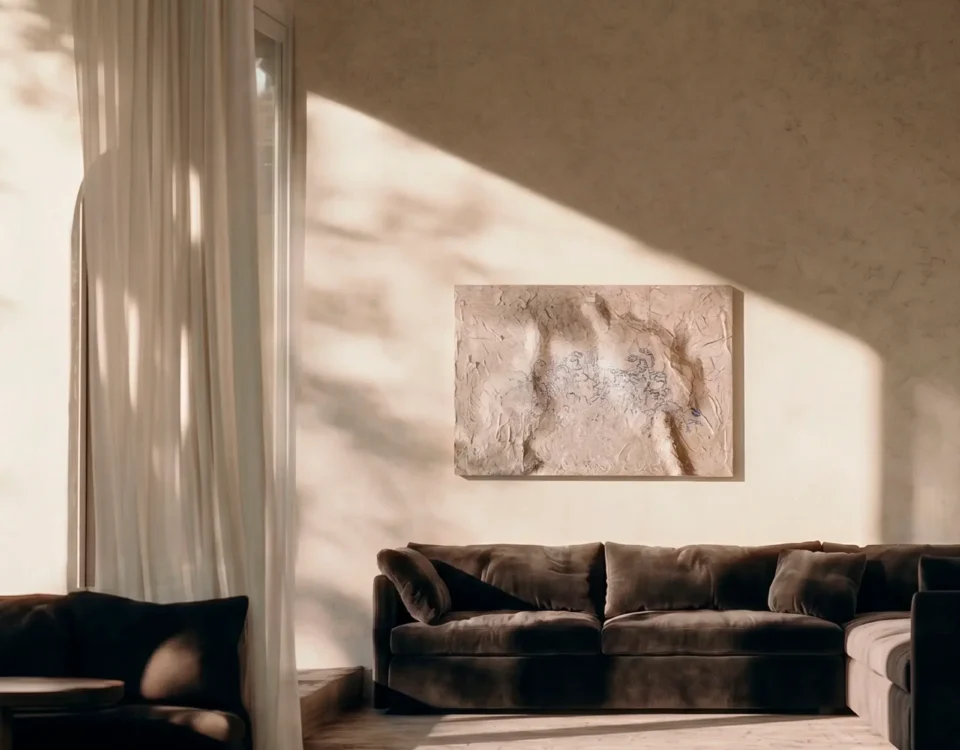
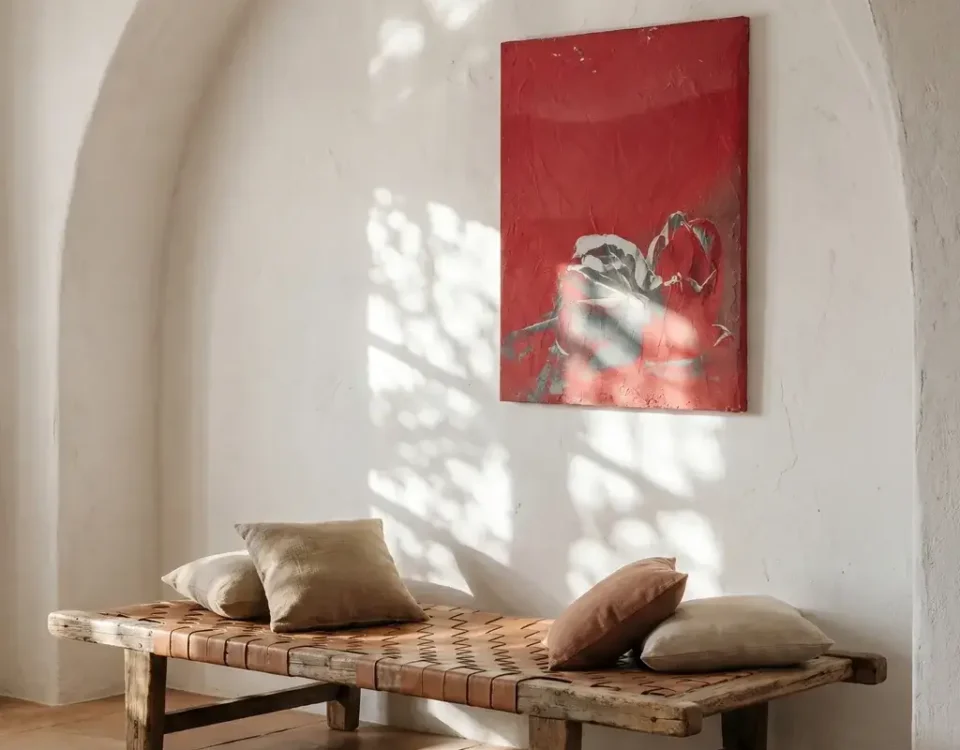
The room scenes on this page are visualisations. The close-ups and the photos of each piece are photographs of the works.