







Why Does a Relief Look Flat in Your Living Room?
Because a lamp is in the wrong place, and it is almost always the same lamp.
A flat work returns the same image whatever direction the light arrives from — brighter or dimmer, but the same image. A surface with depth returns a different image for every direction, because every raised millimetre throws a shadow whose length depends on where the light happens to be standing. Move the lamp and you have not changed the lighting of the work. You have changed the work.
So the question is never how much light. It is where it comes in — and what you are adjusting is not the beam but the shadow the beam manufactures as it grazes the surface. That shadow is not a side effect. On a piece with a built surface it is roughly half of what you are looking at.
Architectural lighting has known this for decades — a lamp set well back washes a wall and flattens it, one brought in close grazes it and brings out the grain of brick or rough plaster — and every lighting catalogue explains the difference. Almost no article about hanging art mentions it, because art is assumed to be flat.
The short answer, if you only want the numbers
- Angle: 20–30° off the vertical.
- One source, not two. Two symmetrical lamps cancel each other's shadows.
- From above or from one side. Never from below.
- LED, 2700–3000 K, CRI 90 or better — and ask for the R9 value too.
The Angle Is the Whole Decision
There is a number that circulates in gallery lighting: 30°, measured from the vertical — the line dropping down the face of the wall is zero, and you tilt out from there. ERCO, who make a good deal of the world's museum lighting, call it the museum angle.
It is a good number and it is a compromise. Thirty degrees is where three demands are least badly served at once: even light across the picture, no reflection bouncing off the glazing into a visitor's eyes, and no shadow thrown by the frame. Go steeper and, in ERCO's own words, textures "often appear exaggerated".
Two of those three problems are not yours. A photographic relief hangs without glass and without a frame — nothing to reflect, nothing to cast a shadow across the surface. And "exaggerated" is a judgement made about a painting. On a relief it is not a fault being introduced; it is the thing you bought, finally showing up.
Nor is it a matter of taste, because a shadow is not a mood — it is a length. A raised area standing d millimetres proud, lit at θ degrees off the vertical, casts a shadow of d ÷ tan θ. Which matters because our pieces carry three depths at once: the grain of around 3 mm that holds the image, the body of the panel at around 20 mm, and up to 70 mm on the deepest ones — KANZAN I and PEPPER I among them.
How long a shadow, at each angle
| Angle off vertical | Grain · 3 mm | Panel · 20 mm | Deep relief · 70 mm |
|---|---|---|---|
| 60° | 2 mm | 12 mm | 40 mm |
| 45° | 3 mm | 20 mm | 70 mm |
| 30° · museum angle | 5 mm | 35 mm | 121 mm |
| 25° · where we would put it | 6 mm | 43 mm | 150 mm |
| 15° | 11 mm | 75 mm | 261 mm |
Length of the shadow cast on the wall by each of the three depths, rounded to the millimetre.
Read down the middle column and the window appears on its own. Between 20° and 30° the grain throws five to eight millimetres — enough to read at arm's length — while the panel throws three or four centimetres, dramatic without swallowing the image. Below 15° the panel alone throws seven centimetres and upwards, and the picture drowns in its own shadow. Above 45° the grain drops under three millimetres and quietly stops existing: you can see the piece perfectly, you just cannot read it.
Did you know...?
6×
more shadow, same relief
Moving from 60° to 15° multiplies the shadow of a 3 mm ridge by six and a half. Nobody touched the artwork. Somebody moved a lamp.
The Same Piece, Three Lights
All of that is geometry. Here is the demonstration.
Three photographs of TULIP XI. What Remains, taken on the same day on a fixed tripod, camera untouched between frames — we checked the alignment afterwards and it drifted by zero pixels horizontally. Nothing moved except the lamp.
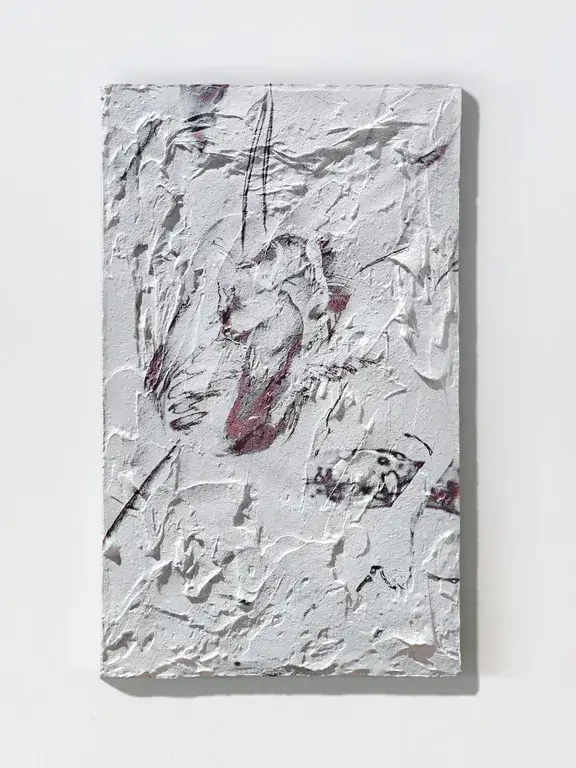
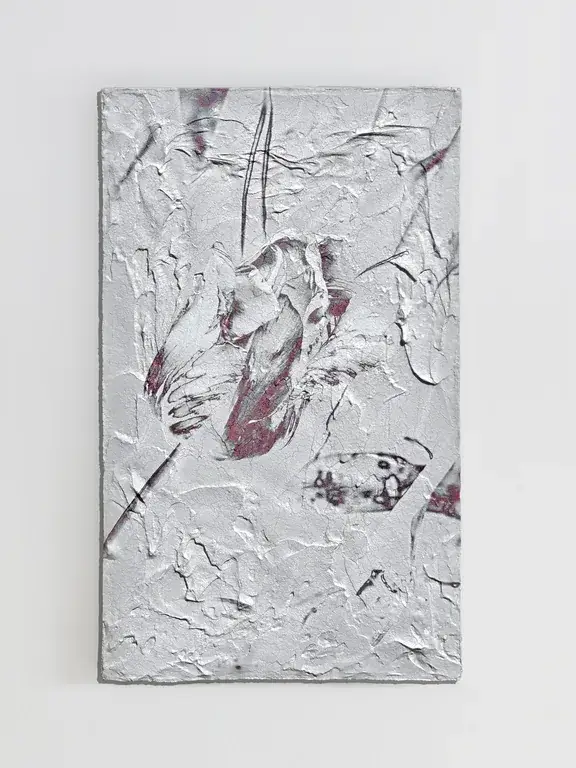
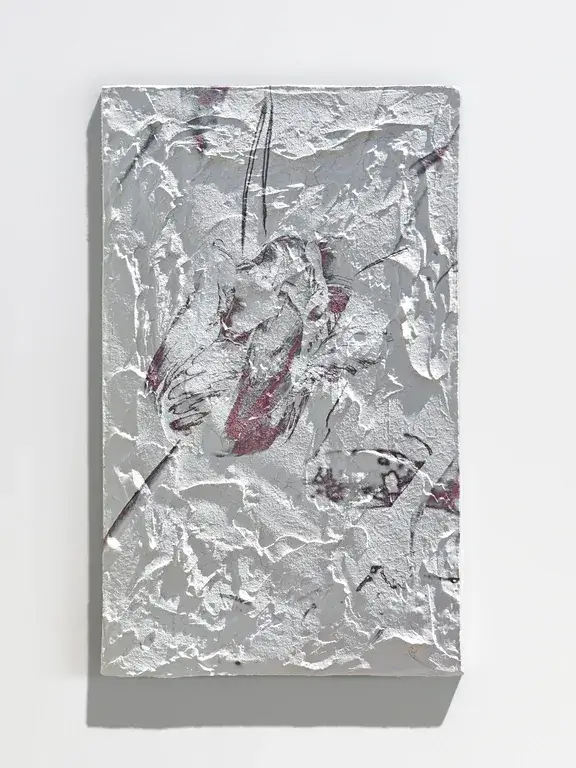
The middle frame is the one worth sitting with. It is not badly exposed or out of focus — it is a technically fine photograph of a piece that has stopped working. Every euro of difference between an original with a surface and a reproduction of one lives in the gap between that image and the two beside it, and the whole of that gap is decided by a lamp position.
So Where Does the Lamp Actually Go?
An angle is not something you can buy. A distance is — and the translation between them is one line of trigonometry: the setback from the wall equals the drop from the ceiling to the centre of the piece, multiplied by the tangent of the angle you want. For 20–30°, that comes out at roughly 0.4 to 0.6 times the drop.
Hang the centre at 150 cm, which is where it should be anyway, and on a standard 2.70 m ceiling that puts the light 45 to 70 cm off the wall. Worth noticing what that does to the usual advice: every guide to hanging pictures says two to three feet, 60–90 cm, which on the same ceiling lands you between 30° and 45°. Right for a painting. Too far out for a relief.
Calculate it, to the centimetre
Put the light 56 cm from the wall.
At that angle a 3 mm ridge throws about 6 mm of shadow.
Take your ceiling height, subtract the height of the centre of the piece, and multiply what is left by 0.36 for 20°, 0.47 for 25° or 0.58 for 30°. On a 2.70 m ceiling with the centre at 150 cm, that is 56 cm at 25°.
What goes up there should be an adjustable track or a directional spot — the only kind you can re-aim once you have seen the result. It also explains the lamp in the middle of the ceiling, which is what most pieces get and the worst in the room: from directly overhead the shadows cover the work, from across the room the texture vanishes. It is very rarely at 25°.
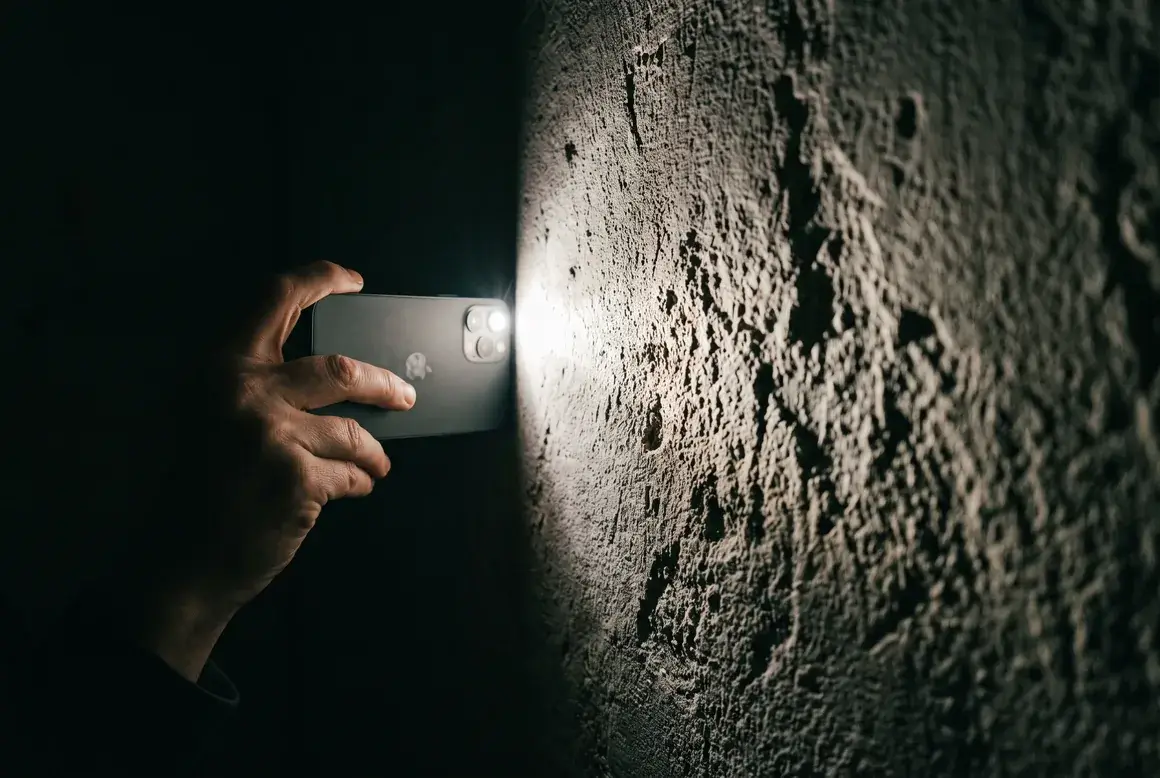
If you would rather not measure anything at all, there is a shortcut that takes a minute and costs nothing.
Turn the room lights off. It has to be properly dark — the test works on contrast.
Hold your phone torch almost flat against the wall beside the piece, beam running along the surface. You will see far too much: huge shadows, the wall's own bumps showing up, the image lost.
Walk the torch slowly away from the wall, still aimed at the piece. There is a moment when the surface catches fire — the grain reads and the image is still whole. That is your angle, and where your hand is, is where the light goes.
What We Got Wrong
We make these things, and we still managed to get it wrong at home more than once.
The wicker shade
We hung a piece near a lamp with a woven wicker shade. In daylight, perfect. At night the shade threw hard striped shadows straight across the work, and it took us an embarrassingly long time to understand why the piece looked wrong after dark and fine in the morning.
It is not only where you put the light. It is everything between the light and the wall — a shade, a shelf, a plant, the top edge of a bookcase. A relief reads shadows for a living, and it cannot tell yours apart from its own.
Then the symmetrical, careful, professional-looking mistake: a light on each side. Two matched sources fill in each other's shadows, and you arrive back at flat frontal light having paid for two lamps. If you want two, aim both from the same side at different heights and let one do the modelling.
The last one is the expensive one, because it destroys exactly what you bought. Never light a relief from below. Your visual system assumes light falls from above — it is how you read depth out of a flat photograph at all — and lighting a surface from underneath inverts the reading: what stands proud looks hollow, what is hollow looks raised. The piece does not look badly lit. It looks like a different, wrong object, and the effect survives knowing about it.
None of which is news. Sir David Brewster worked it all out with candles on a table in 1832, in a passage of Letters on Natural Magic about carved gems flipping between raised and hollow as the light moved — including the bit about the second candle.
"The shadow of a hollow is always on the side next the light, and the shadow of a protuberance on the side opposite to the light."
— Sir David Brewster, 1832
And If You Do Nothing at All?
Then, for most of the day, daylight does the job better than you would.
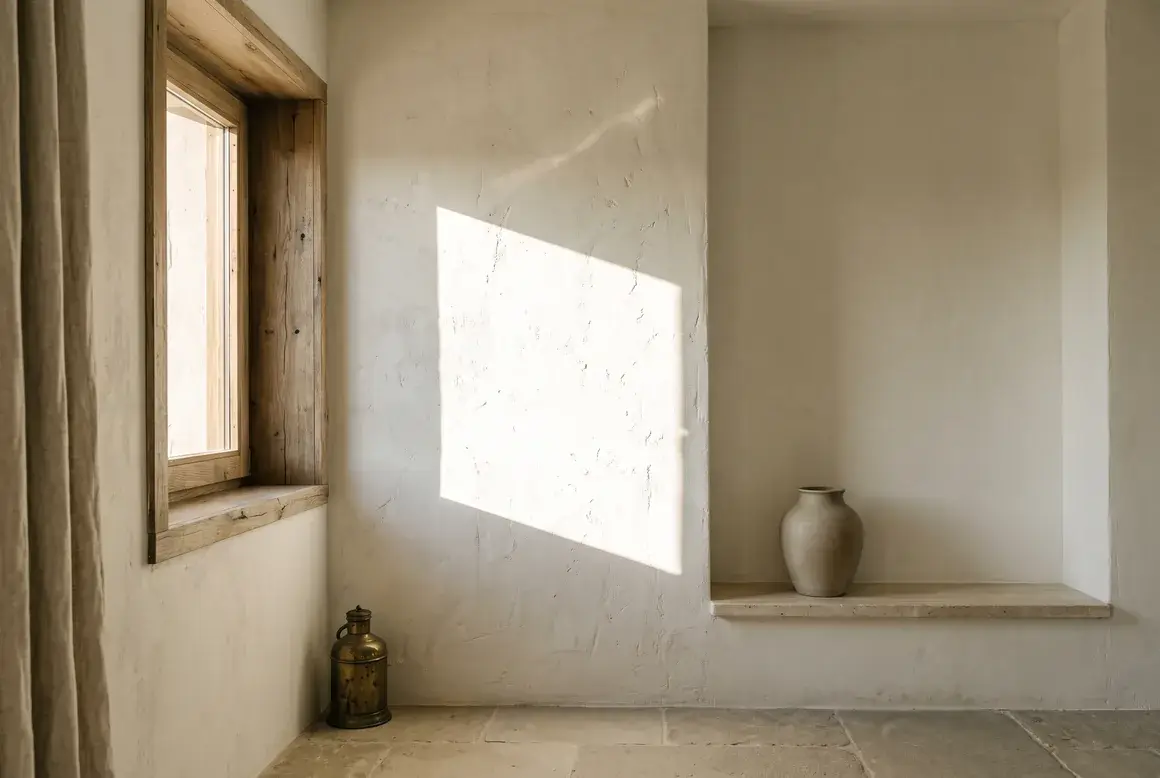
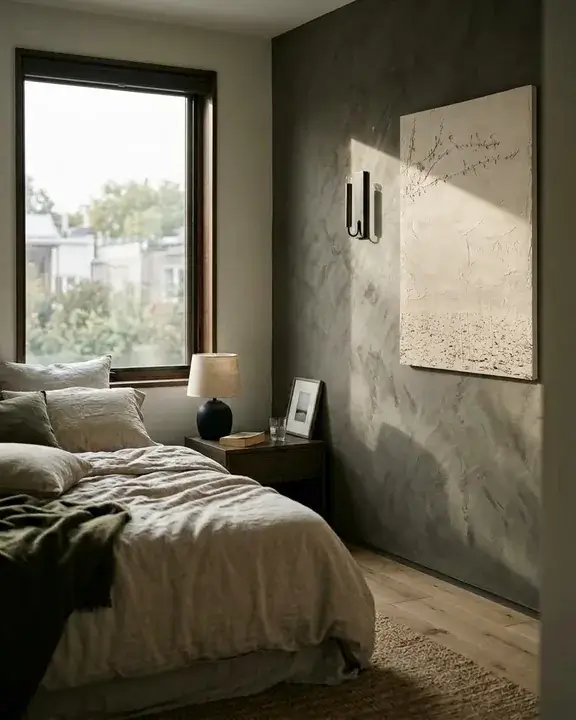
Light arriving through a window on one side of a room is, by accident, exactly what this kind of surface wants: single-source, directional, and low in the morning and evening. A wall that catches side light gives you the left-hand frame in the morning, something close to the middle one at noon, and the right-hand frame in the afternoon — the same piece, three readings, without a switch.
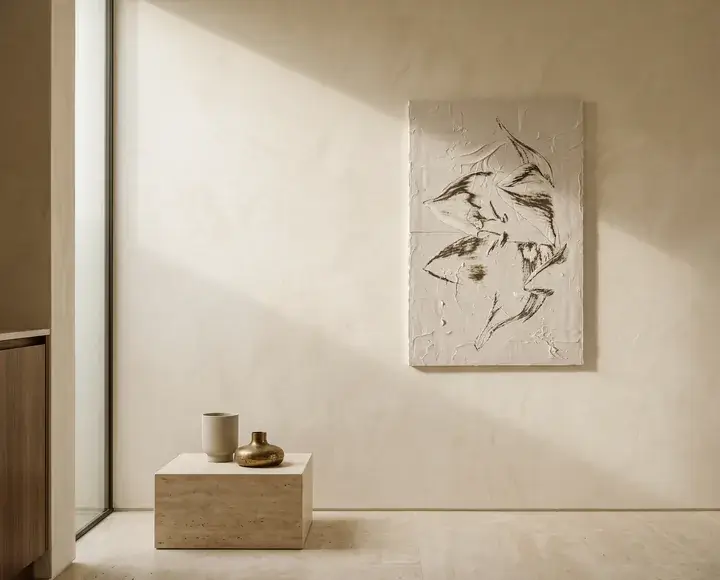
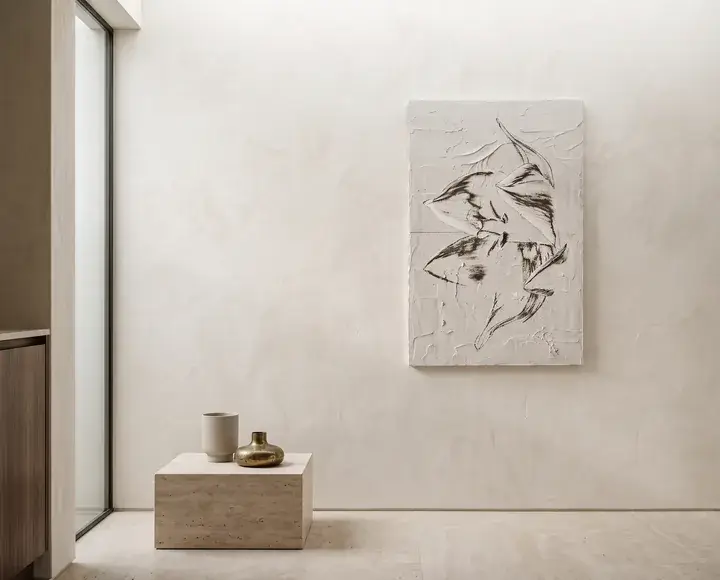
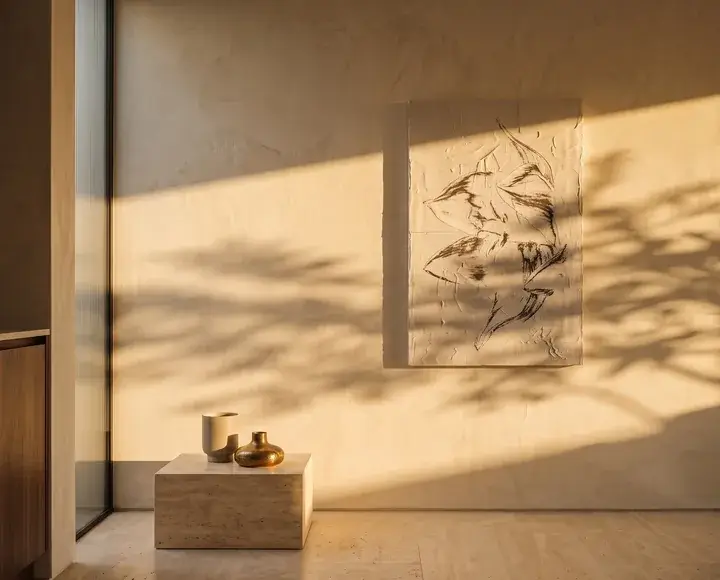
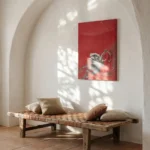
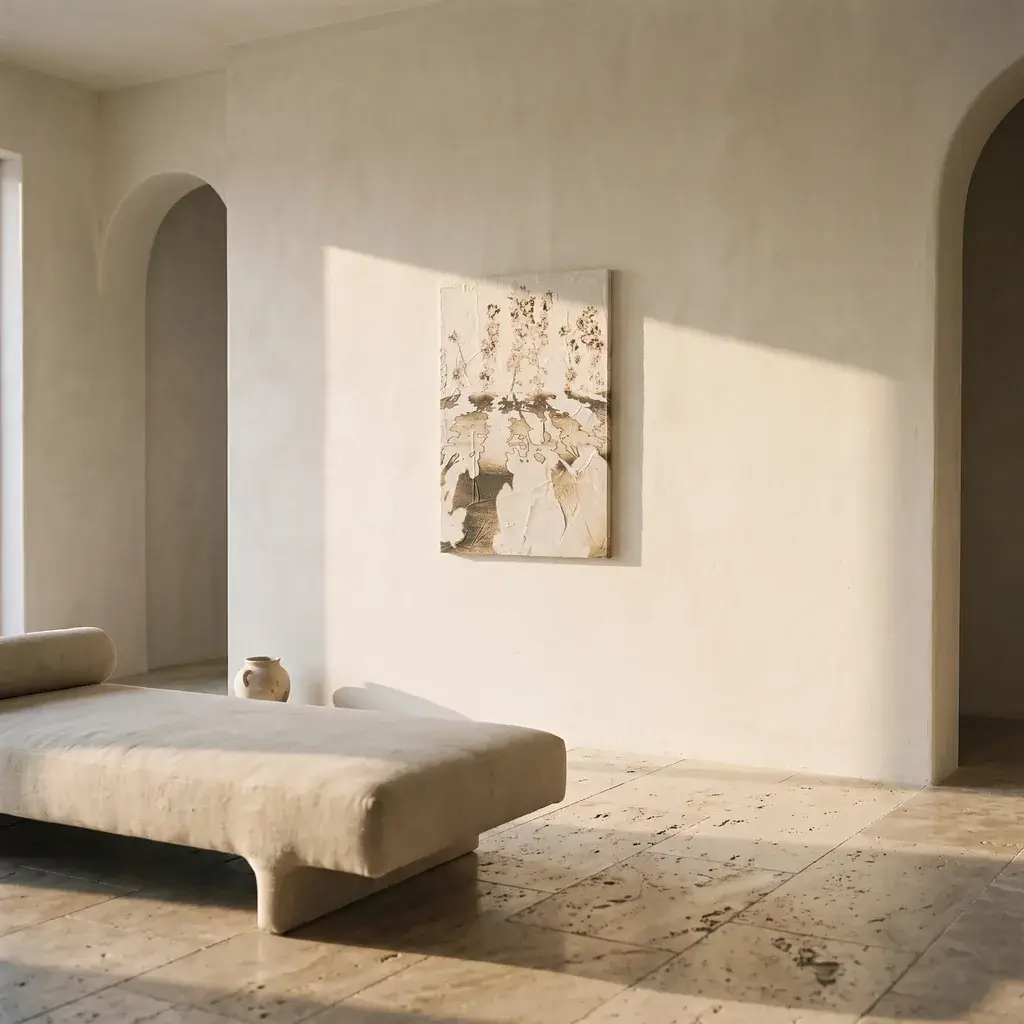
Which reframes a decision most people make backwards. Where a piece goes is not a question about the furniture underneath; it is a question about where the light enters that room, and at what hour. A wall facing the window gets frontal light and flattens anything with a surface. A wall beside the window — perpendicular to it, catching the light along its face — is the best wall in most houses, and it is usually the one still holding a coat rack. Our room views are lit for exactly this, if you want to see it before committing a wall.
There is one thing to keep an eye on, and only one. Daylight along a wall is not the same as a hard-edged rectangle of direct sun landing on the same spot every afternoon. Light damage is cumulative — brightness multiplied by time — so a while in the sun does nothing at all, while the same patch arriving at four o'clock every day for years is a different proposition.
Did you know...?
29 years
of lamplight, in one hour of sun
A patch of direct sun through glass runs at some 20,000 lux, against 175 for the same wall under a lamp. Do the arithmetic over a year and one hour of sun a day outweighs every evening of lamplight, thirty times over. Pick the wall once, and everything you switch on afterwards is a rounding error.
A piece that looks the same at nine in the morning and seven in the evening is one you will stop noticing by the second year. That is not a defect to correct with a lamp. It is most of what you are buying.
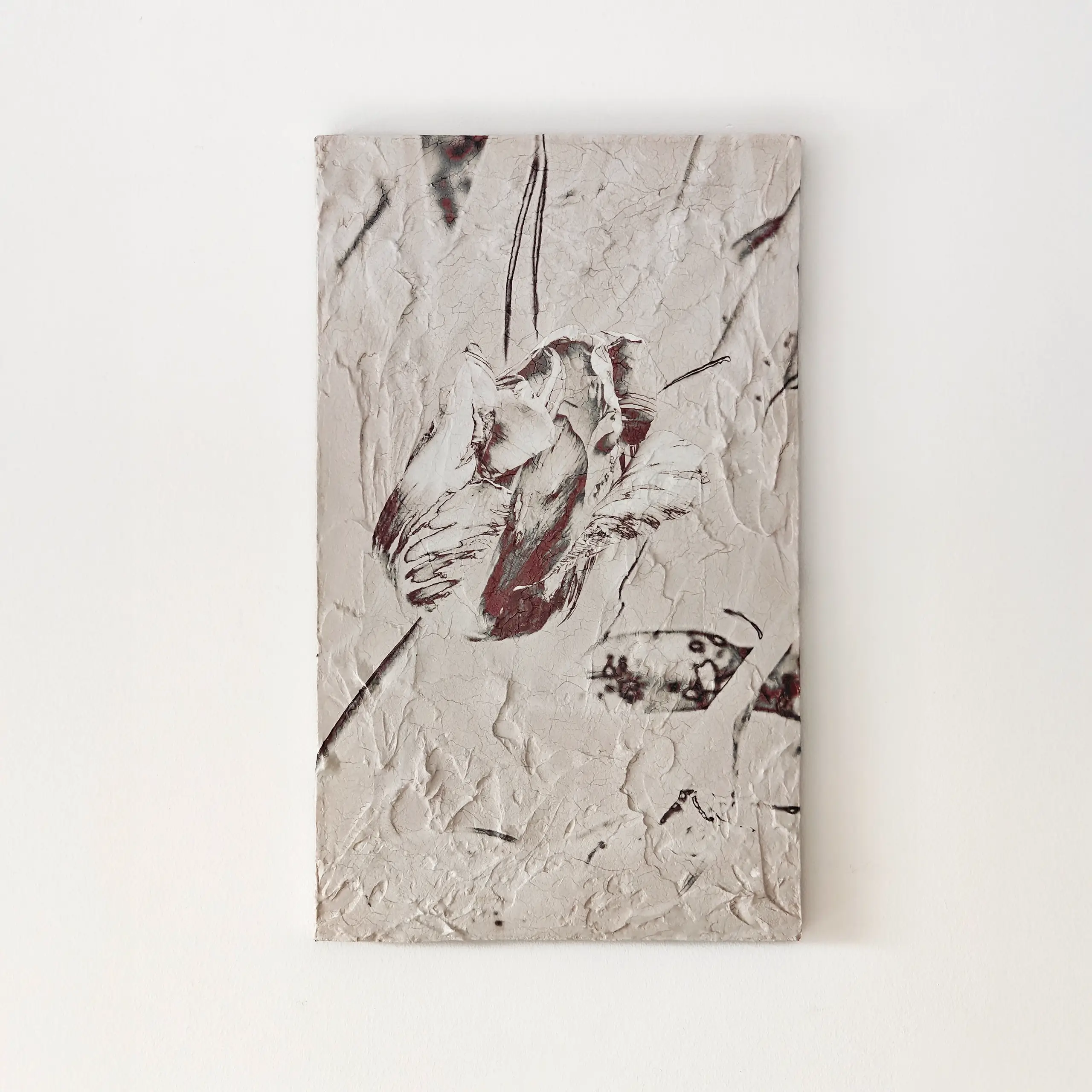
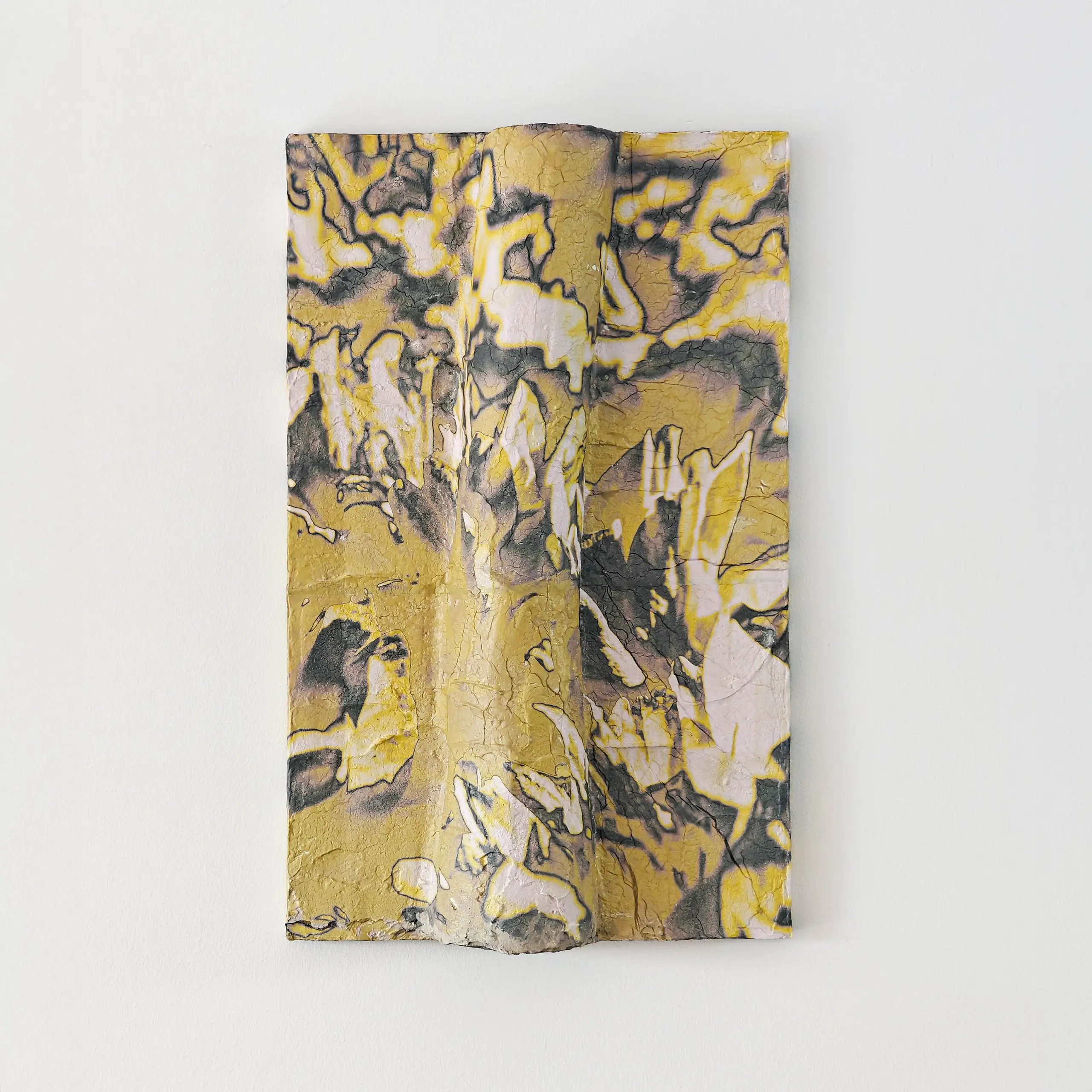
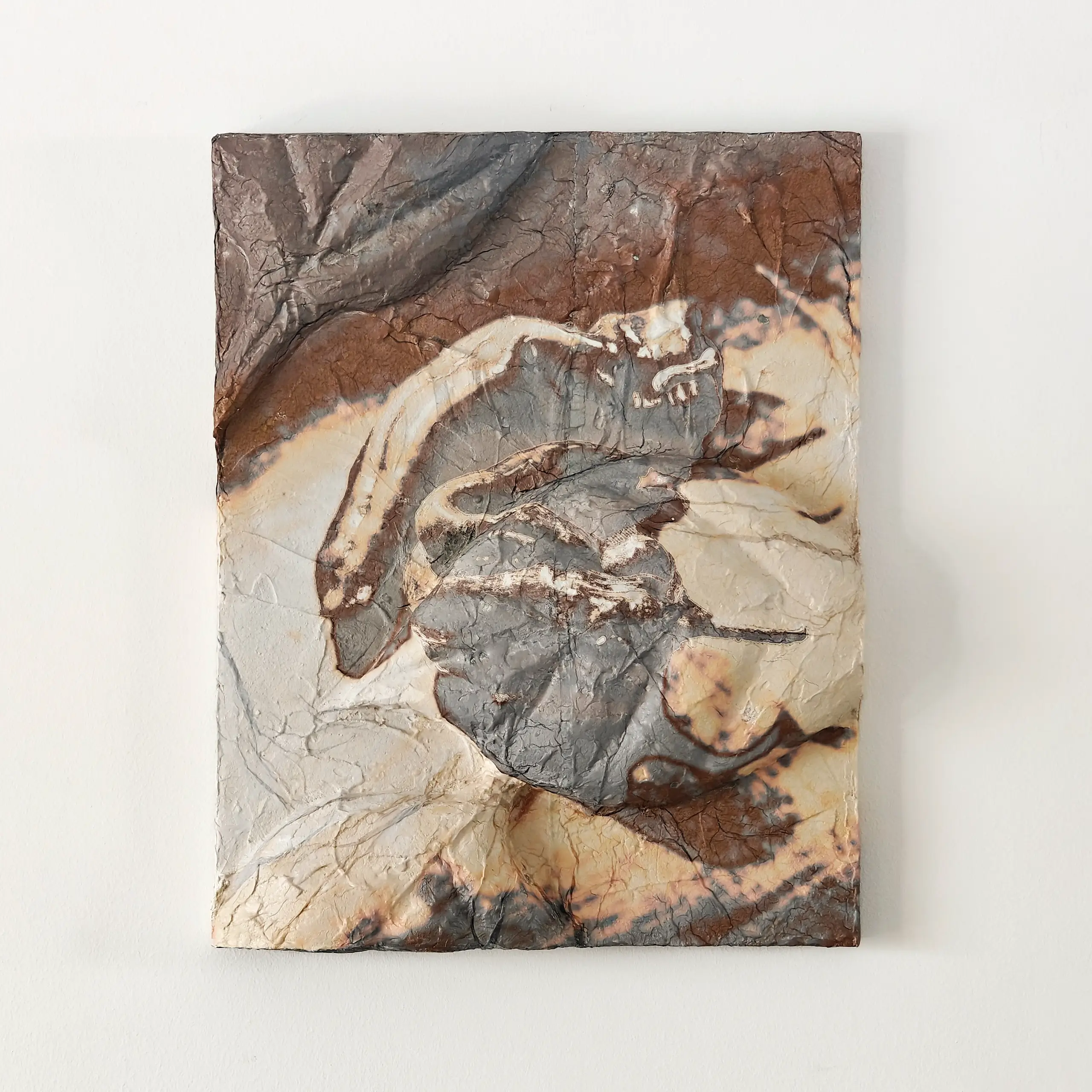
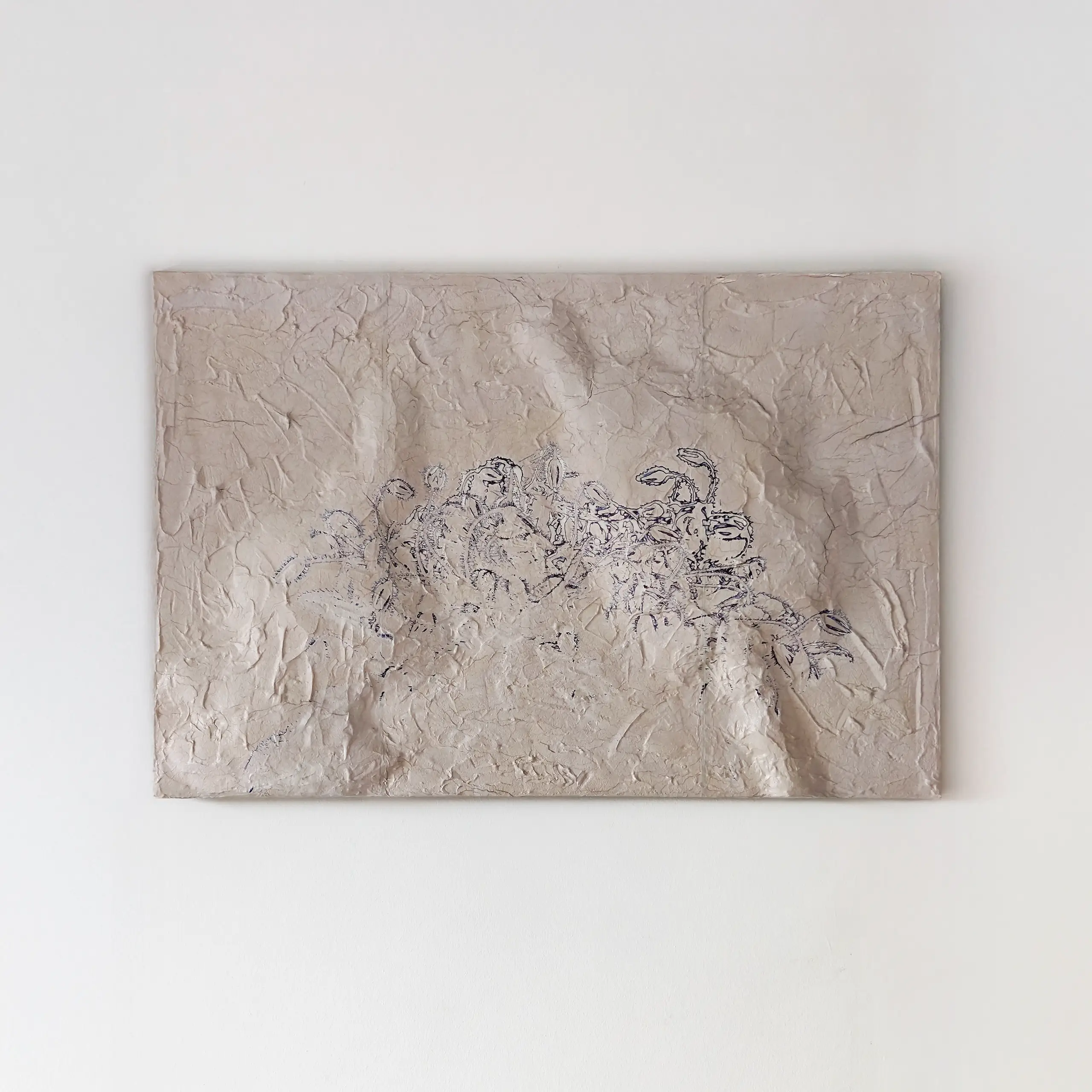
Textured Artworks Worth Lighting Properly:
Lighting FAQs
LED, 2700–3000 K, CRI 90 or higher — and ask the manufacturer for the R9 value as well. The headline CRI figure averages eight pastel test colours and leaves deep red out entirely, so two lamps rated the same can render red completely differently. It matters here because a lot of our pigment is red and deep garnet, and a lamp with a good CRI and a poor R9 switches off precisely those passages.
The ones that are wet, not the ones that are bright. Plaster is hygroscopic — it takes on and gives up moisture from the air — and what cracks a surface over the years is the wet-dry cycle, not light. That rules out bathrooms, the kitchen wall beside the hob, above a radiator or a fireplace, and any exterior wall with damp in it. A stable interior wall with light you can control will outlast all of us.
No, and we would rather say so. A piece on a wall with decent side light from a window is already doing most of what it can do; a dedicated spot is an improvement, not a requirement. The only genuinely bad outcomes are flat frontal light, which makes an original look like a print, and light from below, which makes it look like the wrong object.
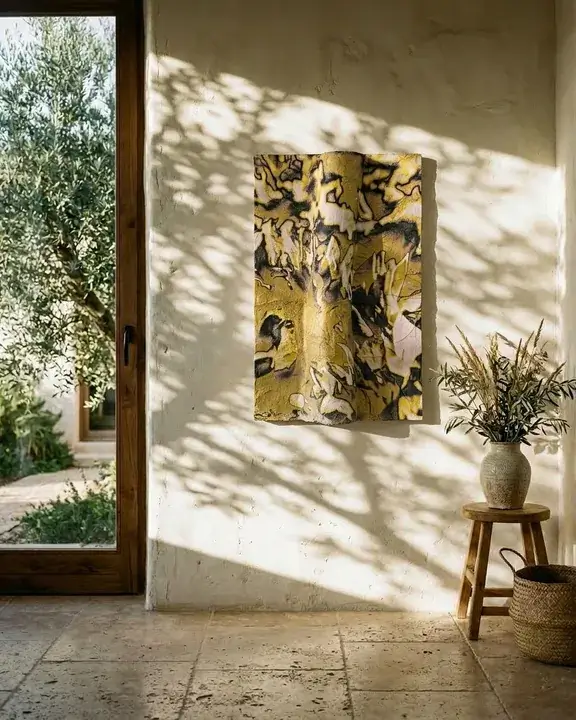
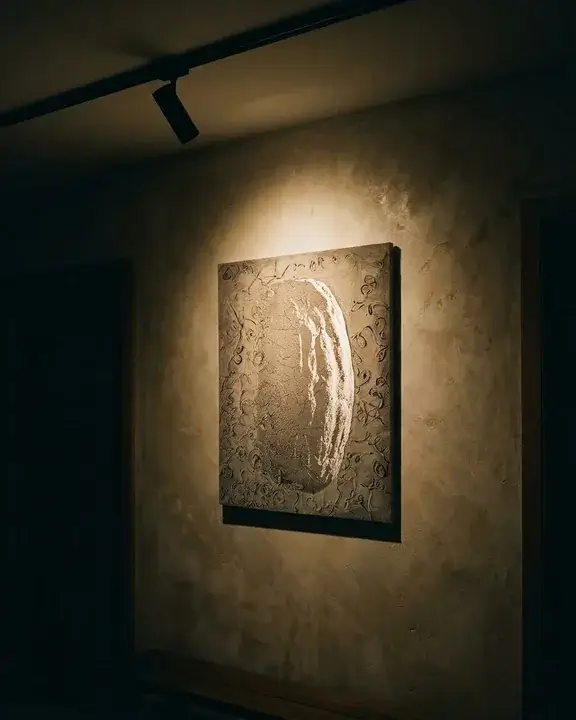
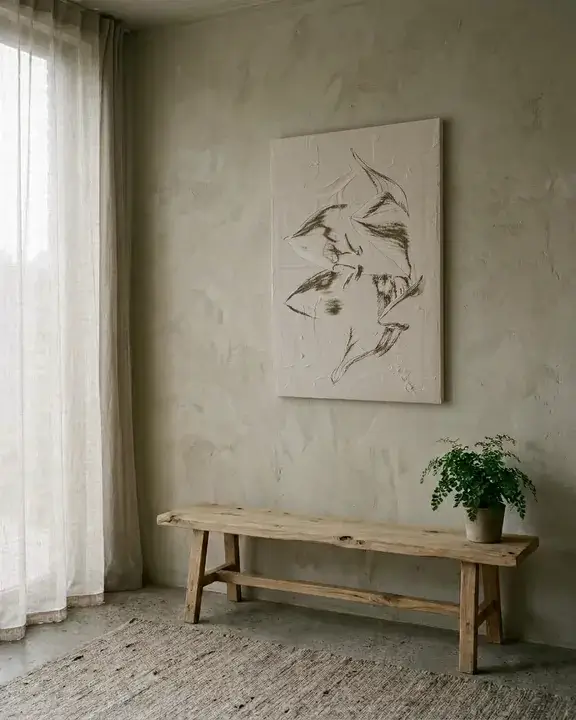
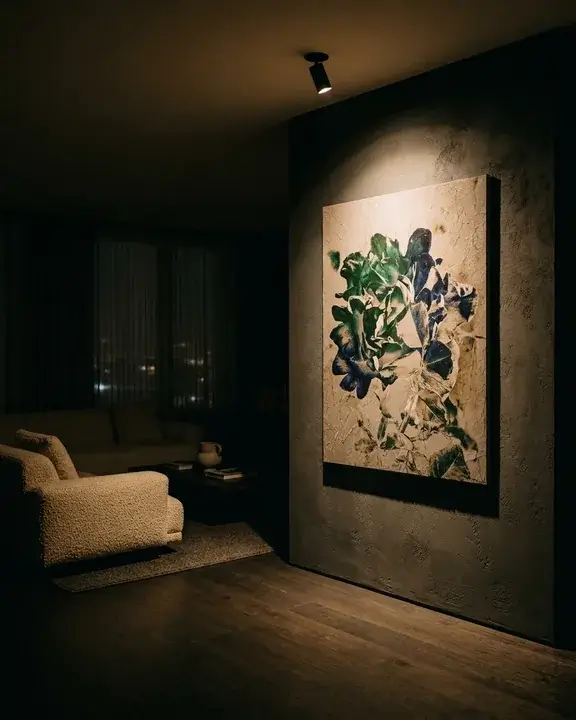
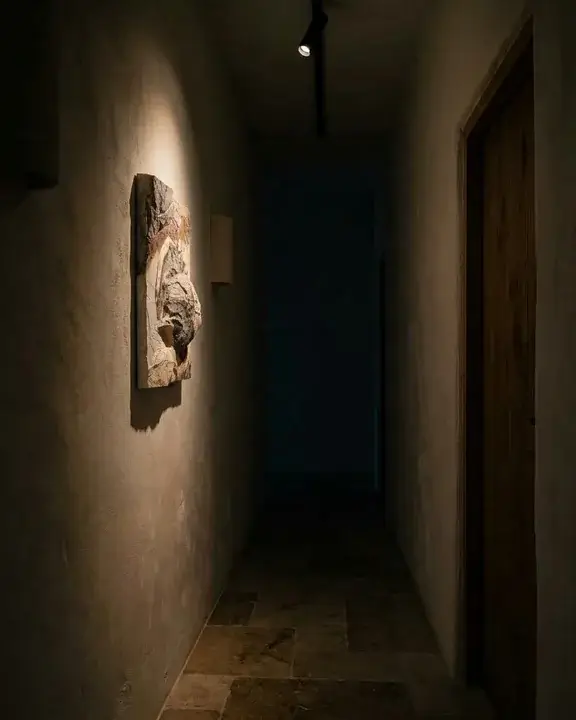
Rooms where the light does the work:
From Nature to Canvas
What do you do with an image you love and a surface you don't?
That was our problem, years before any of this was about lighting. We loved our images, but not their physical expression: printed, flat, behind glass, finished the moment they left the printer and identical under every lamp in the house. So we stopped printing them.
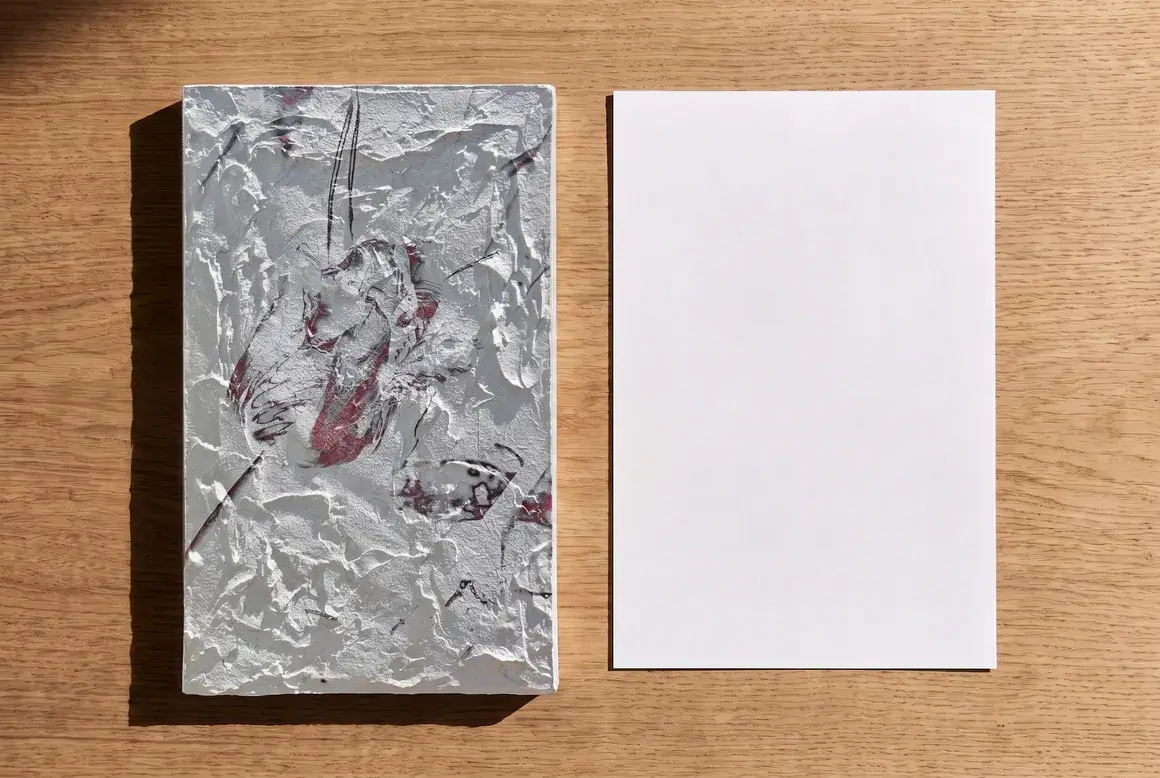
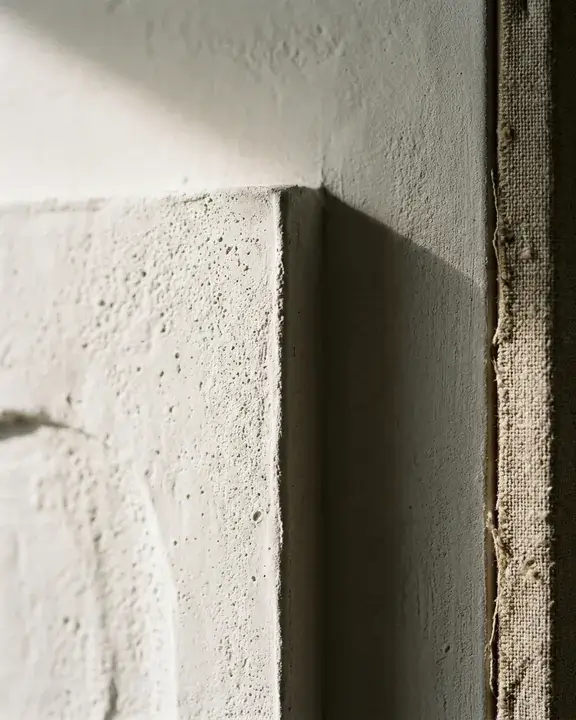
We work in photographic relief in plaster on canvas — the image transferred once onto a surface built to catch light and shadow, no paper and no layers. Which is why we are so particular about angles: a piece like this is not finished when it leaves the studio. The last part of it is made every day by whatever light falls on it. We are not decorating the work; we are handing over the last step. The pieces are grouped by theme, and there is more about the two of us in about us.
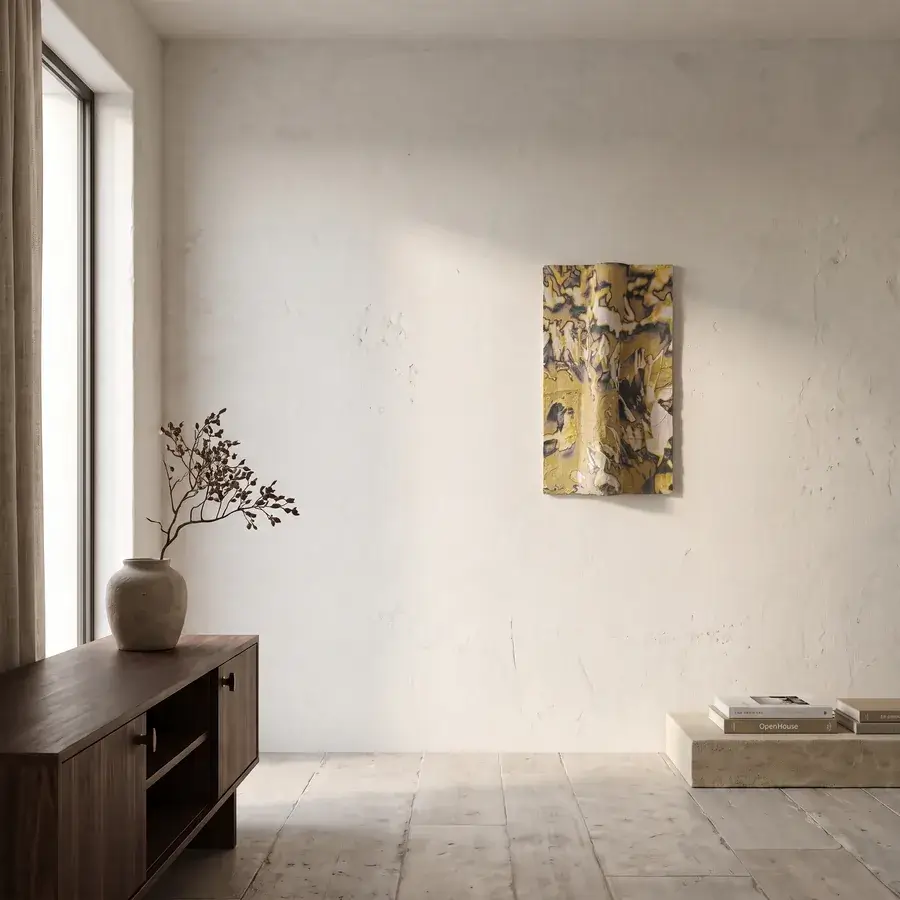
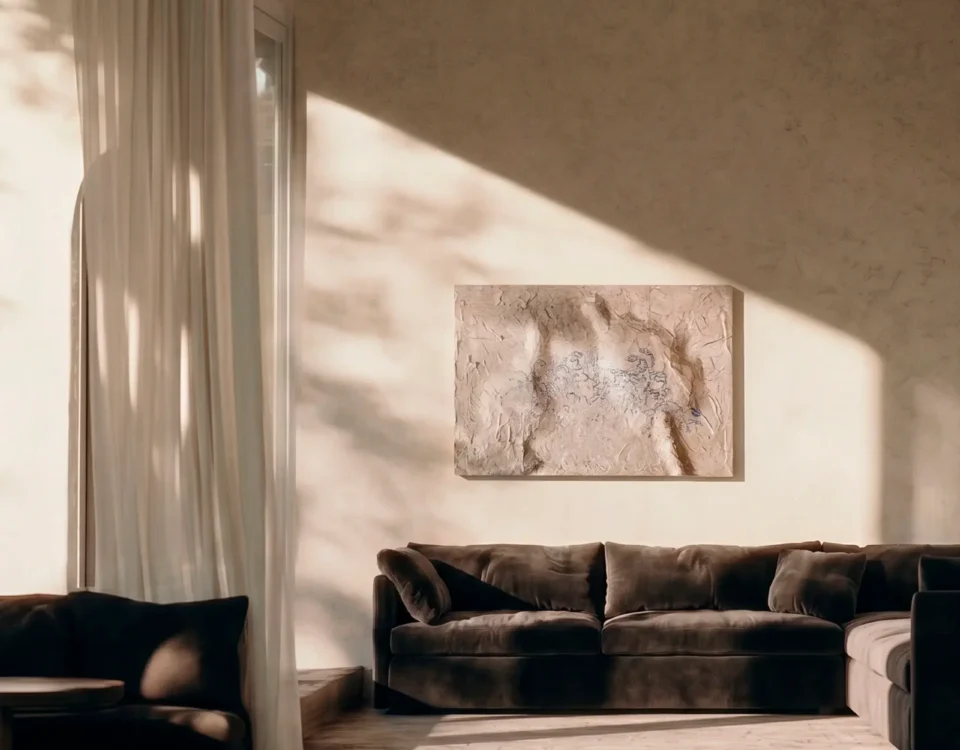
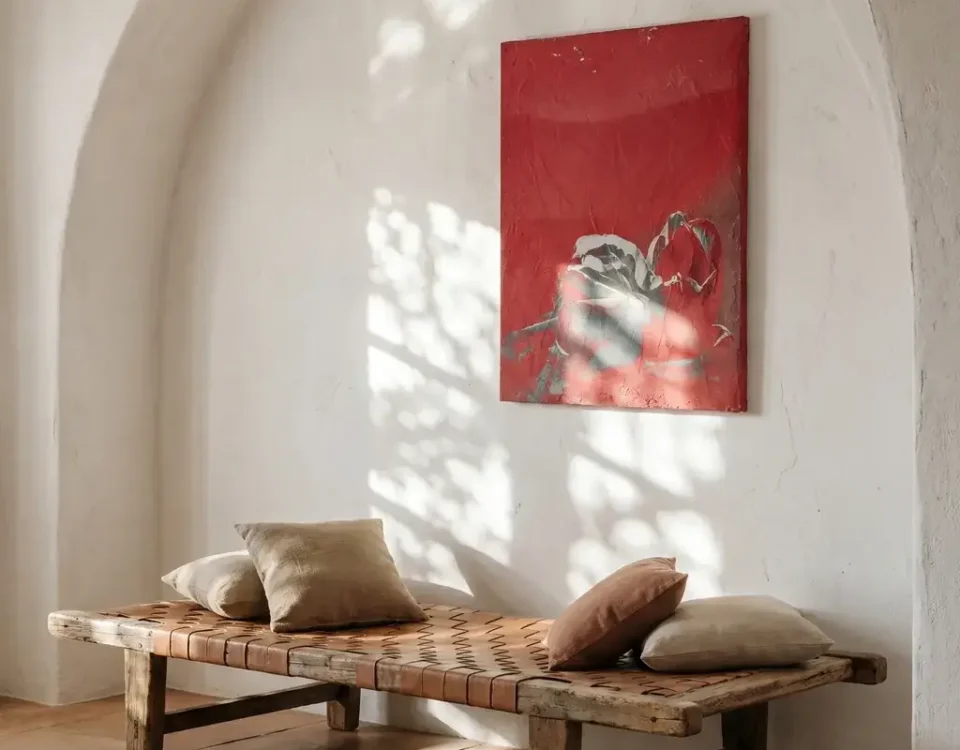
The three lighting tests on this page are photographs of the same physical piece, taken on a fixed tripod. The room scenes are visualisations.