







Two things to begin. In 1993 a thousand Americans were asked what size a painting should be, and two-thirds of them said the same thing: about the size of a dishwasher. And the most repeated rule for art above a sofa measures the one object in the room you will never look at from the sofa. Here is where we are headed: where the two-thirds rule comes from and what it is good for; a better ruler, which is the distance between your eyes and the wall; and a test that costs a roll of brown paper and three days.
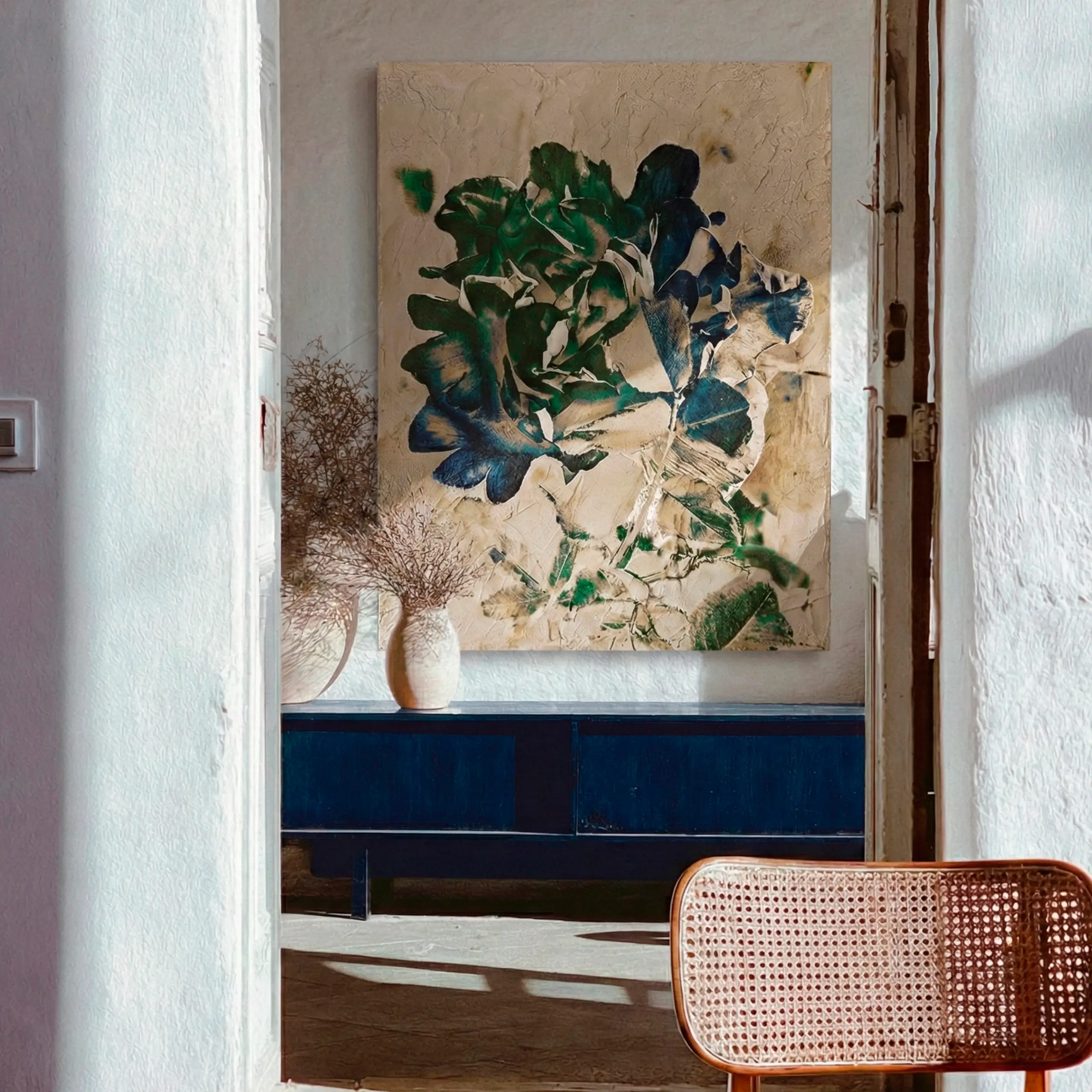
Where Does the Two-Thirds Rule Come From?
Nobody knows. We looked.
The rule is everywhere and always the same: art above a sofa, a bed or a console should be two-thirds of the width of the furniture (60 to 75 per cent). On a 150 cm two-seater, that is 90 to 113 cm of art. On a 210 cm three-seater, 126 to 158. Dozens of guides repeat it. None says who wrote it first.
What they do say is why it works: it is the golden ratio, made practical. It is not. Two-thirds is 0.667; the golden ratio is 0.618. And the golden ratio is not what people like in a picture anyway. In 1876 the physicist Gustav Fechner measured 10,558 paintings in 22 galleries to prove that it was, and found them clustering around 4:3 and 5:4 instead. Painters like plain fractions.
So the rule works for a humbler reason: it proportions a wall. A piece that takes two-thirds of the sofa leaves a third of air, and the air is what makes sofa and picture read as one thing.
The short answer, if you only want the numbers
- Above a sofa: 60–75 % of its width, as one piece or as a group.
- Gap to the backrest: 15–25 cm.
- A vertical piece breaks the rule and looks fine. The rule measures width because it was written for wide pictures.
- Size is set by the distance you will see the piece from. Above the sofa, that is the far side of the room.
What the rule quietly assumes is the interesting part: a wide painting, looked at from the front. Neither is true of the wall above your own sofa. To see why, it helps to know how the picture got there.
Who Decided Pictures Belong in the Living Room?
Blacksmiths, mostly. The room with pictures in it is four hundred years old, and the rule about the sofa is the youngest thing in it.
In 1640 an English traveller, Peter Mundy, wrote home from Holland that “many tymes blacksmithes, Cobblers, ettc. will have some picture or other by their Forge.” He was not exaggerating: when the economist John Michael Montias went through the household inventories of Delft, he found that around 1646 two-thirds of the town had paintings at home, eleven each on average. The room with pictures in it is a cobbler's habit, four hundred years old.
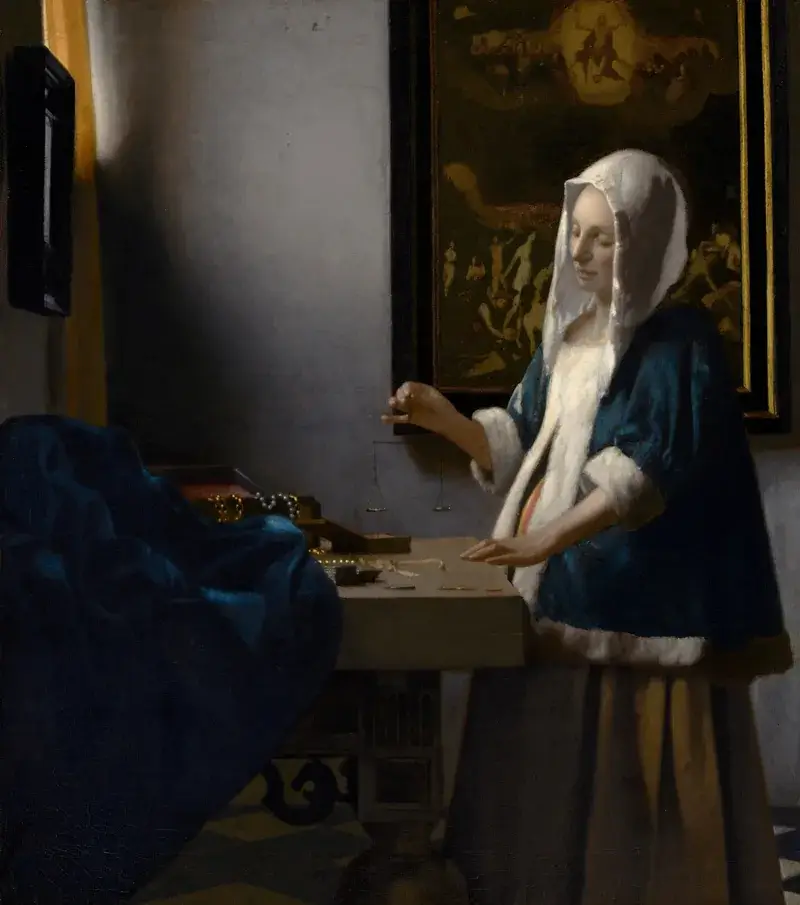
Johannes Vermeer, Woman Holding a Balance, c. 1664. National Gallery of Art, Washington, Widener Collection (CC0). A real painting, not a visualisation.
Did you know...?
11 paintings per household
Delft, around 1646. Minimalism came later.
The word came next. In 1725 the French Academy moved its exhibition into a room of the Louvre called the Salon Carré, and the room gave its name to the show. Your salón and the Paris Salon are the same room.
Then the room changed its job. In 1908 Matisse wrote that he dreamed of an art “something like a good armchair.” Two years later the Ladies' Home Journal proposed that the parlor (the front room kept for Sundays and funerals) should become the living room, “where people are at ease with one another.” The room you sit in was invented for staying in, not for showing.
Which is where the sofa painting comes from. By the 1960s the pictures sold in furniture stores had a trade name (sofa art) and, by one 1988 count, one retailer alone ran sixty crews selling up to a thousand paintings each every weekend. They were made to fit a piece of furniture: wide, because sofas are wide. That is the world the two-thirds rule was written for.
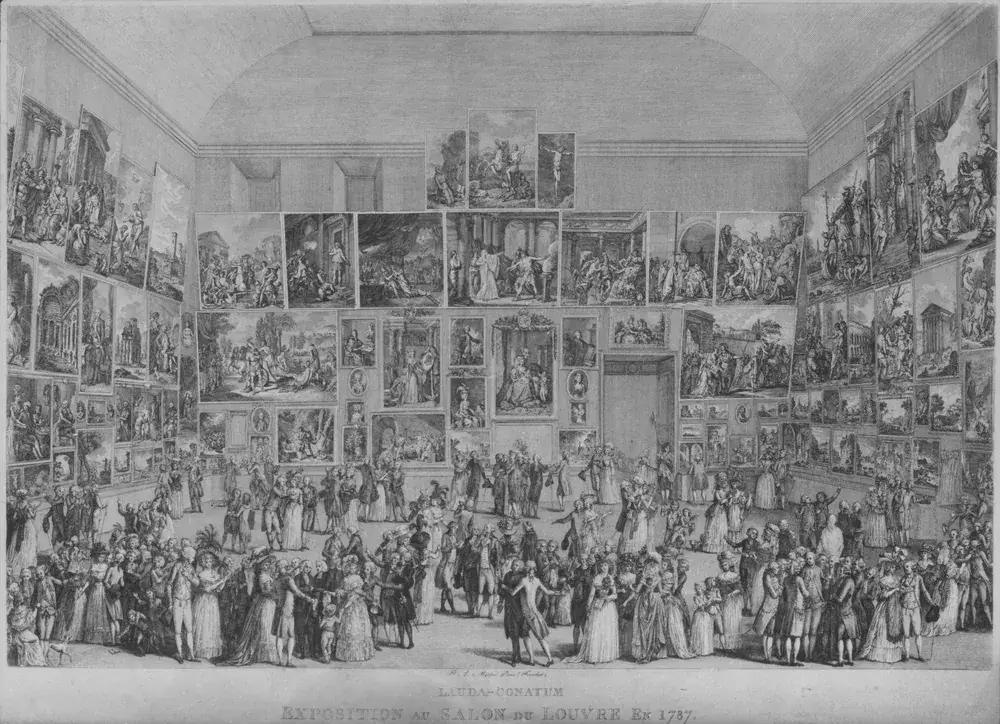
Pietro Antonio Martini, engraving, 1787. The Metropolitan Museum of Art (CC0).
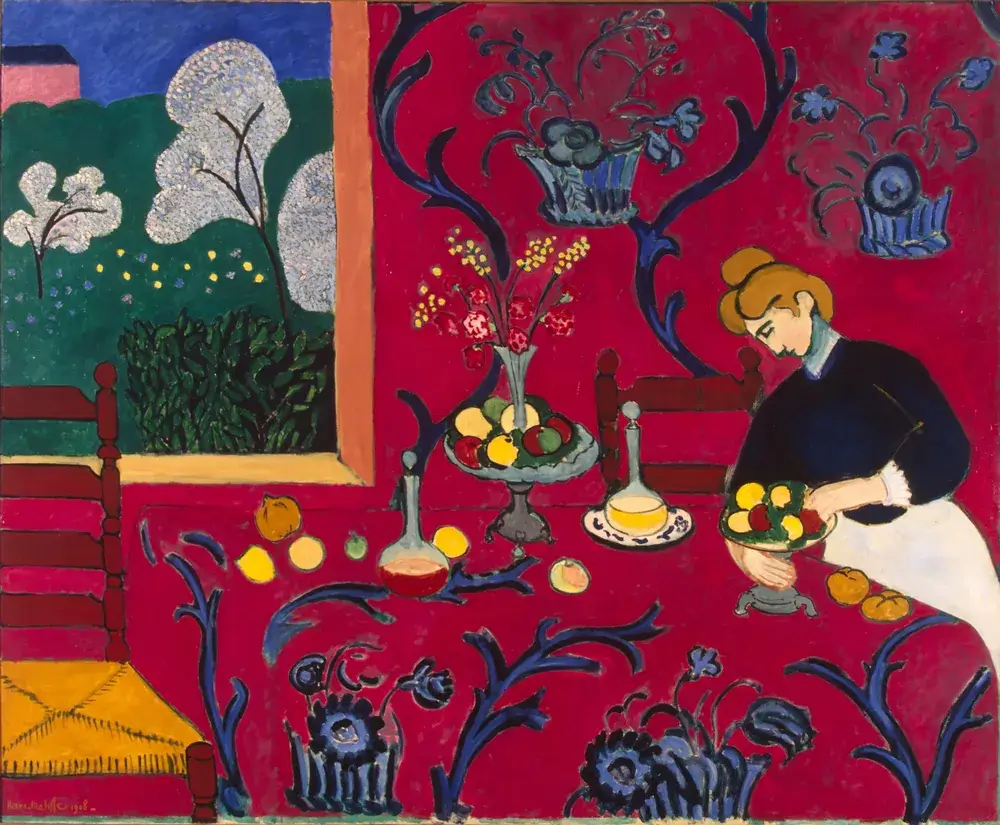
Henri Matisse, Harmony in Red, 1908. Hermitage Museum, public domain.
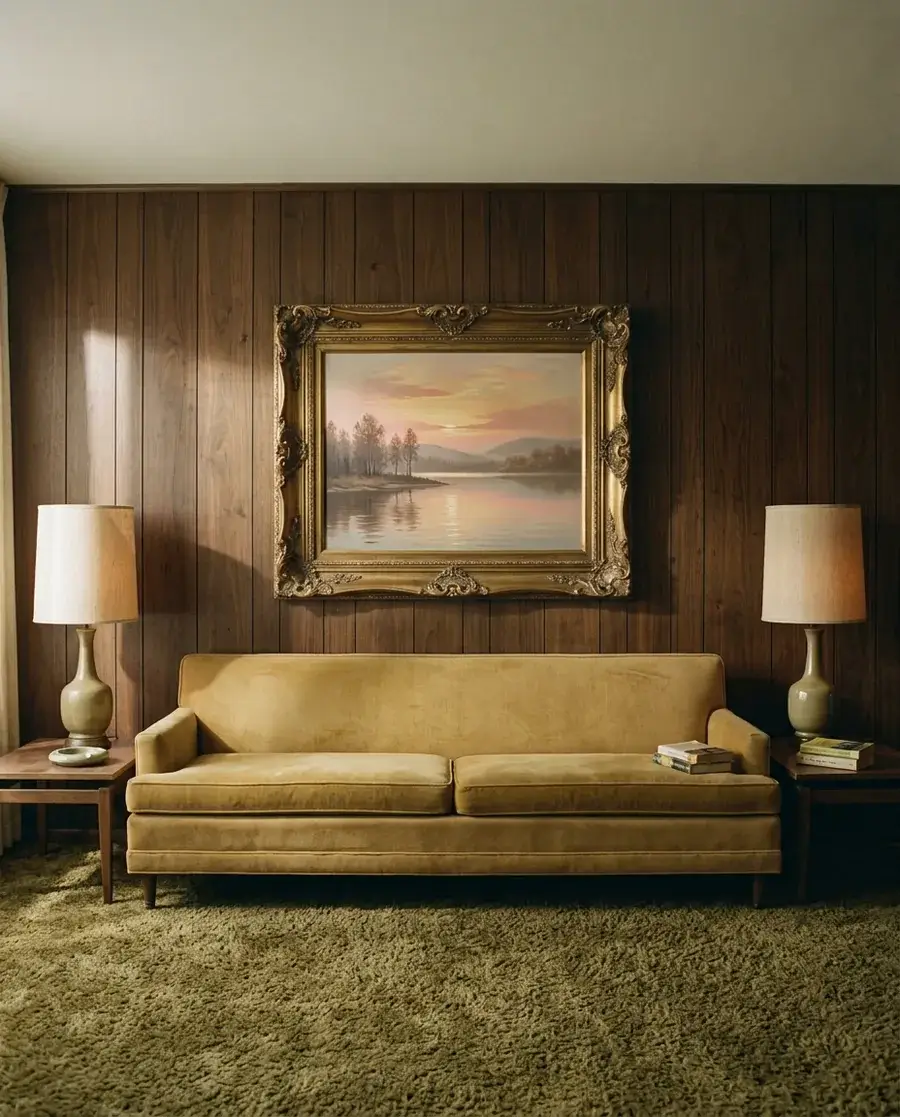
A visualisation, not a photograph.
And then two artists asked the customers. In 1993 Komar and Melamid polled 1,001 Americans: 88 per cent wanted a landscape, blue won, and 67 per cent wanted a picture “about the size of a dishwasher.” So they painted one, 61 × 81 cm. We did not plan this, but one of the formats we work in most is 65 × 81: a dishwasher, to the centimetre in height. It is a standard stretcher the French fixed in the nineteenth century, a 25 Figure, and its proportion, 1.25, is the one Fechner found on the gallery walls a century earlier.
Which Wall Are You Actually Going to Look At?
This is the question the sofa rule cannot answer, and it decides the size.
Most living rooms have three walls that can take a picture, and they are seen from different places:
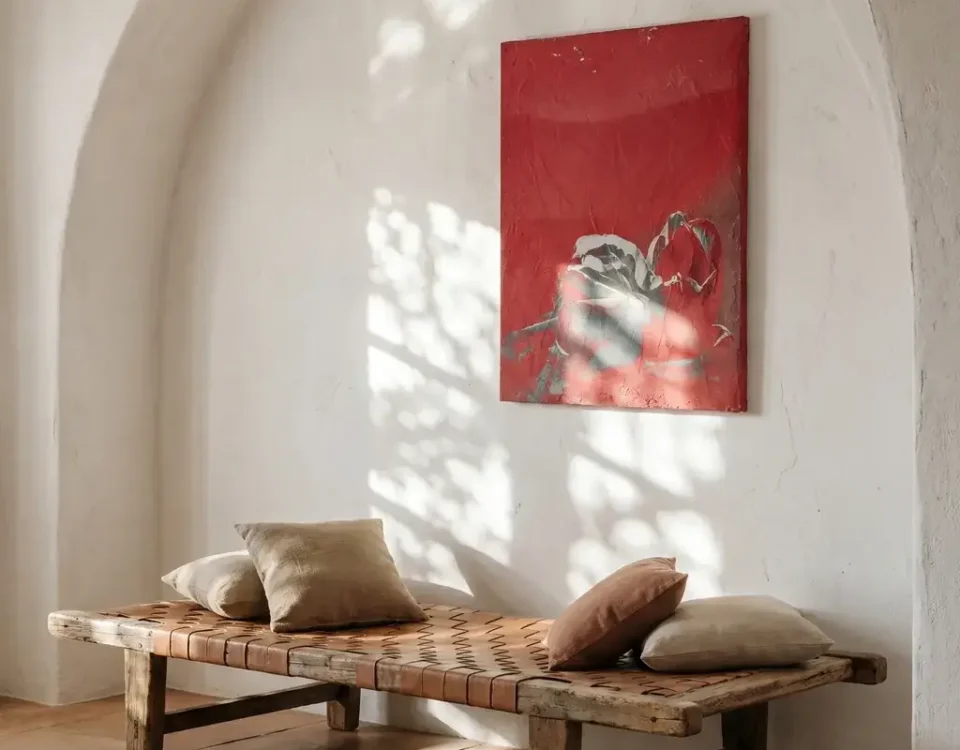
- Above the sofa: from the doorway and the armchair opposite, three to four metres off. Never from the sofa.
- Opposite the sofa: sitting down, for hours, from about three metres; then from half a metre, when you get up.
- Beside the sofa: from the armrest, one to two metres. Usually the wall that gets the window from the side: the best wall in the house for anything with a surface, as we explained in the piece on light.
Now the ruler. How far away a picture reads “naturally” has a number, and it comes from photography: a photograph keeps the perspective it was taken in when your eye is about one diagonal of the print away. A longer lens pushes that out: the photographs our pieces are built from are mostly taken with a 100 mm, which puts them at a little over two diagonals. The unit is the diagonal, not the sofa.
Put the two together and the wall above the sofa sorts itself out. A 33 × 55 piece has a diagonal of 64 cm; from the doorway you see it at nearly five: a small picture. A 89 × 116 piece has a diagonal of 146 cm; from the same doorway you are at two, almost exactly what it was photographed for. Above a sofa you need a long diagonal or a group. The two-thirds rule is just the check that the result leaves enough air.
Which size for which distance
| Format | Diagonal | Best seen from |
|---|---|---|
| 33 × 55 | 64 cm | 1.5 m |
| 65 × 81 | 104 cm | 2.4 m |
| 89 × 116 | 146 cm | 3.4 m |
| Three 33 × 55 in a row | 127 cm | the group from across the room; each piece, from 1.5 m |
For photographs taken with a 100 mm lens. The largest lands on the far wall of an ordinary living room.
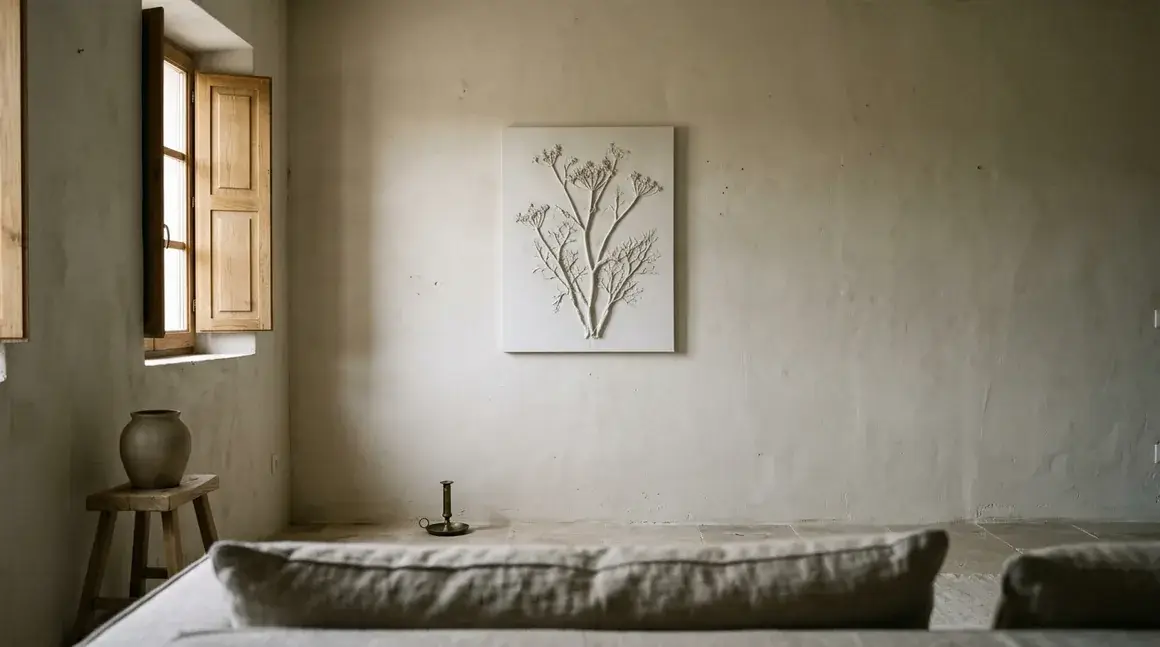
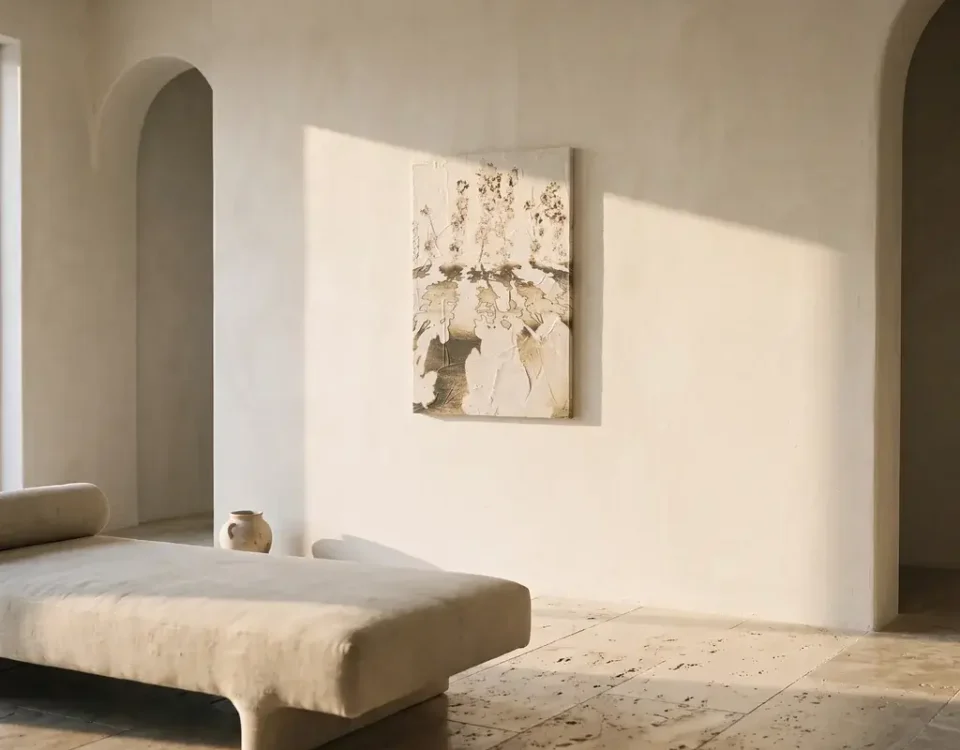
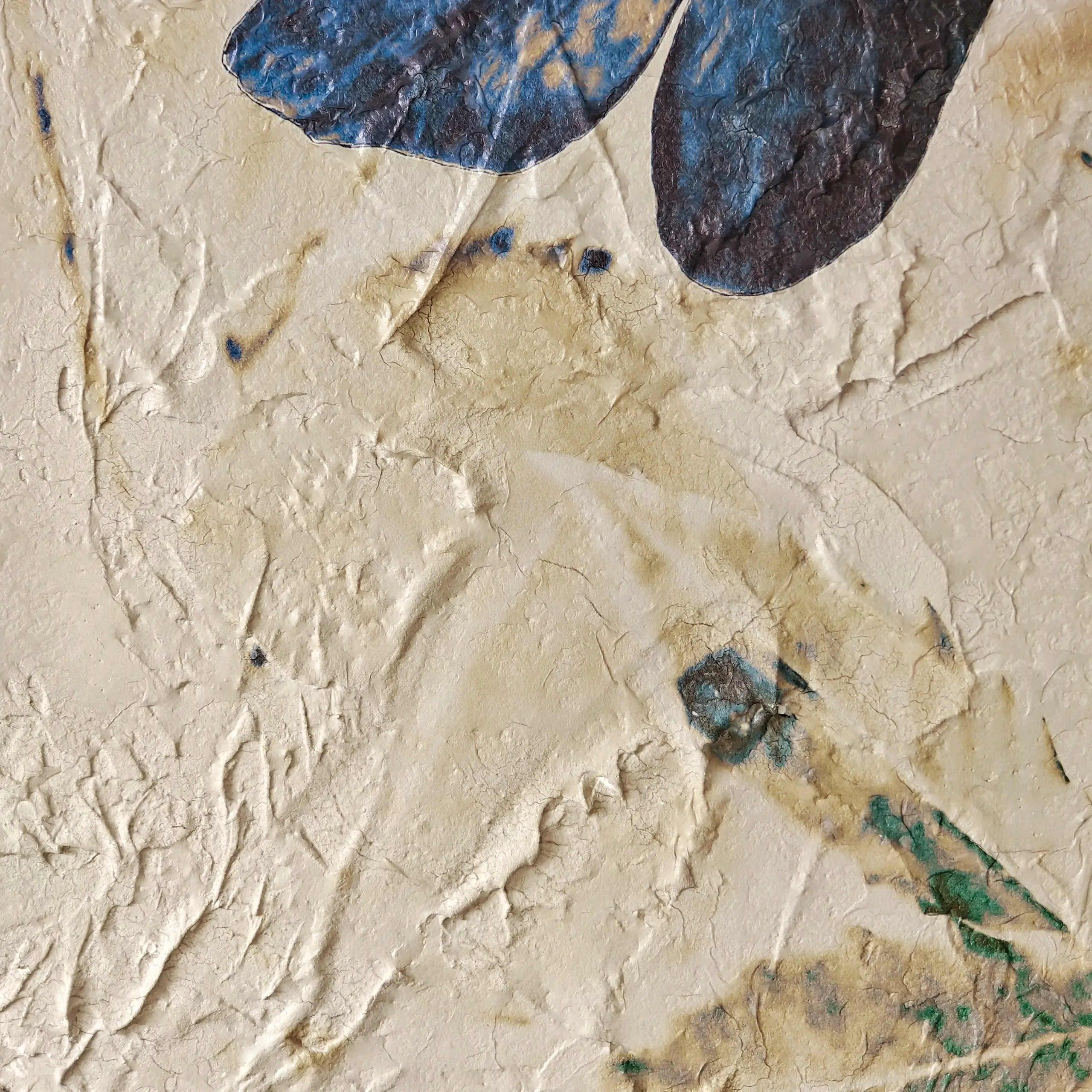
The wall opposite is the other case, and the one that matters for a piece with a surface. Rothko is reported to have asked that his large canvases be looked at from eighteen inches; he painted big, he said, in order to be intimate. A relief belongs to both traditions: from the sofa you see the image, and at half a metre the surface takes over: the grain, the shadow, the part no photograph of it contains. A piece with depth is chosen for two distances, and the wall facing the sofa gives you both every day.
Did you know...?
5× its diagonal
How far a 33 × 55 piece is when seen from the doorway. From the armrest beside it, one diagonal. And a whole world.
So What Size, Then?
A 210 cm three-seater in a four-by-five-metre room. The rule asks for 126 to 158 cm of art. Four honest ways to get there, and they are not the same picture.
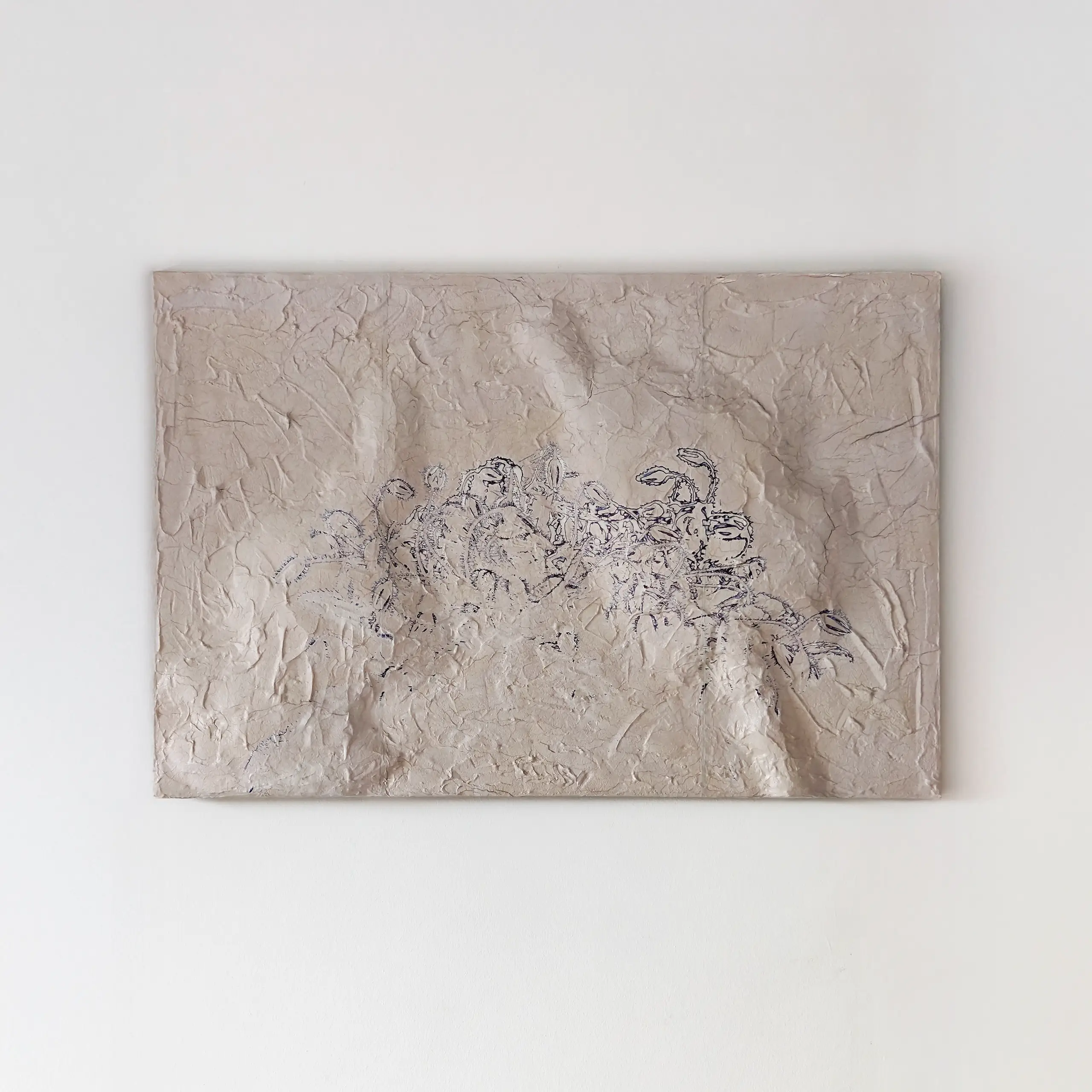
One wide piece. The classic sofa painting, 140 × 70, seen from across the room. It works, and it is the shape the rule was written for, and the one we make least: our widest single pieces are around 90 cm, like BORAGE I, which meets the rule over a two-seater.
A pair. Two 65 × 81 with ten centimetres between them make 140, and two pictures that answer each other are better company than one wide one.
A group. Three 33 × 55 in a row, eight centimetres apart, make 115, the low end of the rule on a 190 cm sofa. Adjust the gaps before the pieces; the gaps are what the eye reads.
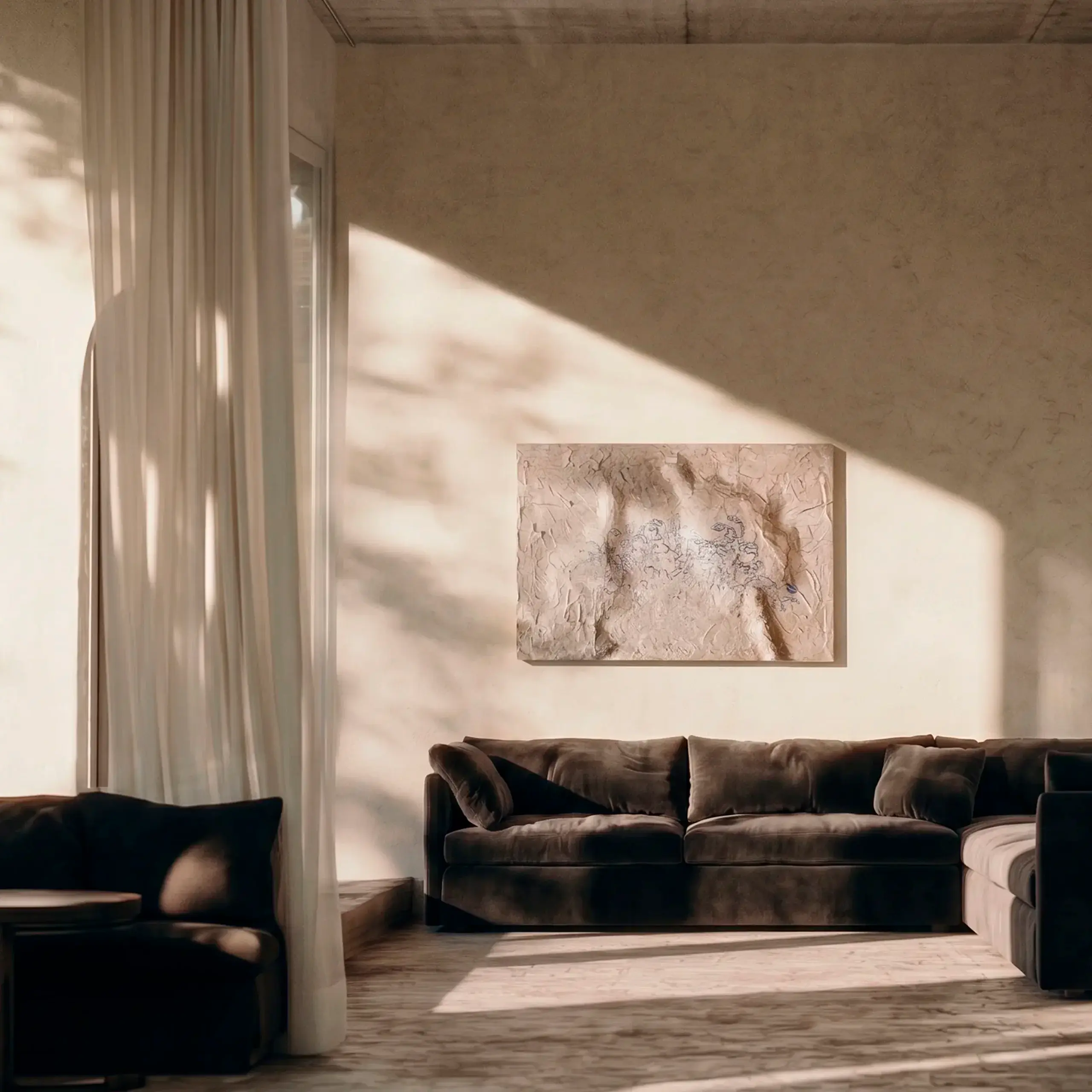
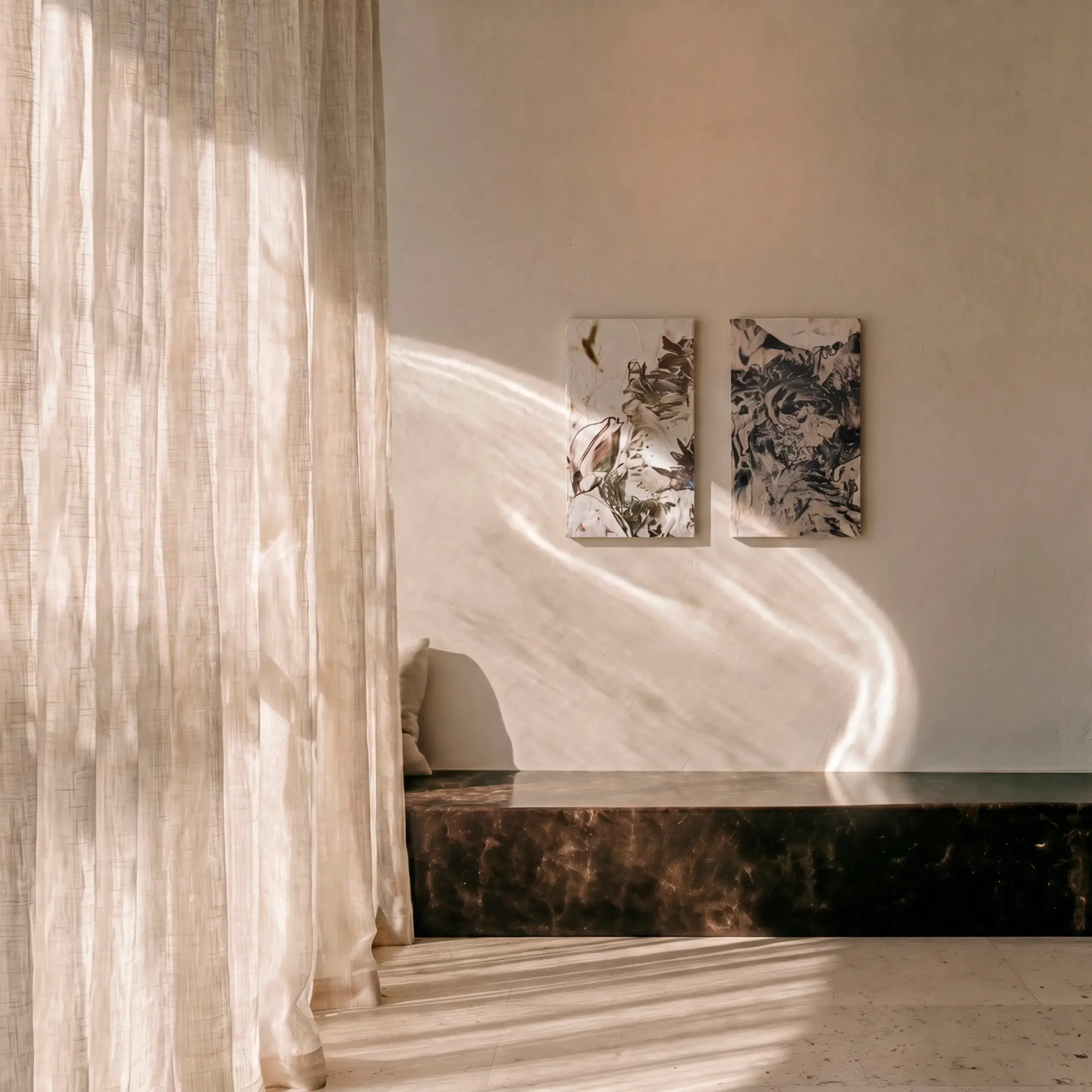
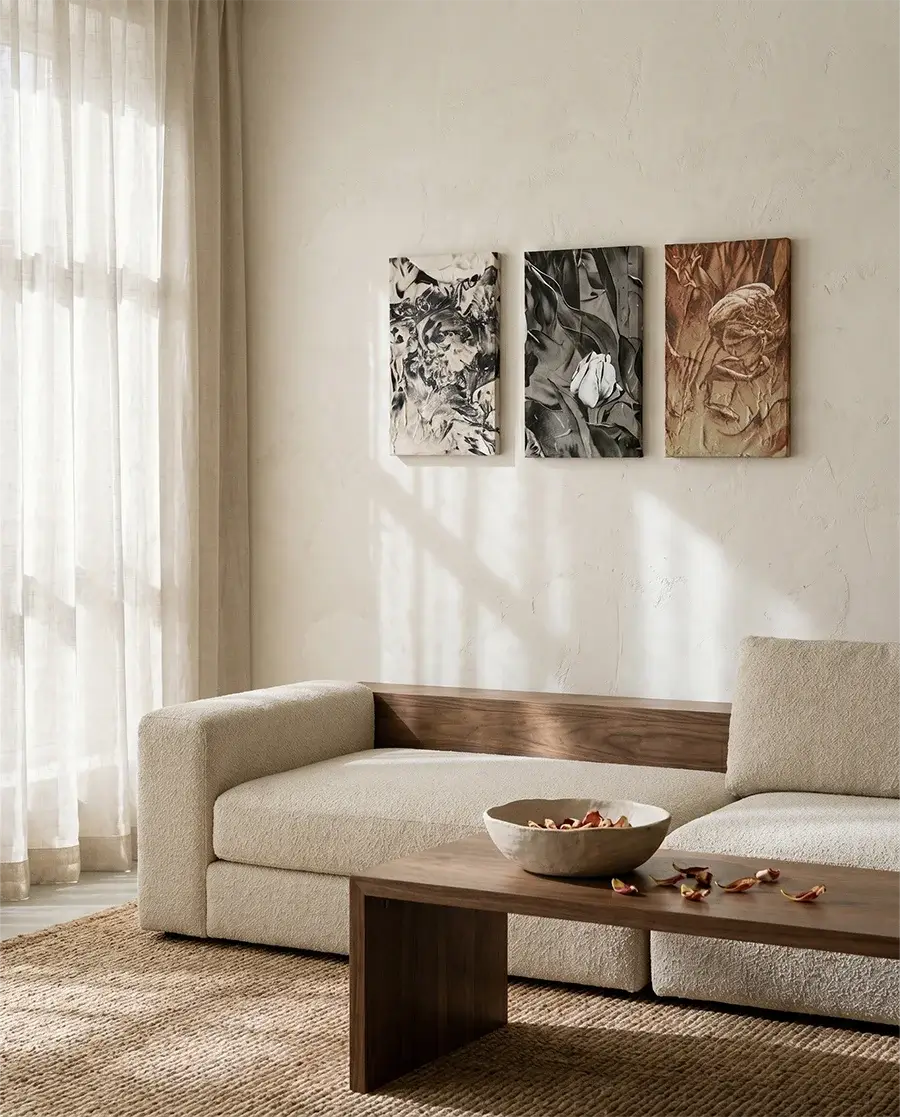
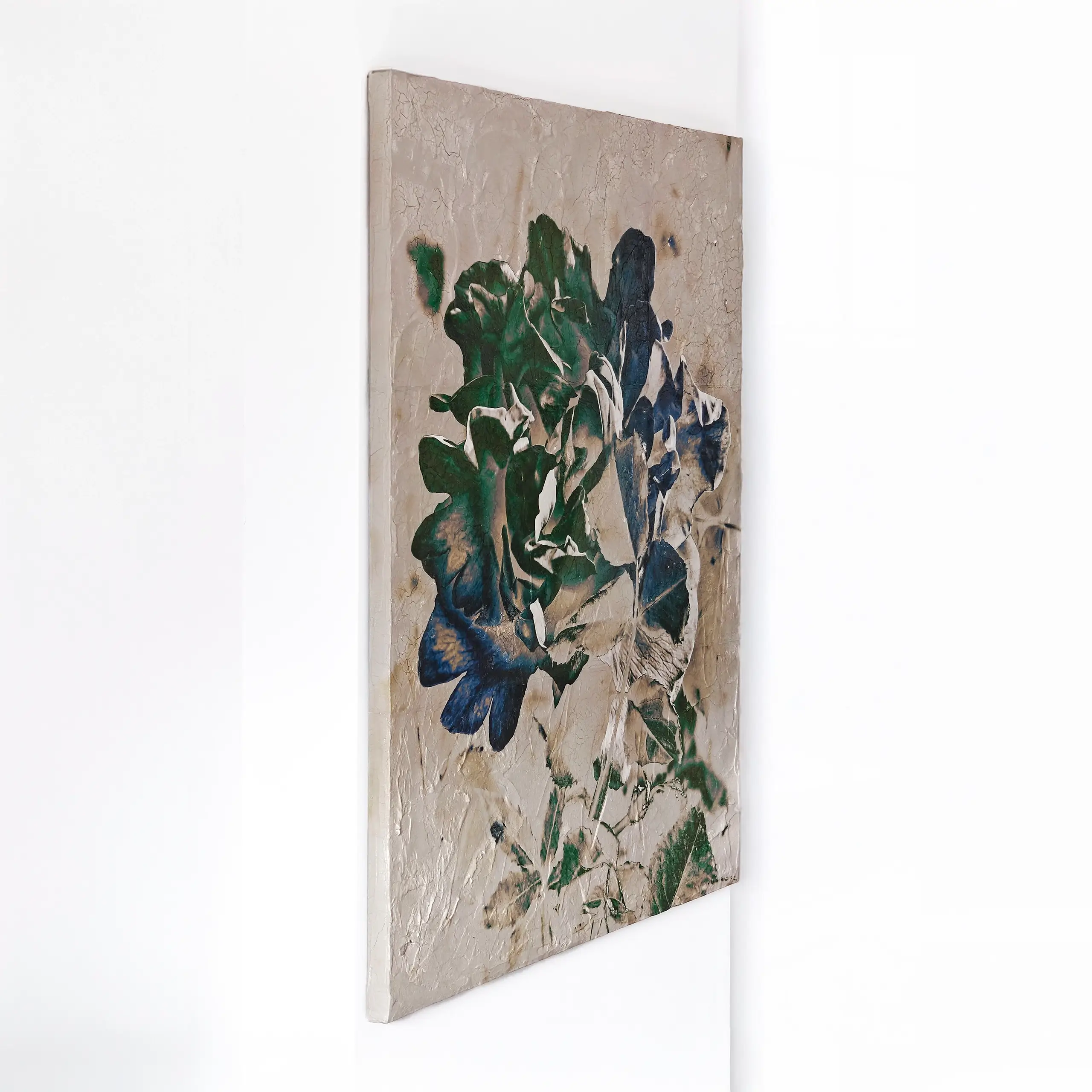
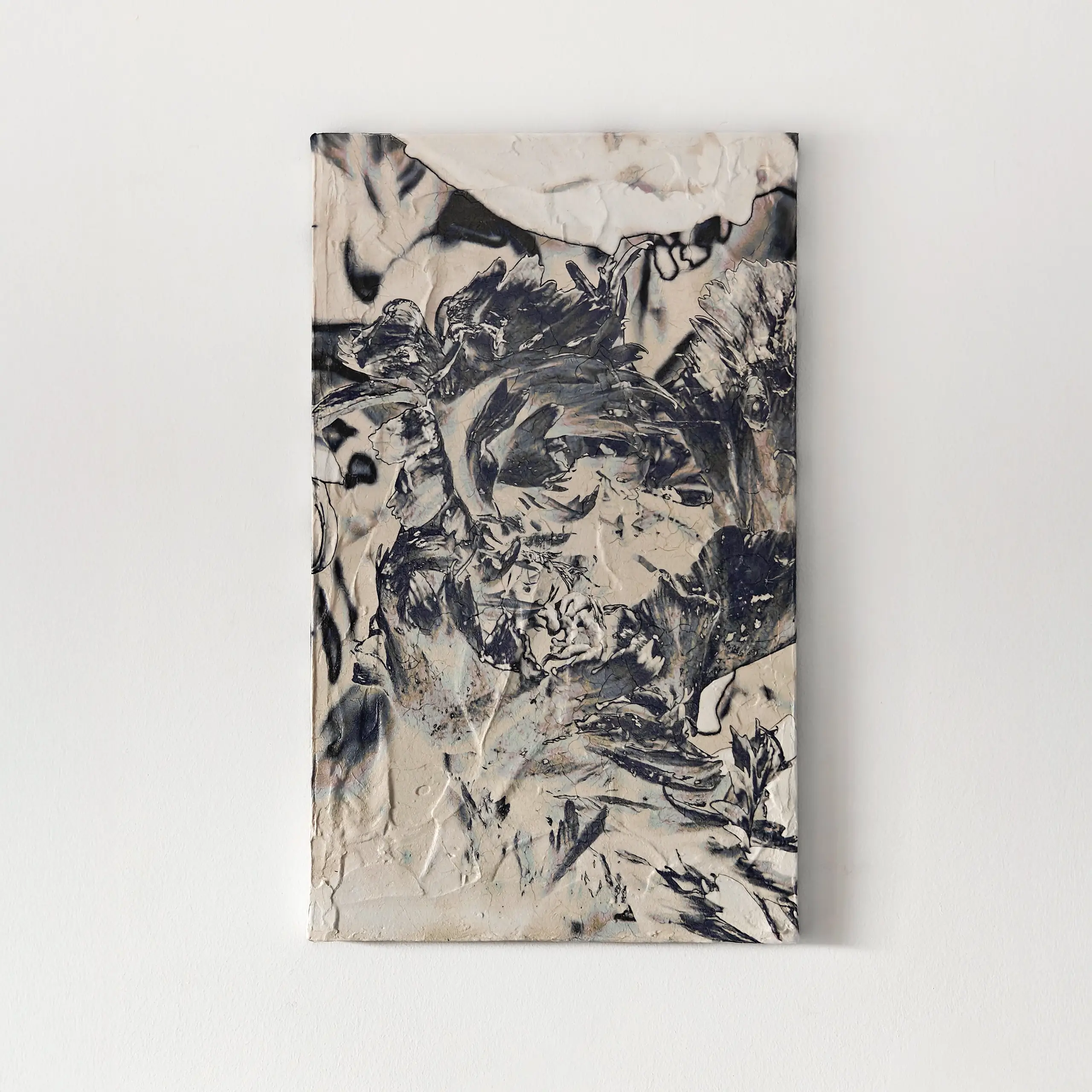
A vertical. The one the rule cannot see. ROSE XII is 89 × 116: 42 per cent of the sofa, a clear fail. It also covers 1.03 square metres of wall, more than the 140 × 70 landscape the rule approves. Same mass, carried upward, with the air on both sides instead of above.
Height, on this wall, is decided by the sofa, not by the famous 145 cm. Leave 15 to 25 cm above the backrest: closer and heads brush it, further and it floats. With a backrest at 85 cm, an 81 cm piece then centres at about 145 by itself: the usual number, reached by a different road. The arithmetic of the nail is in How High to Hang Art.
The Three-Day Test
None of this replaces looking. It only tells you what to look at.
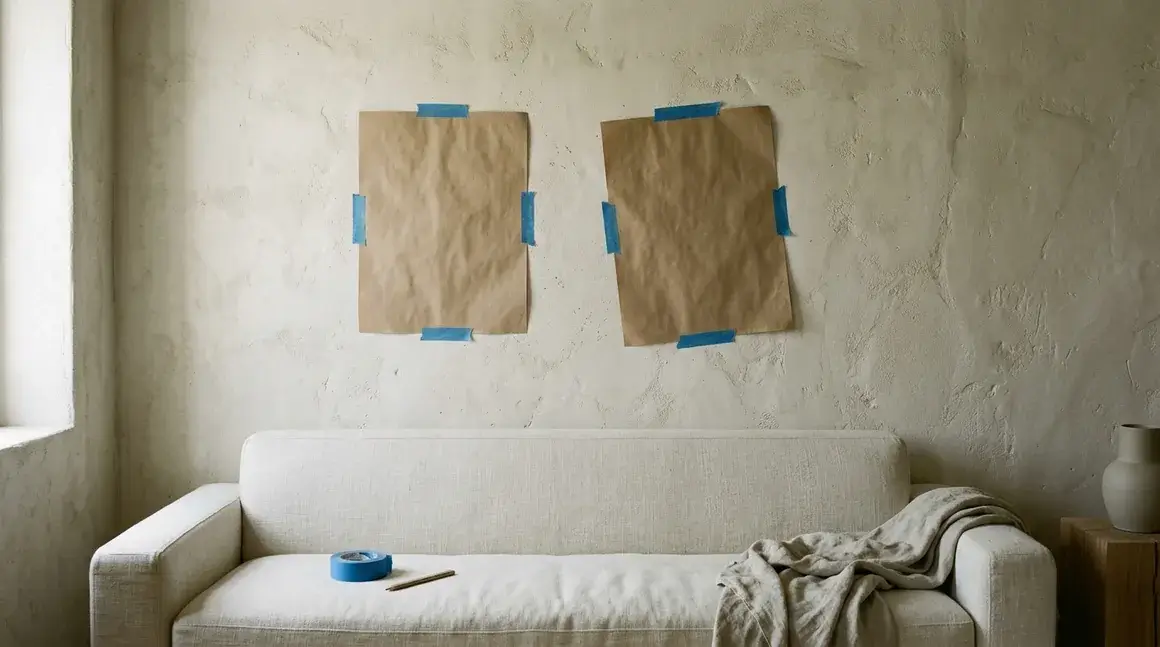
Cut the outline of the piece (or of each piece and the gaps between them) from brown paper, and tape it to the wall at the real height. Leave it there for three days.
Three days, not an evening, because a picture on a wall is not one picture: it is one at nine in the morning with the window on its side, another at noon, another under the lamp at night. Look from the three places that matter: doorway, seat opposite, armrest. If it only works from one, it is on the wrong wall, not the wrong size.
Brown paper lies about one thing: it is light. If the piece is dark, tape grey card inside the outline, so you see the mass and not just the edge.
Should It Match the Sofa?
Komar and Melamid's thousand Americans answered this one too: blue. It is the honest majority answer and it is not the point.
A colour that repeats the sofa, the cushions and the rug is a colour you will stop seeing by the second month: it has agreed with everything and become furniture. A colour that answers the room is in the same conversation without saying the same thing. Matisse wanted an art that calms, but calm is not coincidence, and nothing about a good armchair matches the curtains.
So: pick the wall first, by its distances. Then the piece that holds your eye when you walk in. Colour last.
What Goes Wrong Most Often
Three things, and we see them in most living rooms.
The mirror facing the television. A mirror above the sofa reflects the wall opposite, and that wall usually holds a black rectangle. You have bought a second television that only works when the first is off.
The picture beside the television. Anything on the same wall as a screen is in a contest it loses every evening. The wall for the piece you want to look at is the one at right angles to the screen.
Sizing for the sofa and then sitting on it. The wall above the sofa is seen by people standing up. Hang the picture you care most about there and you have hung it for your guests. The one you want to live with goes opposite.
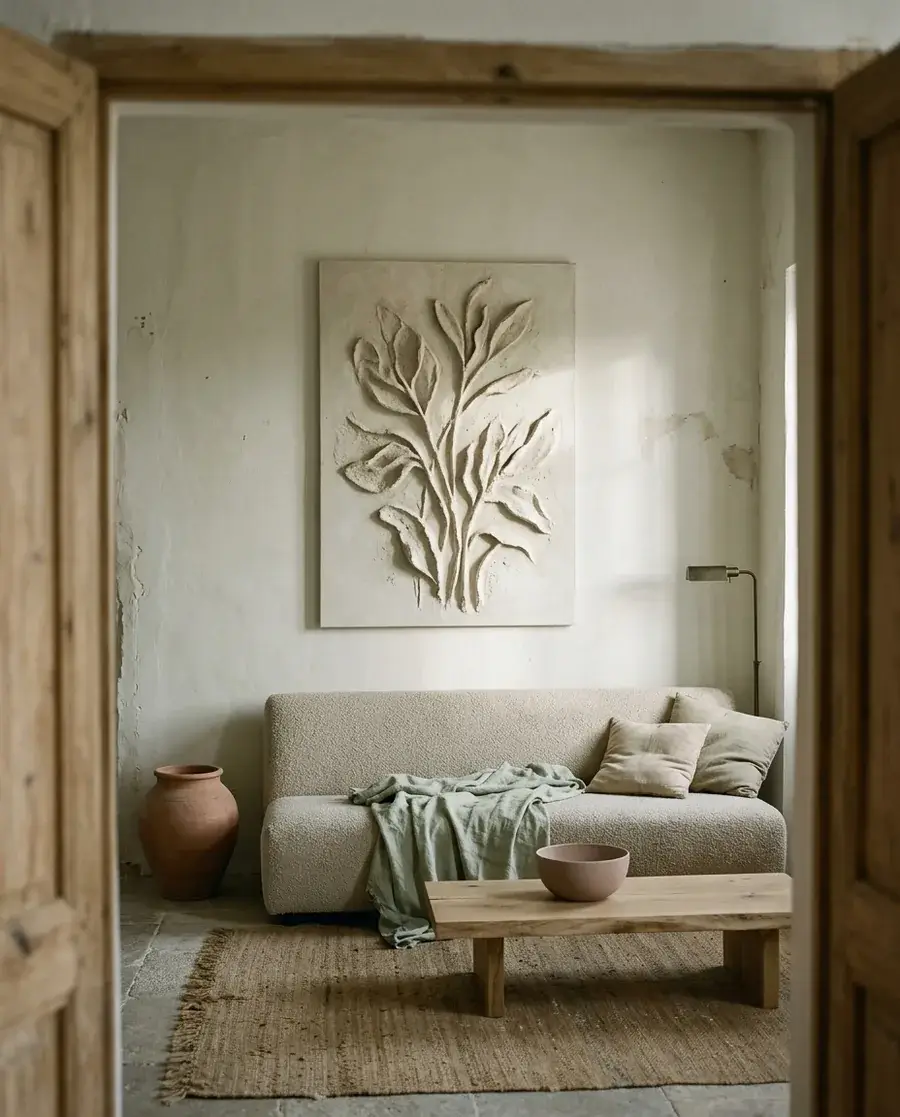
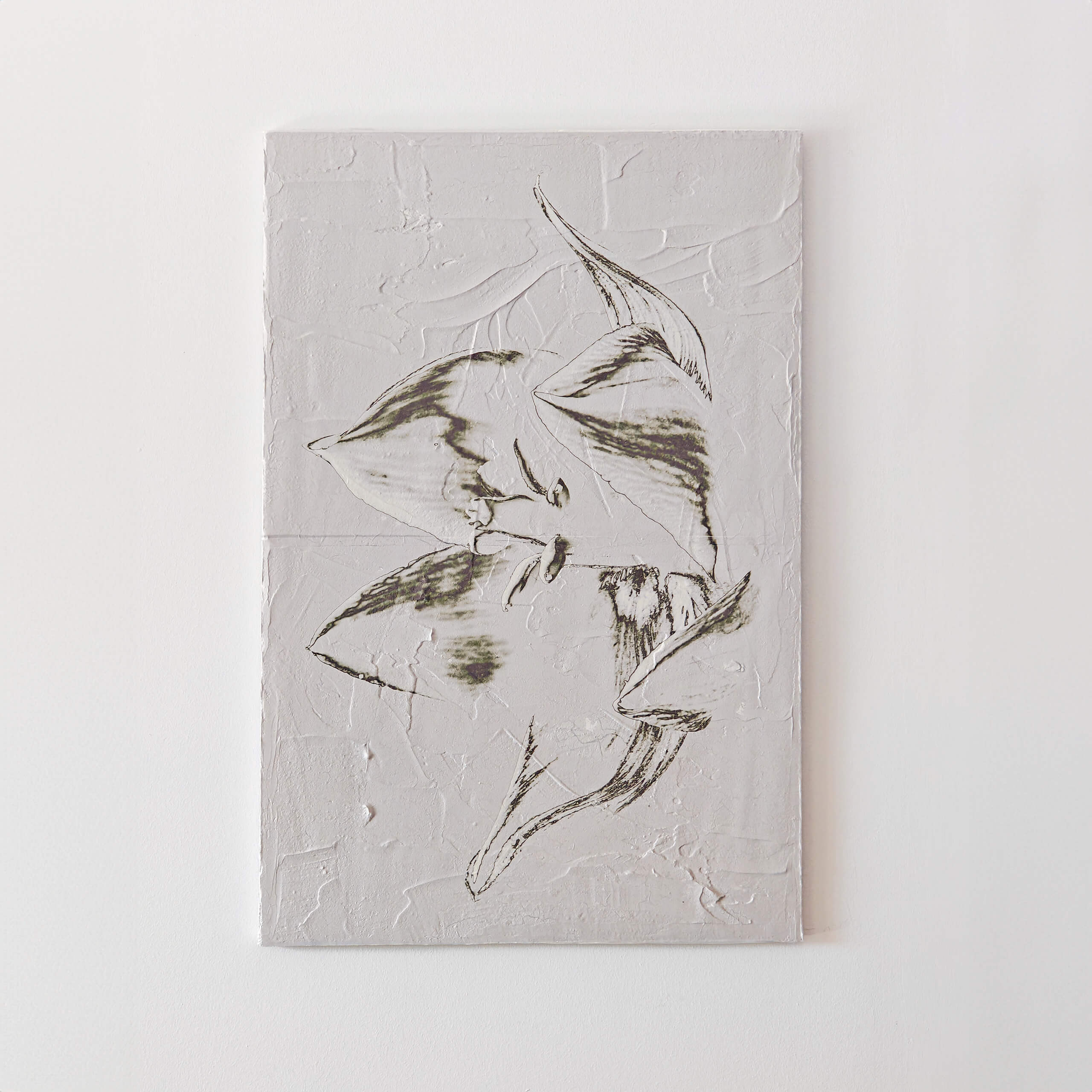
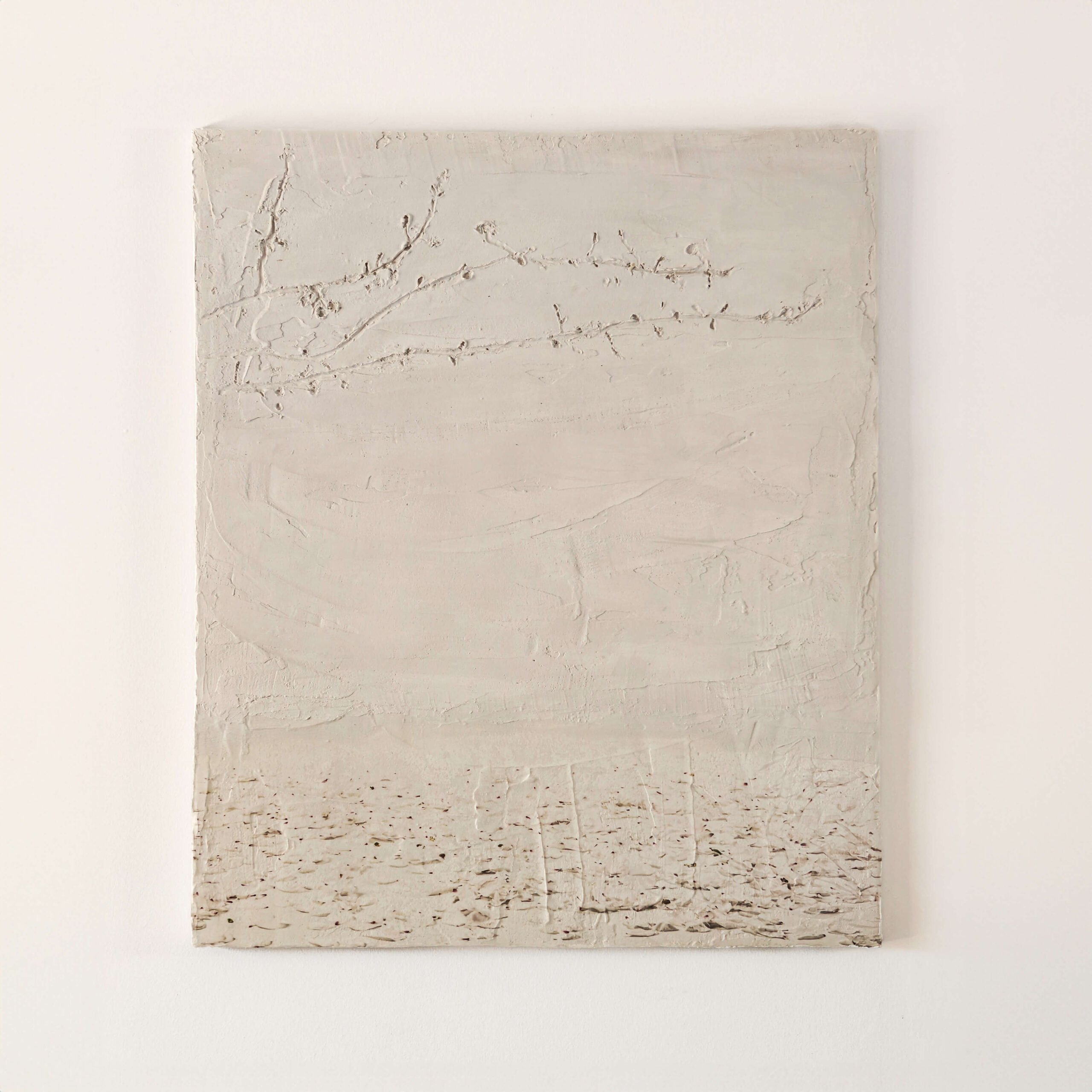
Four pieces, four walls:
Living Room FAQs
Art, unless the wall opposite is worth doubling. If what you want is light, put the mirror beside the window instead.
You can; it will not be looked at. If that is the only wall, hang the piece at the far end from the screen and choose something that reads from the sofa: a long diagonal, or a group.
Decide by distance. From three metres, a single 33 × 55 is a postcard and three of them are a picture. From one metre, one is plenty.
From Nature to Canvas
Why does a picture need two distances at all?
Because ours began as photographs, and a photograph has only one. We loved our images and not their physical expression: flat, behind glass, the same from the doorway and from the armrest. So we stopped printing them.
We work in photographic relief in plaster on canvas: the image transferred once onto a surface built to hold light and shadow, no paper and no layers. From across the room it is an image; up close it becomes an object, and the room decides how often you get to do both. The pieces are grouped by theme, our room views show them on different walls, and there is more about the two of us in about us.
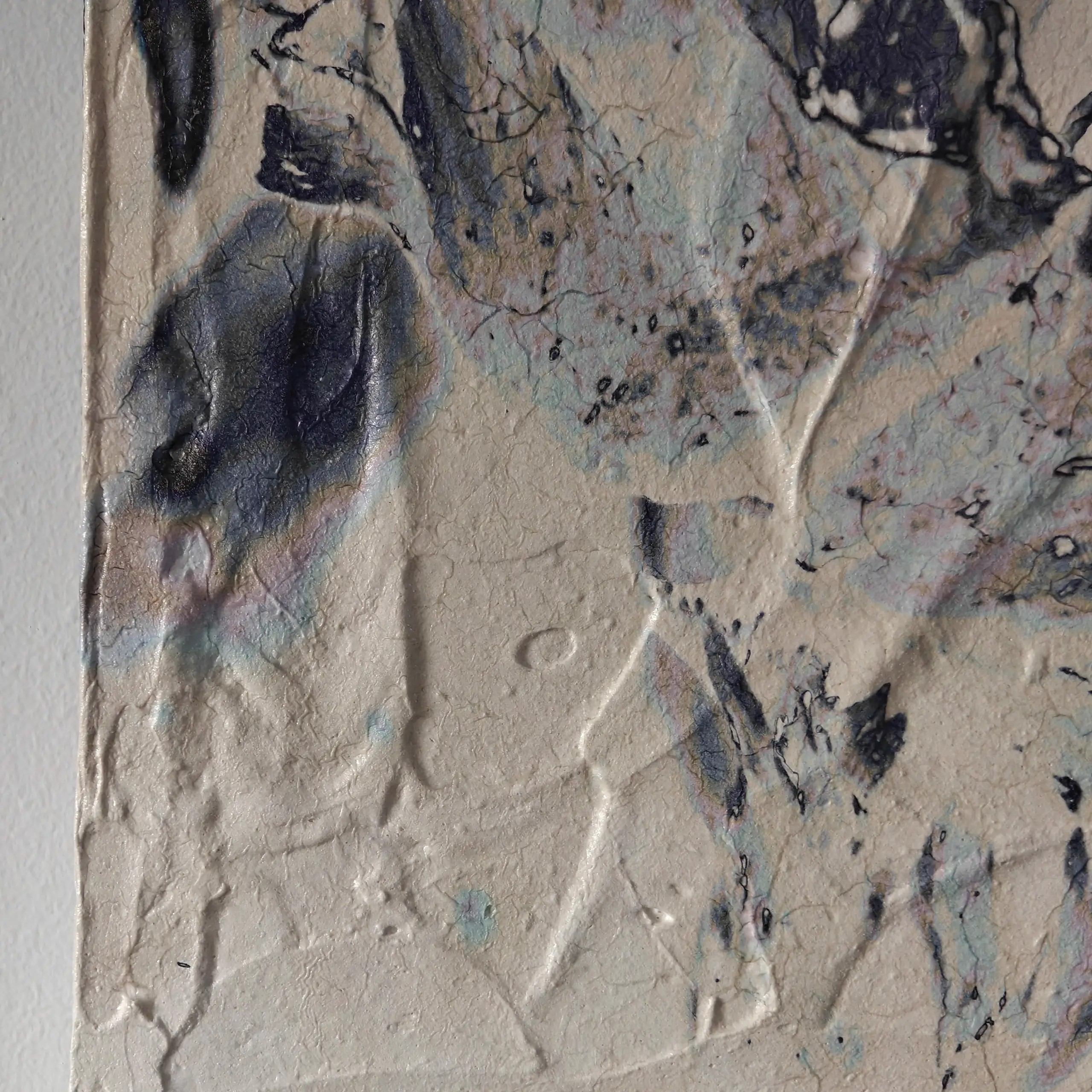
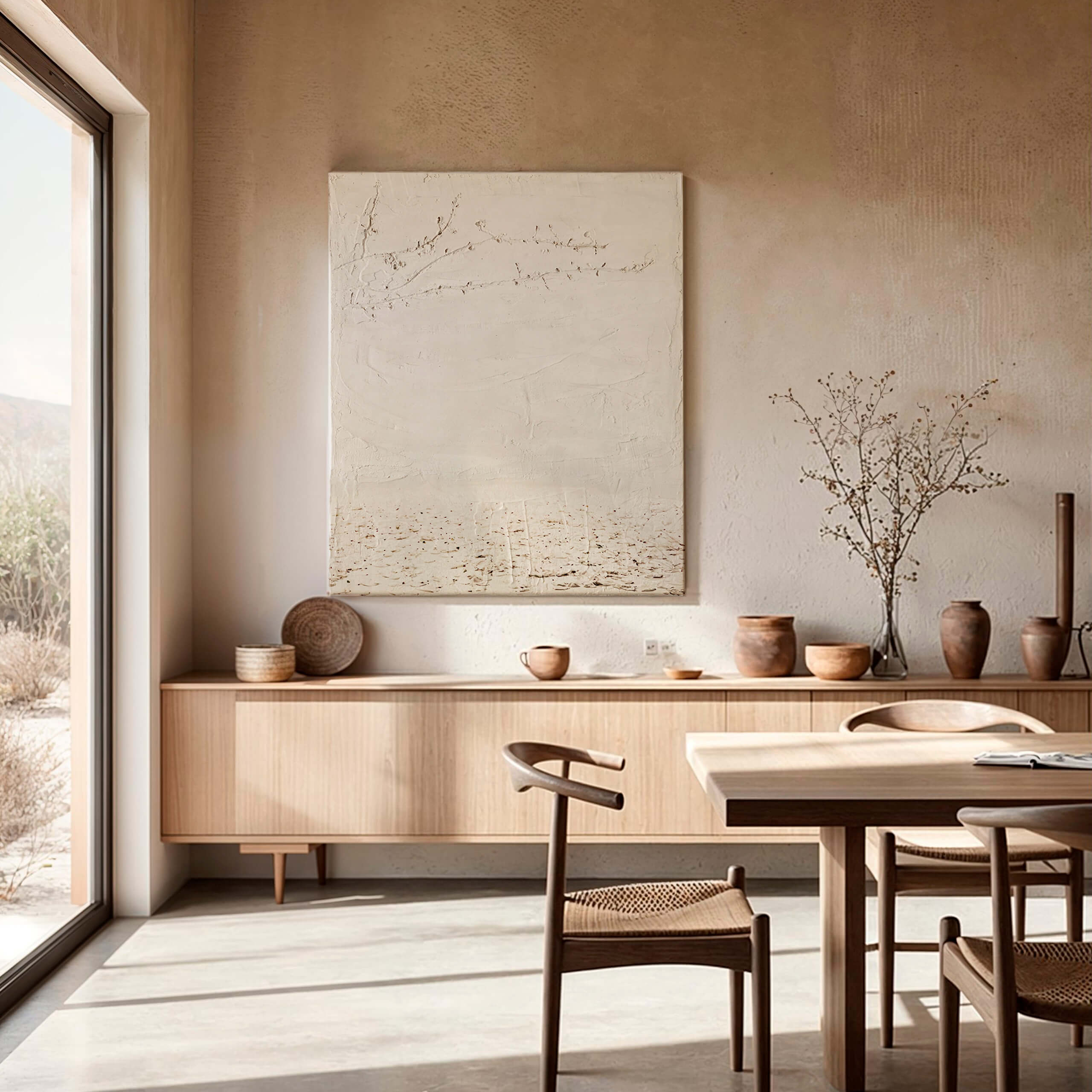
The room scenes on this page are visualisations. The close-ups, the two views of ROSE XII and the four works above are photographs of the actual pieces, and the Vermeer, the Matisse and the engraving of the 1787 Salon are real works.