







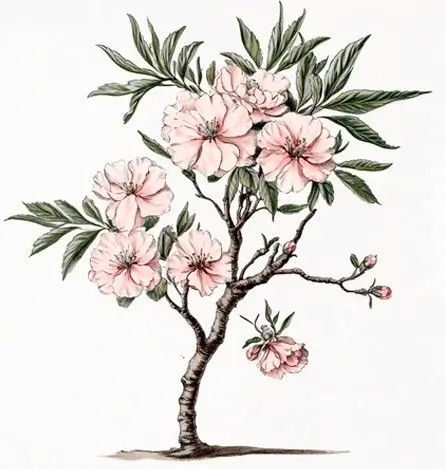
Kanzan
Facts and Features
| Common & Scientific Name: | Kanzan Cherry Tree (Prunus serrulata 'Kanzan') |
| Etymology: | Derived from the Japanese word 'Kanzan' (meaning 'cold mountain') |
| Family: | Rosaceae |
| Blossoms: | Large, double-petaled pink flowers |
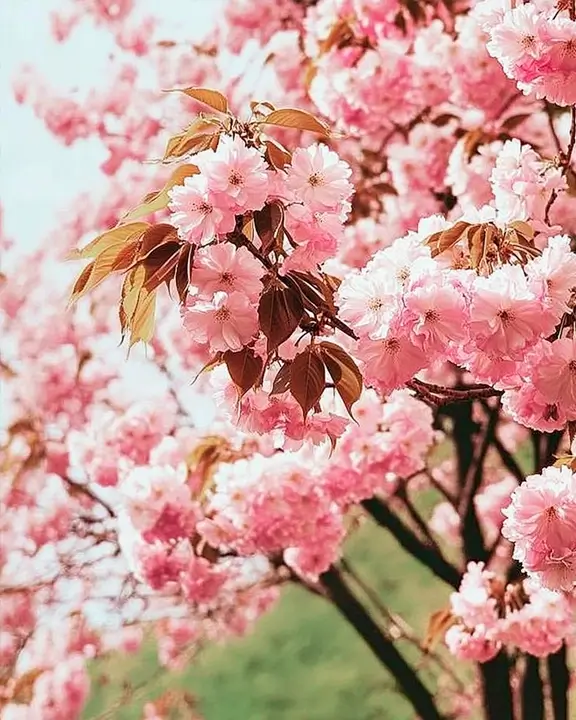
| Foliage: | Young reddish-bronze leaves maturing to deep green |
| Fruit: | Rarely produces fruit; ornamental tree |
| Height: | Up to 12 meters (40 feet) |
Kanzan main features chart
Kanzan Through Time: The Edo Floral Icon
Originally named ‘Sekiyama’ (Sekizan), the Kanzan Cherry Tree has a deep-rooted history in Japanese horticulture, particularly in the Edo period when it was selectively cultivated for its extravagant blossoms. The name ‘Kanzan’ is a poetic term meaning “bordering mountain,” evoking a sense of nostalgia for one’s distant homeland valley.
Kanzan cherries were introduced to the United States as early as 1903, before becoming one of the twelve varieties gifted from Japan to Washington, D.C. in 1912. Among the 3,020 trees donated, Kanzan quickly stood out for its densely petaled, vibrant pink blooms. Today, Kanzan remains the most widely grown cherry variety in the UK and is dominant in various cities worldwide.
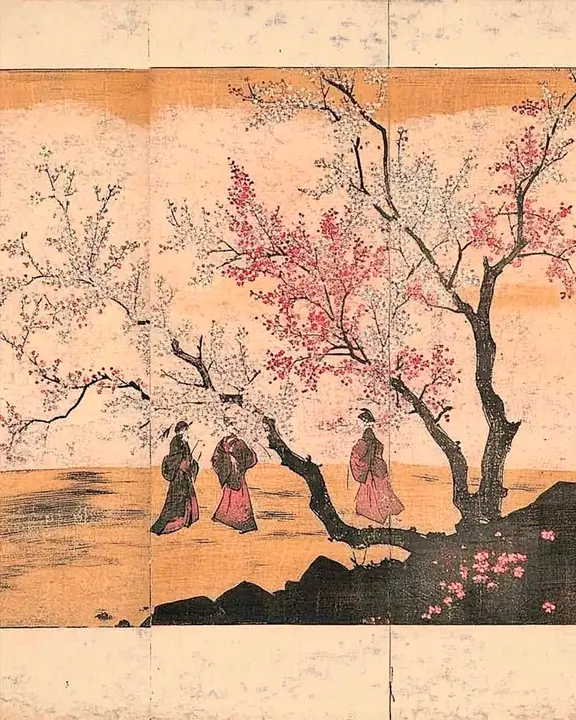
Kanzan cherry tree variety traces its roots back to Japan’s Edo period (1603–1867)
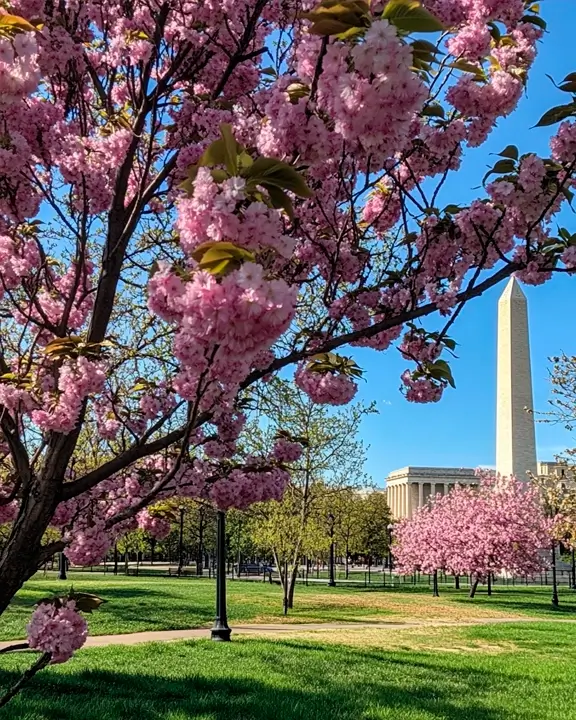
Notably, Kanzan was among the dozen cherry varieties gifted from Japan to the U.S. in 1912
Kanzan is the second most common cherry variety in Washington, D.C., after Yoshino, contributing significantly to the city’s renowned cherry blossom displays
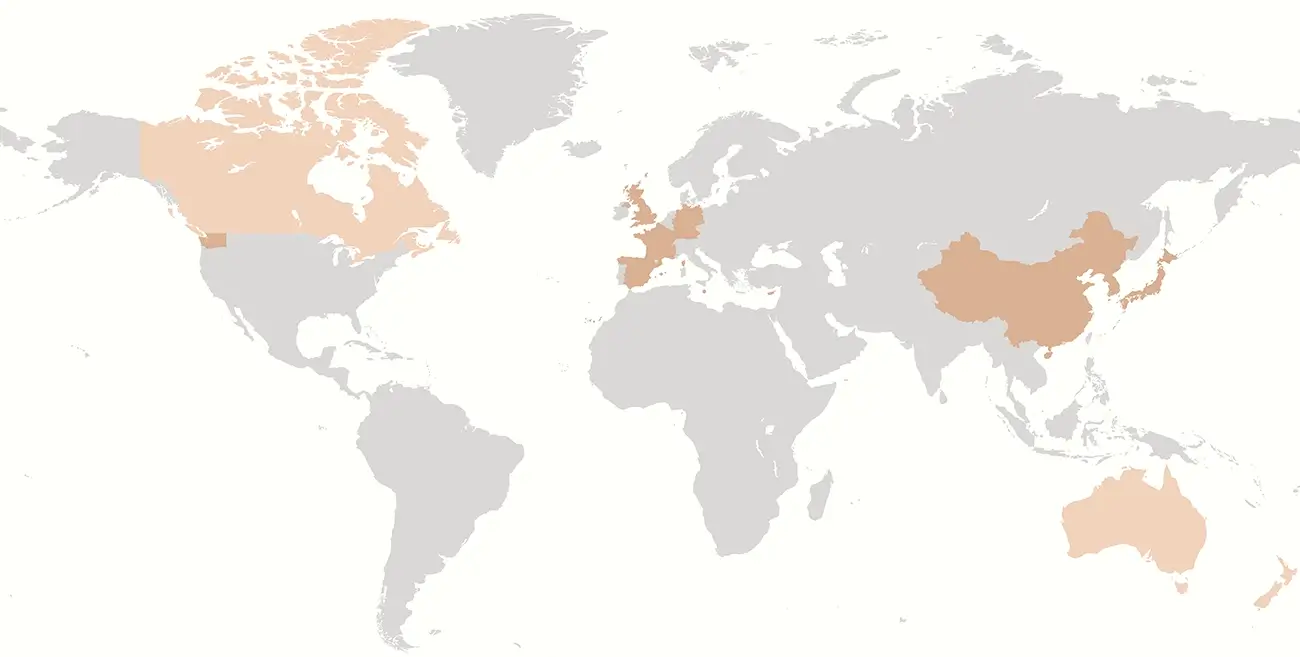
Althought Kanzan Cherry Tree is native to Japan, it has also been extensively cultivated in China and Korea, where it is featured in temple gardens and urban landscapes, as well as United States, UK, Spain, Australia or Canada. Unlike wild cherry species, Kanzan does not grow in the wild—it is entirely a cultivated variety.
The Little-Known Wonders of the Kanzan Cherry Tree
DID YOU KNOW...?
petals per bloom!
-
Color Transformation: The flowers start as deep pink buds, open into rich fuchsia, and gradually fade to soft pastel pink as they mature.
-
Fragrance: Kanzan blossoms have a delicate, light scent, though they are not as fragrant as other sakura.
- Encouraging a Healthier Lifestyle: Studies show that attractive flowering trees can encourage people to walk or bike rather than drive, promoting a more sustainable and active lifestyle. The Kanzan’s magnificent spring bloom also draws communities outdoors to engage in hanami (flower viewing), fostering a cultural appreciation for nature in the city.
-
No Messy Fruit: Kanzan is a fruitless variety, making it ideal for urban landscapes without the inconvenience of falling cherries.
-
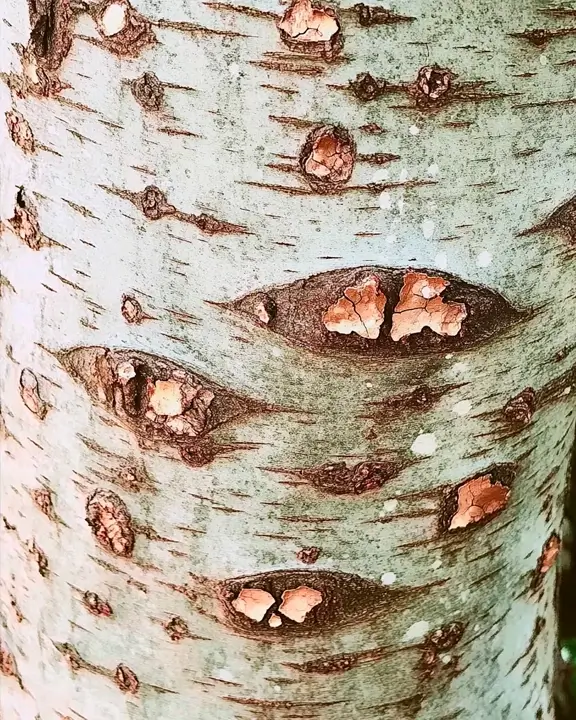
Winter Interest: The tree’s brownish bark with horizontal lenticels adds visual texture even in dormant months.

Flowers Within Flowers!
When spring awakens, the Kanzan Cherry Tree transforms landscapes into cascades of luminous pink.
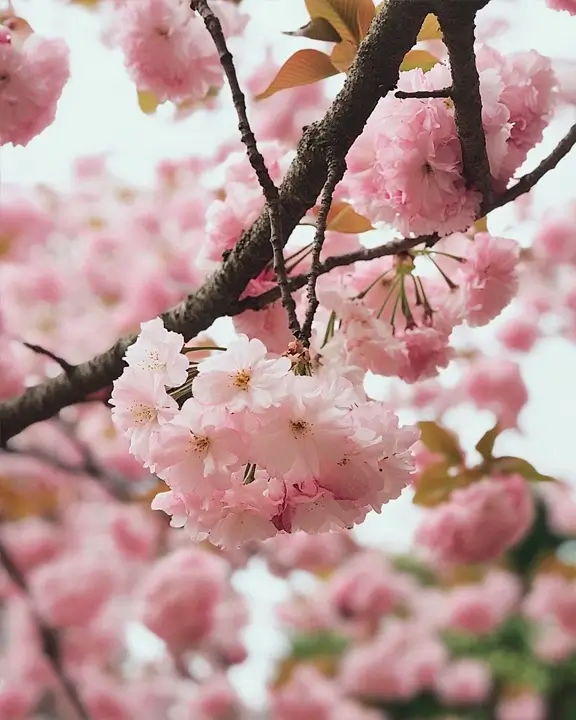
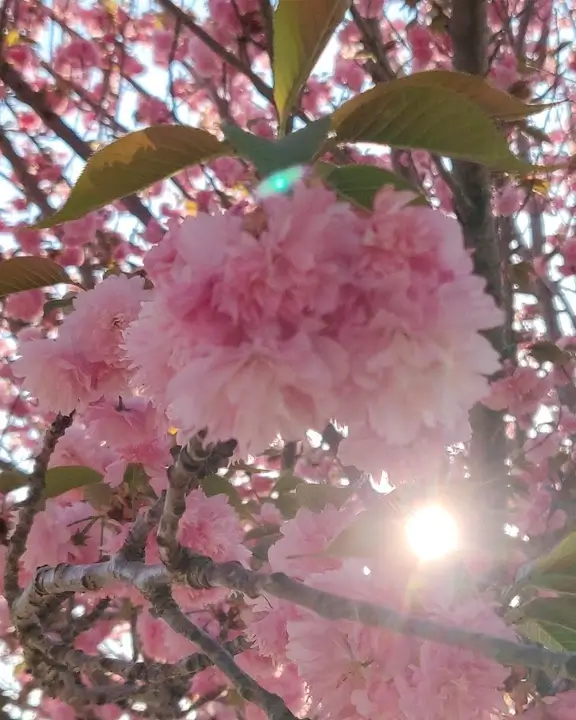
In contrast to the simplicity of five-petaled wild sakura, Kanzan’s tufted blooms have an almost exuberant fullness. Each Kanzan bloom is a rosy, double-petaled spectacle, boasting 20-30 petals per flower (sometimes up to 50!), making them among the fullest and most opulent cherry blossoms in existence. They don’t merely perch on branches; instead, they spill over in graceful clusters of 3 to 5 flowers, forming pendants of lush petals that sway with the breeze. In addition, Kanzan’s late bloom ensures a prolonged spring spectacle, creating a mesmerizing pink carpet when its petals finally drift to the ground.
Kanzan Varieties and Modern Uses
While the Kanzan Cherry Tree is one of the most well-known cherry blossom varieties, several notable cultivars have emerged from it:
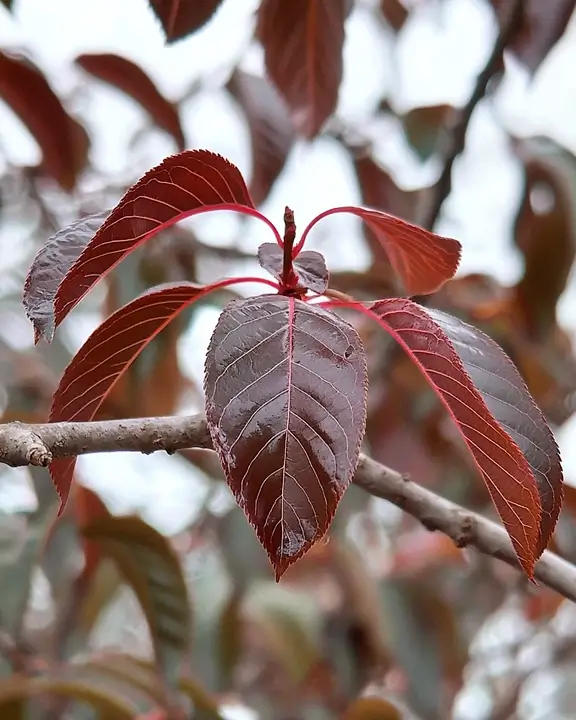
Prunus ‘Royal Burgundy’ – A mutation of Kanzan with deep purple foliage, developed in the 1990s.
.

‘Pink Perfection’ – A smaller, compact version of Kanzan created in Britain in the 1930s, with similar vibrant double blossoms.
Today, Kanzan cherry trees are widely used in:
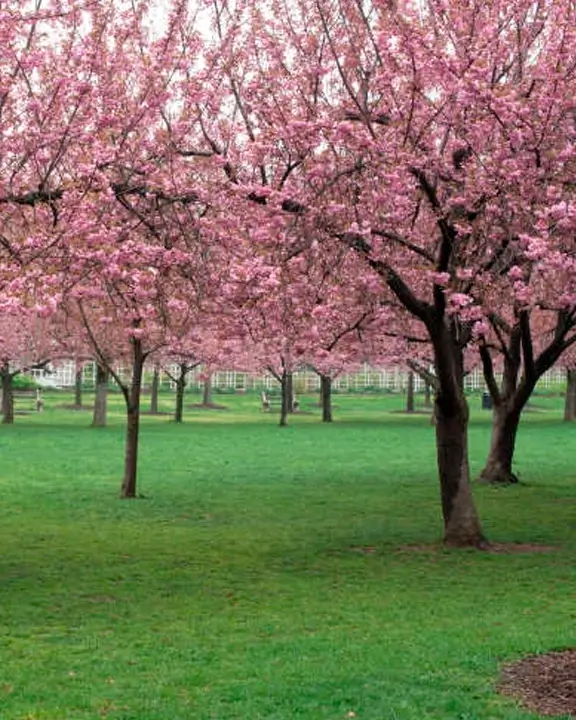
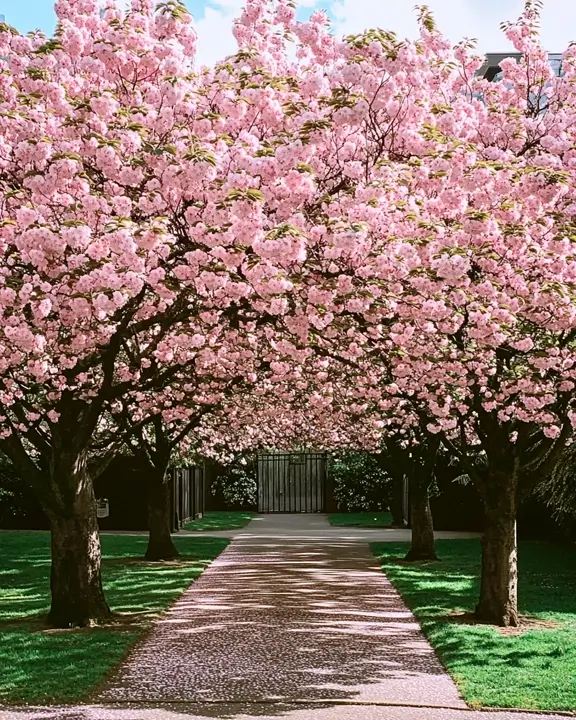
Urban Landscaping: Frequently planted in parks, streets, and boulevards, including Washington D.C.’s East Potomac Park, or Botanical Gardens like Brooklyn Botanic Garden’s Cherry Esplanade.

Bonsai and Niwaki: Some gardeners train Kanzan as bonsai or pruned niwaki trees to enhance its architectural beauty.
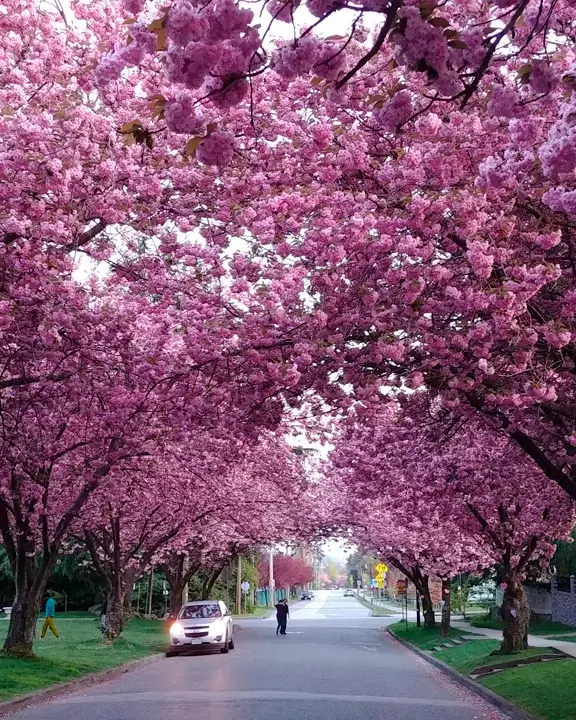
Cherry Blossom Avenues: Planted in Bonn, Germany, and Tokyo’s Ueno Park to create famous pink tunnels of blossoms.
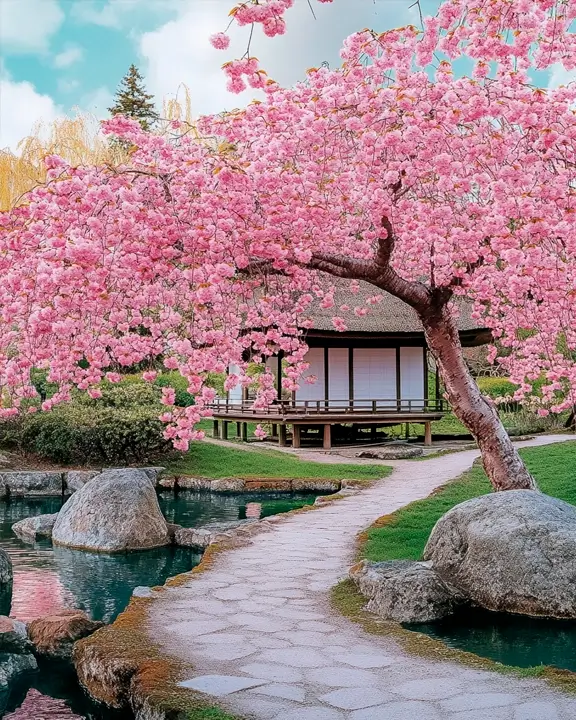
Japanese Zen Gardens: Frequently incorporated into Zen gardens across Japan, where its structured form and seasonal beauty enhance the tranquility and meditative atmosphere of these spaces.
Blossoms with a Message: The Kanzan’s Symbolism
The Kanzan Cherry Tree embodies impermanence, renewal, and celebration. While cherry blossoms have long been associated with samurai culture, Kanzan’s exuberant multi-layered blooms are also seen as a symbol of abundance and luxury.
-
Sakura: ephemeral beauty and transience of life - Across the world, whenever people see a Kanzan cherry tree bursting with pink blossoms, it often evokes feelings of joy tinged with nostalgia – joy for the immediate beauty, and nostalgia knowing it will be short-lived until next spring.
-
Hope and new beginnings – Frequently planted in Japanese schoolyards to mark milestones.
-
Peace and friendship – Japan gifted Kanzan and other sakura to Washington, D.C. in 1912 as a symbol of diplomacy.
-
Prosperity and Celebration – The fullness of Kanzan’s blooms represents prosperity, festivity, and joy in Japanese culture.
“There are no strangers under the cherry trees.”
Kanzan Cherry Tree in Art
The Kanzan Cherry Tree has captivated artists for centuries, becoming a central motif in Japanese ukiyo-e prints, photography, and contemporary sculpture. Hokusai and Hiroshige, two legendary woodblock printmakers, immortalized cherry blossoms in their landscapes, emphasizing the fleeting nature of beauty—an idea deeply tied to the Japanese aesthetic of mono no aware (appreciation of the fleeting nature of existence). Kanzan’s full, double-layered petals have also inspired modern artists, such as Yayoi Kusama, whose bold floral themes echo the vibrancy of these blossoms, and Damien Hirst, whose Cherry Blossoms series reinterprets their explosive color through thick impasto paintings.
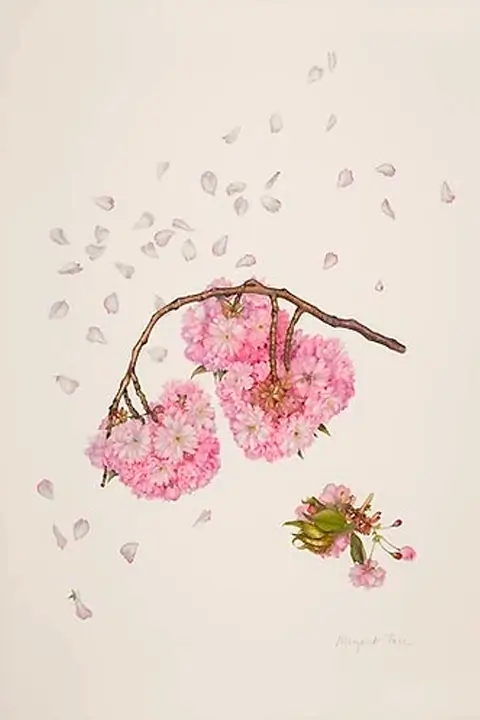
“Prunus Kanzan illustration” – Brooklyn Botanic Garden (2009)
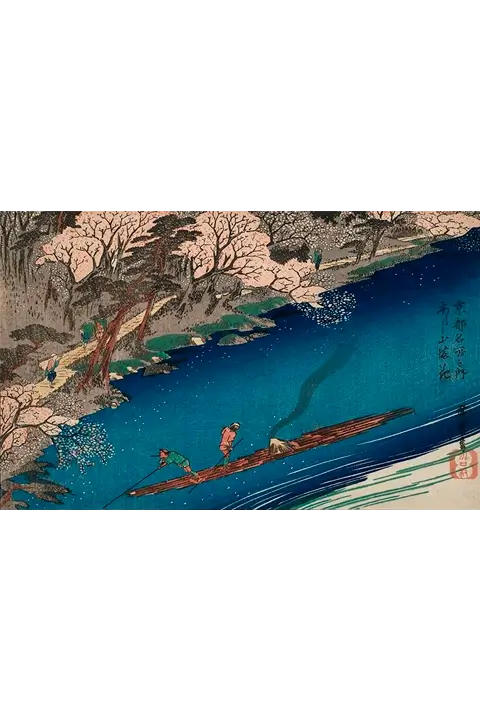
Cherry Blossoms in Full Bloom at Arashiyama – Utagawa Hiroshige (1834)
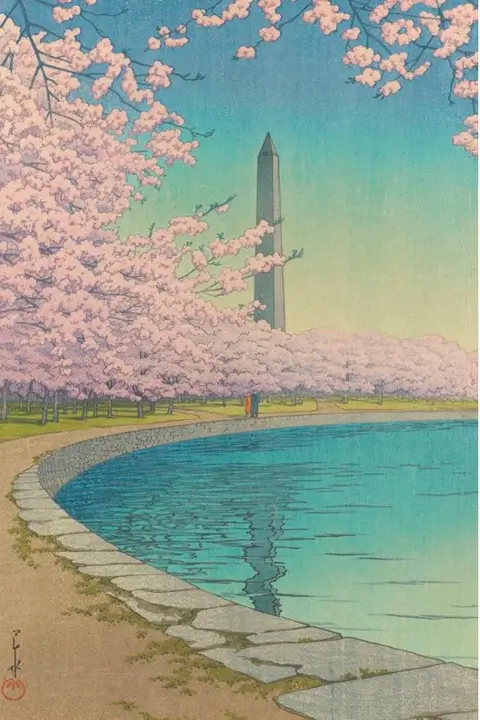
Washington Monument (Potomac Riverbank) – Kawase Hasui (1935)
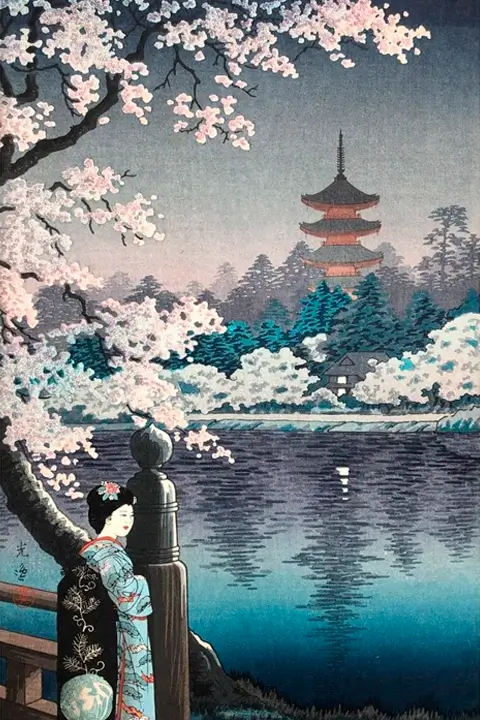
“Geisha and Cherry Tree at Ueno Park” – Tsuchiya Koitsu (1939)
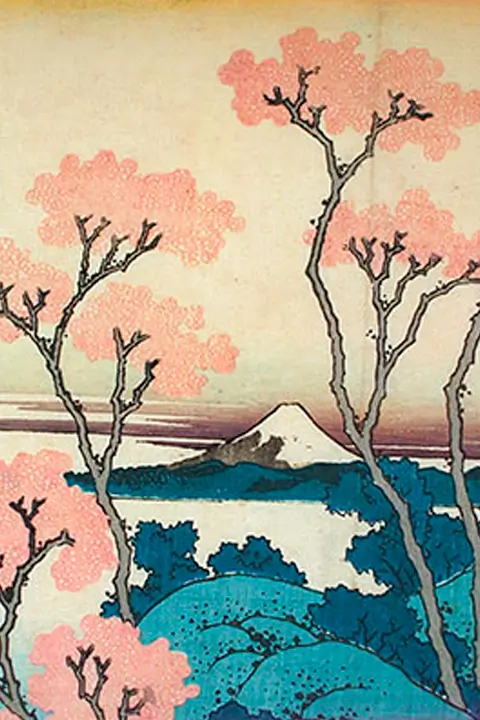
“Thirty-six views of Mt. Fuji” – Katsushika Hokusai (1800)
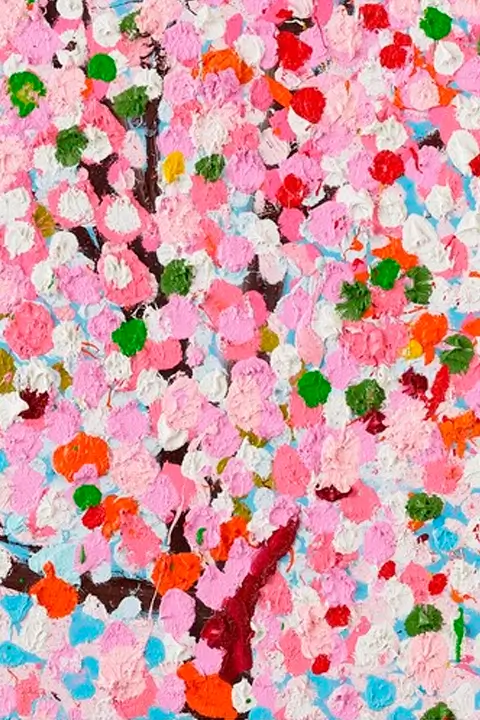
Cherry Blossom – Damien Hirst (2020)
At COBELIO, the Kanzan’s opulent blooms, dynamic textures and layered petals are translated into photo relief and plaster artworks, preserving its fleeting beauty in a form that lasts beyond the bloom. Our work captures the essence of this tree’s ephemeral yet striking presence, merging nature’s artistry with contemporary craftsmanship.
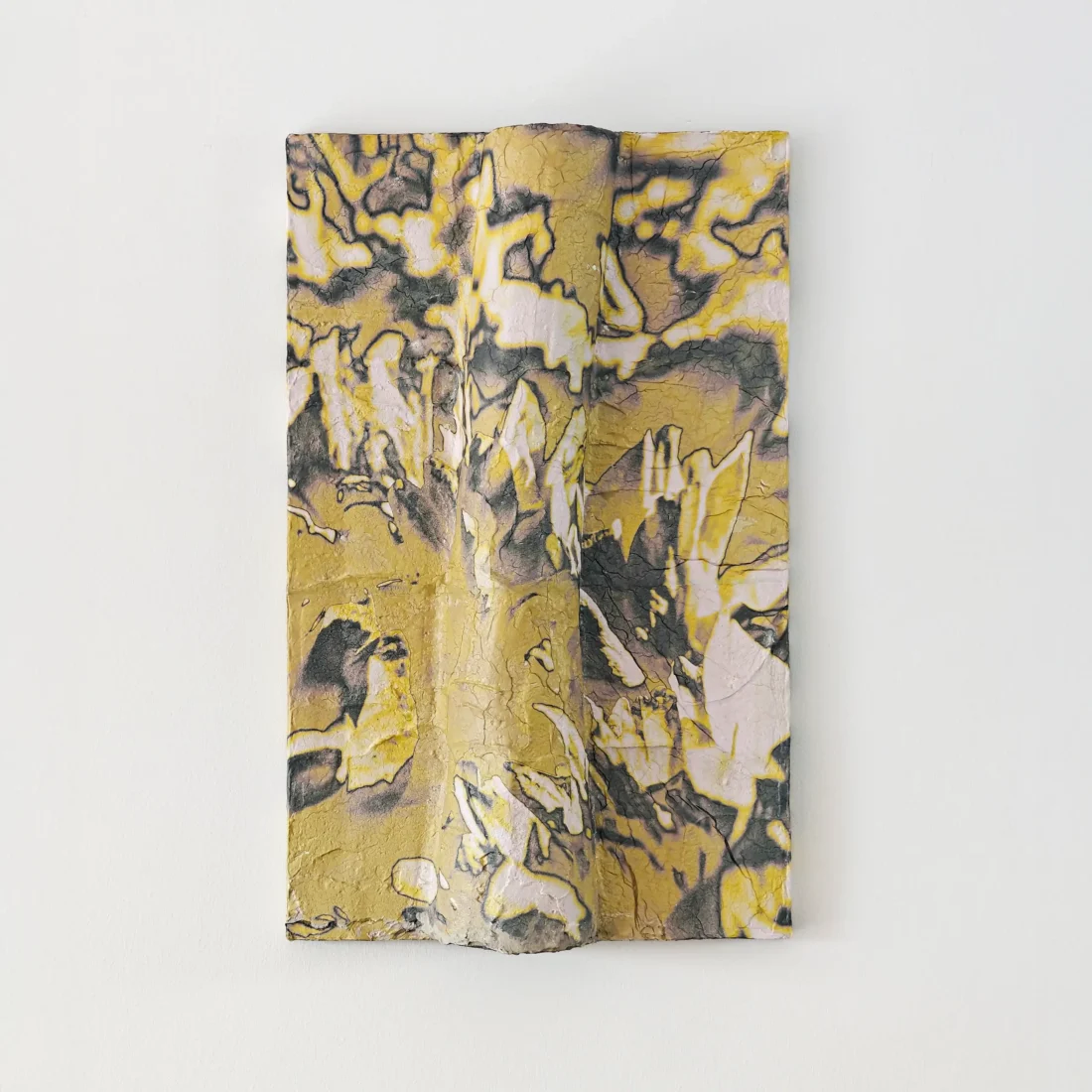



They Couldn't Resist the Kanzan

Collingwood ‘Cherry’ Ingram – A British horticulturist who helped preserve rare sakura, including Kanzan, by reintroducing lost cultivars to Japan.
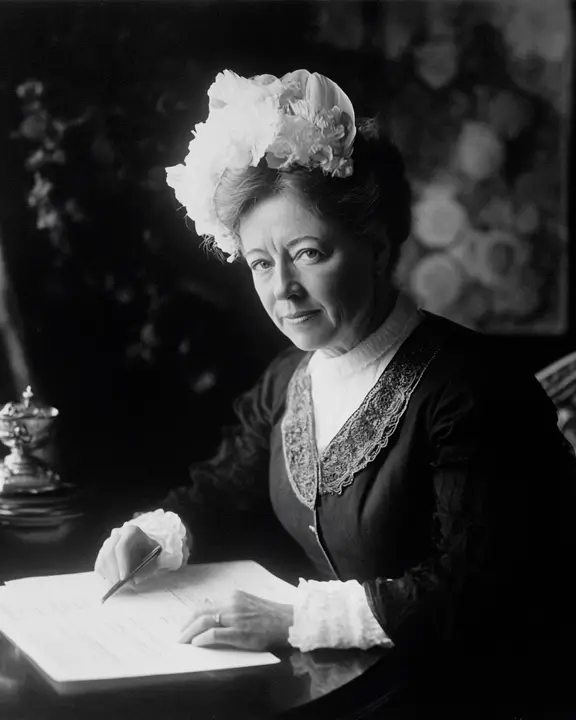
Helen Herron Taft – The U.S. First Lady responsible for bringing cherry trees to Washington, D.C.’s Tidal Basin in 1912.
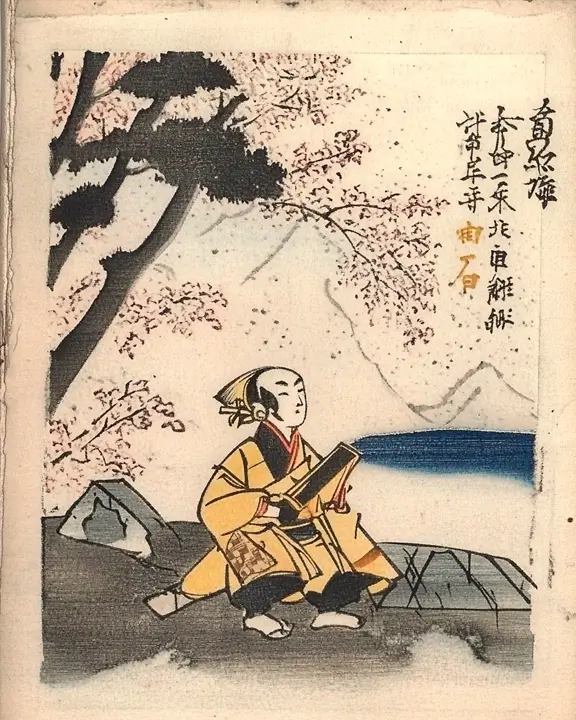
Saigyo Hoshi (1118–1190) – A Heian-era poet-monk who revered cherry blossoms, expressing a wish to die beneath them in full bloom—his verses shaped samurai ideals and sakura appreciation.
Feel the Pink Kanzan Effect!
-
📚 For book enthusiasts: Dive into literary works that celebrate cherry blossoms, like The Sakura Obsession by Naoko Abe, which explores the history and cultural significance of Japan’s cherry trees.
-
🎬 For cinema fans: Watch The Last Samurai, where the beauty of cherry blossoms plays a symbolic role in the story, or The Cherry Orchard (1999), based on Anton Chekhov’s play.
-
🍽️ For foodies: Visit Michelin-starred restaurants like Sushi Ginza Onodera in Tokyo or Narisawa, which incorporate sakura-inspired dishes and decor. Or imagine eating a kaiseki dinner while gazing at illuminated cherry trees in Gion or Maruyama Park, in Kyoto.
-
🎨 For art admirers: Explore COBELIO'S Kanzan cherry tree artworks, where the essence of Kanzan blossoms is captured in textured reliefs and photographic compositions.
-
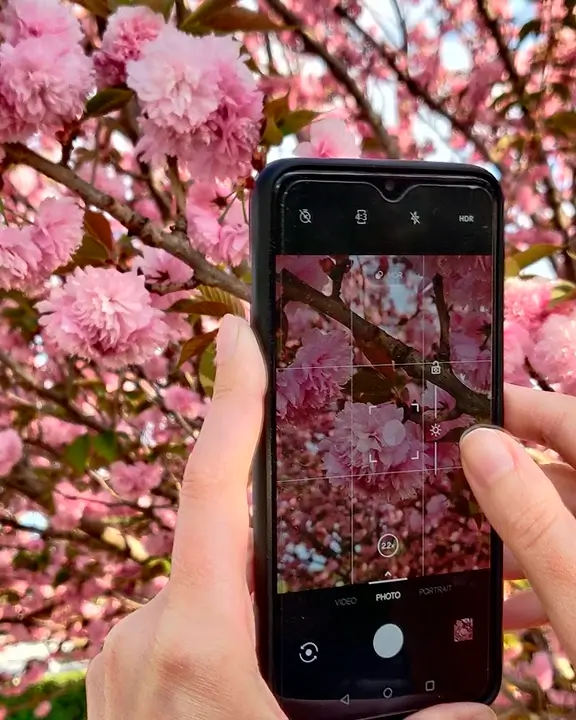
✈️ For travelers: Try your hand at capturing cherry trees yourself! Plan a visit to the Tokyo Cherry Blossom Festival or Washington, D.C.’s National Cherry Blossom Festival to experience the Kanzan’s blooms in their full glory (Walking or biking under these deep pink Kanzans along the East Potomac Park is a must-do). Don't forget also France (Jardin des Plantes), Germany (Bonn’s cherry blossom tunnels) or Vancouver, Canada (Queen Elizabeth Park, Stanley Park). Even without a formal event, going out with a camera (or phone) to shoot a Kanzan cherry tree in full bloom is an artistic experience.
-
🍃 For Eco-Activists: Support conservation projects like the Japan Cherry Blossom Association, which promotes sustainable planting and preservation of sakura trees worldwide.

From Nature to Canvas
At COBELIO, the Kanzan Cherry Tree is more than just an inspiration—it is an expression of movement, transformation, and ephemeral beauty. Its lavish blooms, layered textures, and dreamlike pink cascades have shaped our artistic vision, much like they have captivated us in nature.
Through photo relief and plaster techniques, we translate the Kanzan’s essence into textured art, preserving its delicate petals and striking contrasts. By working with plaster and spackle, we recreate the interplay of light and shadow that defines its organic forms, offering a sensory experience that extends beyond mere observation. Our creative process is a fusion of tradition and experimentation, allowing this fleeting bloom to transcend time and become an artistic relic that echoes its natural wonder.
Discover COBELIO’S Kanzan-inspired artworks and experience its ephemeral beauty, eternalized in art. Explore our Kanzan collection here.